Leave A Message
If you are interested in our products and want to know more details,please leave a message here,we will reply you as soon as we can.
submit
Custom Facial Skincare

plant-derived exosomes

Home

plant-derived exosomes

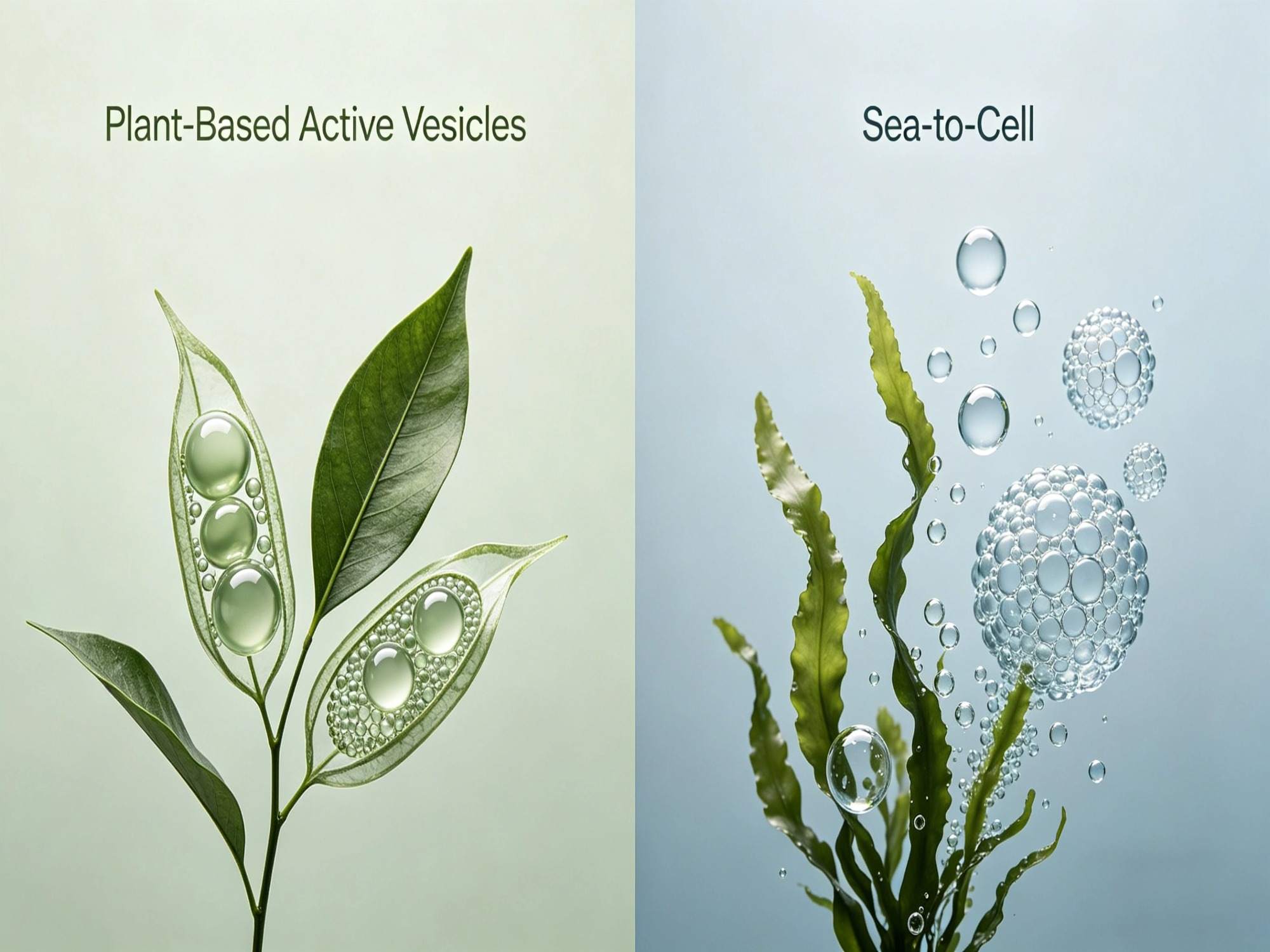
  • Exosome‑Inspired Skincare: Plant‑Based Active Vesicles vs. “Sea‑to‑Cell” Trends – What’s the Better Choice for Your Brand?
    Exosome‑Inspired Skincare: Plant‑Based Active Vesicles vs. “Sea‑to‑Cell” Trends – What’s the Better Choice for Your Brand?
    Apr 30, 2026
    1. Why ‘exosome skincare’ presents such a challenge Exosome products have become all the rage in the industry in recent years; not only have before-and-after comparison videos quickly flooded TikTok—search volumes have surged by over 1,500% in just two years—but the market is projected to reach nearly US$2 billion by 2032. “Salmon” and “exosome” serums have long been established as bestsellers by Korean beauty giants such as Medicube and VT Cosmetics. Consequently, many B2B buyers naturally wish to get a slice of the pie. The problem, however, is that exosomes derived from humans or animals are not advisable and remain in a legal grey area. EU cosmetics regulations explicitly prohibit the use of human-derived exosomes. The US Food and Drug Administration (FDA) has not yet approved any exosome-based cosmetics. In contrast, plant-derived “exosome-like” nanovesicles—also known as plant-derived liposomes (ELNs)—represent a cleaner, safer alternative. They deliver similar benefits whilst posing minimal compliance risks.     2. Three Technical Pathways, One Clear Winner Currently, three options are available to brands and retailers. First, human or animal exosomes, which possess extremely high biological activity but also pose significant ethical and regulatory risks. Second, DNA-derived active ingredients extracted from the well-known salmon PDRN, often marketed under the umbrella of ‘exosomes’. Whilst generally accepted, their INCI name must be listed as ‘Sodium DNA’. Third, plant-derived active vesicles that are not included on any banned lists and are free from ethical or moral controversy. They can exert cell signalling effects without attracting the attention of regulatory authorities. Major raw material suppliers have increasingly shifted towards this direction, as it is safer and offers a clear and well-defined compliance pathway.     3. Trends among major raw material suppliers At In-cosmetics Global 2026, DSM-Firmenich launched Exovive Lift, a plant-derived active vesicle made from Alpine apples, Mediterranean citrus and Sicilian papaya. A two-month clinical trial demonstrated that this ingredient significantly reduces wrinkles, with effects akin to making the skin appear eight years younger, whilst boosting skin elasticity by 30%. This points to the direction in which the industry is heading. Although the EU restricts the use of human exosomes, it recognises plant-derived exosomes (ELNs) as a compliant alternative. In the US, the threshold for declaring plant-derived exosome ingredients under their INCI names is significantly lower. For brands targeting the European or US markets, plant-derived vesicles are not only a current trend but also a sound long-term choice.     4. Real production data from our factory At our GMPC-certified factory in Guangzhou, we have produced a plant-peptide repair serum utilising plant-derived active vesicles. An independent laboratory conducted a four-week trial involving 30 participants. The results showed a reduction in the appearance of fine lines of 18% to 22%, an improvement in skin elasticity of 15% to 18%, and an increase in hydration of 28% to 32%. All our production takes place in a Class 100,000 cleanroom; we track every batch and subject each formulation to 720 hours of stability testing. This is by no means an ‘exosome’ marketing gimmick – it is a genuine skincare product that meets export standards and ensures your compliance with regulations. We offer custom concentrations, synergistic active ingredient formulations and complete compliance documentation (INCI: Sodium DNA, CPNP, Halal certification, FDA). You can receive samples within 15 days, and our minimum order quantities are low. We have already shipped to brands in the US, Germany and the Middle East.     5. Why this matters for your private label brand Compared to popular Korean ‘salmon’ or ‘exosome’ serums, our plant-based version offers equivalent efficacy whilst keeping you entirely free from legal disputes. This high-tech repair serum, utilising plant-derived vesicles, provides you with a ‘clean’ product narrative. Positioned as a gentle post-procedure serum, it soothes redness, strengthens the skin barrier and promotes natural repair, making it particularly suitable for clean beauty, vegan or sensitive skin ranges.     6. Summary The exosome craze is very real, but replicating ingredients that carry legal risks is by no means a wise move. Please opt for plant-based alternatives—they deliver comparable results whilst completely avoiding compliance risks. Are you looking for a post-procedure serum, daily barrier care products, or a complete sensitive skin skincare range? Please feel free to contact us to request samples or arrange a technical consultation.  
    Read More
  • Red Line or Blue Ocean? Industry Insights and Technological Outlook for Exosomes as an Emerging Component
    Red Line or Blue Ocean? Industry Insights and Technological Outlook for Exosomes as an Emerging Component
    Apr 10, 2026
    The Shift: From Feeding Skin to Talking to Cells As science pushes the boundaries of skincare, the conversation is moving from simply feeding the skin toward direct cellular communication. Exosomes—nature's own nanoscale couriers—have drawn global attention, with the exosome skincare market projected to grow from USD 685 million in 2025 to USD 1.98 billion by 2032. While still in a regulatory exploratory phase in China, the underlying science and commercial momentum offer a compelling long-term direction for forward-looking industry professionals.     What Are Exosomes? Nature's Nanoscale Messengers What are exosomes? These are tiny vesicles, roughly 30–150 nanometers in diameter, secreted by nearly all cell types. They carry bioactive molecules—proteins, nucleic acids—and transmit signals between cells, guiding target cells toward specific behaviors such as initiating regenerative programs. Simply put, most skincare delivers ingredients; exosomes deliver instructions. This fundamental difference has positioned exosomes at the forefront of global skincare research, with applications spanning anti-aging, skin rejuvenation, barrier conditioning, and tone management—categories that collectively drive the market toward an estimated USD 5.16 billion by 2033.     Three Sources: Animal, Plant, and Bioengineered Exosomes Current exosome materials fall into three main categories. First, animal- or human-derived exosomes are primarily sourced from stem cells. Stem cells can consistently secrete highly active exosomes, but ethical and regulatory constraints largely limit their application to regenerative medicine. Second, plant-derived exosomes are extracted from botanicals like centella asiatica, ginseng, and apple. Their key advantage is extremely low immunogenicity—they rarely trigger adverse reactions—and they account for over 90% of the cosmetic exosome market due to more navigable compliance pathways. Third, bioengineered exosomes mimic natural structures via biotechnology to encapsulate specific actives, an approach still in early-stage exploration.     How Exosomes Work: Signal Transduction and Cellular Renewal The core mechanism of exosomes is signal transduction. Rather than providing direct nutrition, they communicate with target cells to awaken intrinsic renewal pathways. In skin-related in vitro studies, exosomes have shown potential to help support the synthesis of collagen and elastin, visibly improve the appearance of fine lines, help calm visible redness, condition the skin barrier, and promote a more even, radiant complexion. Their nanoscale lipid bilayer structure—similar to skin cell membranes—also supports efficient delivery of labile ingredients. Plant-derived exosome-like nanovesicles have attracted particular interest for topical formulation, offering a compelling balance of bioactivity and safety. Note: the above is based on published academic research; exosome ingredients are not yet approved for cosmetic use in China.     Our Manufacturing Readiness: GMPC Infrastructure and Formulation Expertise As a contract manufacturer with over twenty years of skincare R&D and production experience, we closely monitor emerging ingredients and technological developments. While exosomes are not yet applied in cosmetics in China, the core technical directions—nanovesicle encapsulation, active stabilization, and transdermal delivery—are conceptually aligned with our formulation expertise in dosage form development. We have extensive practical experience in active ingredient stability, compatibility, and sensory optimization, and we continue to follow advancements in microencapsulation delivery systems across the industry. Our capabilities are supported by a library of over 3,000 mature formulas and a Class 100,000 GMPC cleanroom with an RO/EDI ultrapure water system (≤2 μs/cm), providing a solid foundation for high-potency ingredient development. For brands planning ahead, our facility is equipped to support pilot-scale development and large-volume production—with daily output reaching 100,000 units for standard skincare and 200,000 pieces for masks—ensuring both speed and consistency when regulatory conditions align.     Looking Ahead: Prepared for the Next Frontier Exosomes illustrate one possible evolution from ingredient stacking toward biological signal modulation in skincare. Although the commercial pathway in China awaits further regulatory clarity, the underlying logic—nano-delivery, precision control, and active protection—has become an irreversible direction for high-performance skincare. For those of us in the supply chain, the task is to maintain curiosity toward frontier science while diligently refining our foundational capabilities. When the opportunity fully opens, only the prepared will be ready to step forward—and with our existing GMPC infrastructure and formulation experience, we are building that readiness today. Compliance Disclaimer: This article is intended solely for the purpose of introducing industry technical developments and facilitating academic exchange. It does not constitute any product or business recommendation. To date, no exosome-related cosmetic ingredients or products have been approved in China, and it is strictly prohibited for any enterprise to produce or market exosome-related products under the guise of cosmetics. — Aisen Skincare Manufacturing Contract Manufacturing & Private Label Solutions
    Read More

leave a message

leave a message
If you are interested in our products and want to know more details,please leave a message here,we will reply you as soon as we can.
submit
Contact Us: aisenchris5@gmail.com

home

products

WhatsApp

CONTACT US

Start a Conversation

Hi! Click one of our members below to chat on