Leave A Message
If you are interested in our products and want to know more details,please leave a message here,we will reply you as soon as we can.
submit
Custom Facial Skincare

Blog

Home

Blog

  • AHK-Cu : A New Opportunity for Hair Growth
    AHK-Cu : A New Opportunity for Hair Growth
    Aug 01, 2026
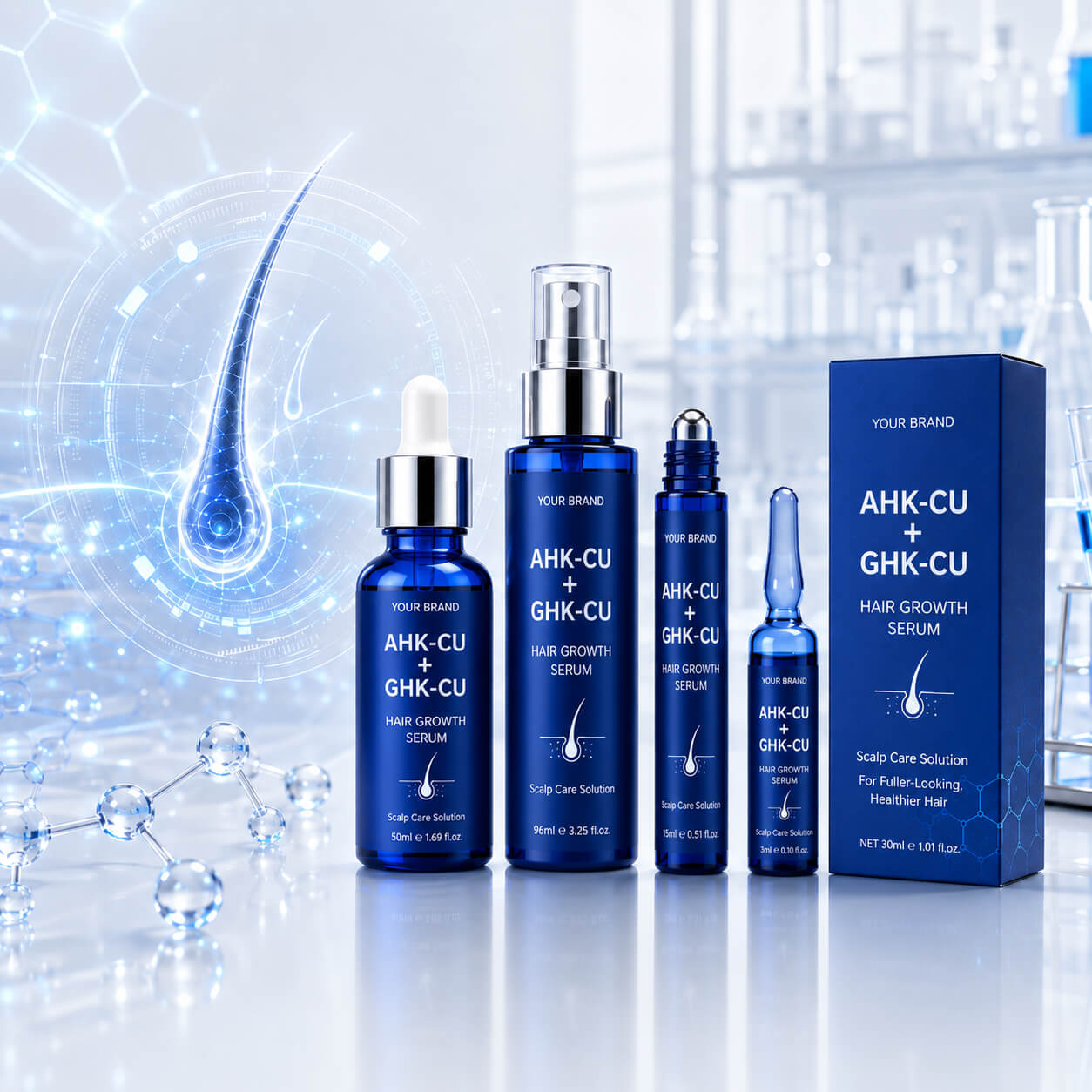
    The scalp care category of the hair care brand is taking things more seriously. Customers increasingly don’t want a herbal anti-hair loss shampoo or a hair tonic. Consumers want products that are more targeted, more sophisticated and simpler to explain on a product page. AHK-Cu is optimized for copper. Rooibos, caffeine, ginger and herbal extracts are already widely employed in the hair care market. They are easy to understand for consumers. But many designs are similar for many products. AHK-Cu, with its technology-driven ingredient story, can elevate any brand’s premium scalp serum, copper peptide hair growth serum or private label anti-hair loss offering and help it make a statement.  1. AHK-Cu usually implies an active ingredient The copper peptide in question is a very powerful molecule. Most discussions concerning hair care involving AHK-Cu relate to hair follicles, dermal papilla cells and the scalp. Each cosmetic must be communicated clearly and carefully. Never purchase a scalp serum that claims to “treat hair loss” or “guarantee hair regrowth”.    A more suitable term would be scalp environment care, stronger-looking roots, fragile hair support, fuller-looking hair and healthier-looking hair condition. This kind of language is more appropriate for the global cosmetic market. It also allows the brands to keep the appeal of AHK-Cu for hair growth, without sounding like a drug.   2.Why Serum Is a Superior Format   Many anti-hair loss products are still in development as shampoos or conditioners. These formats are familiar, but have a short contact time on the scalp. They are also easier to cost compare.In our opinion, AHK-Cu is more suitable for leave-on products for the scalp. You may also create a stronger product identity for this ingredient as a scalp serum, spray, roller serum or ampoule. It also feels more premium than a basic rinse off product.   The leave-on format gives brands more room to build a complete formula. AHK-Cu can be the core story of copper peptides, and other ingredients can enhance the final product experience. Caffeine can offer an energizing scalp care angle. Niacinamide and zinc PCA can support fresh oil control concept. Panthenol and hyaluronic acid can boost comfort and hydration. Botanical extracts make it easier to connect the formula to natural scalp care.   The aim is not to load with many ingredients for decoration. The formula should have a clear reason: scalp comfort, fresh texture, root-strengthening care or fuller-looking hair.   3. Who are AHK-Cu Products for? There are so many anti-hair loss products that continue to be developed as shampoos or conditioners. These formats are known but are not effective because they have a limited contact time on the scalp. It is also easier to make price comparisons.  AHK-Cu seems to be better suited for leave-on scalp treatments. The ingredient is given an enhanced product identity in a serum for the scalp, applied as hand serum, spray, roller serum or ampoule. It provides a more luxurious experience than regular rinse-off agents. The leave-on format allows brands a wider canvas to create a full product.  AHK-Cu is the core copper peptide story and the other ingredients help with the experience in the end product. Caffeine can bring a fresh new take on scalp care. Niacinamide with zinc pca can support a new concept of oil-control. Panthenol and hyaluronic acid can help with comfort and hydration. Botanical extracts can help associate the formula with natural care of the scalp. We don't want to garnish with lots of things. The formula must have a clear rationale; scalp comfort, fresh texture, root strengthening care, fuller looking hair.   4.First Things OEM Buyers Need to Know For OEM buyers, AHK-Cu is not only a raw material matter. Formula stability, scalp feel, packaging compatibility, label support and export documents are also important for a good product. Scalp products need a very specific kind of texture. It should feel light, fresh and non-greasy. Not flat, not sticky. This is particularly true for leave-on scalp serums and sprays that consumers may apply during the day. Packaging changes also product positioning. The dropper bottle feels more like a luxury serum. It’s easier to use a spray for daily, full-scalp application. A roller applicator is convenient for local massage and care. Ampoules are ideal for salons and professional treatment kits.   When a customer looks for an AHK-Cu OEM manufacturer, it’s usually more than just production they need. They need a factory that will help turn the ingredient into something stable and usable that can be exported.   5.Aisen Support AHK-Cu Serum Aisen Pro Skin can assist global customers in OEM/ODM/OBM development of AHK-Cu scalp care products. This includes product concept, formula development, sample testing, packaging selection, private label customization, label support, quality control, export documents, and world-wide delivery.For brands who want to develop a custom AHK-Cu serum, Aisen can develop scalp serums, scalp sprays, roller serums, ampoules and care sets to match the target market and sales channel. Aisen can also help with formula application for customers that need bulk copper peptide for hair care, not just supply the ingredient. Aisen can develop scalp serums, scalp sprays, roller serums, ampoules and care sets depending on the target market and sales channel for brands planning to use a custom AHK-Cu serum. Aisen can also help with formula application, not just give you an ingredient name, if you’re a customer looking for copper peptide in bulk for hair care.     Also, for long-term cooperation, the ability of Aisen to produce in the factory is important. Aisen has 3,000+ mature formulas of skincare, 12 automated production lines, 100,000-grade clean workshop, GMPC / ISO 22716 standards and annual capacity of up to 80 million units, supporting trial orders and scalable production.  
    Read More
  • Skin Longevity Is Becoming the Next Big Anti-Aging Opportunity for Skincare Brands
    Skin Longevity Is Becoming the Next Big Anti-Aging Opportunity for Skincare Brands
    Jul 16, 2026
      Many beauty brands face the same challenge when developing a new anti-aging product: consumers have already seen too many active ingredients. Retinol, peptides, hyaluronic acid, niacinamide, vitamin C, and collagen-related concepts are still important, but the market has become highly educated. For skincare brands, importers, e-commerce sellers, spa channels, salons, and product development companies, the real question is no longer whether another anti-aging serum can be made. The better question is how to build a more premium, more trend-driven, and more expandable anti-aging story.   This is why skin longevity is becoming a stronger topic in the global skincare market. In cosmetic product development, skin longevity should not be understood as a medical promise to extend life or reverse aging. It is better positioned as long-term skin quality management: helping skin look healthier, more resilient, more elastic, smoother, brighter, and less visibly tired over time.   Compared with traditional anti-aging language, skin longevity feels more advanced. It moves the conversation away from one wrinkle or one ingredient and toward skin quality, barrier resilience, elasticity, radiance, firmness, and healthy-looking skin condition. For B2B customers, this gives the concept real commercial value: it can support not only one serum, but also creams, ampoules, masks, professional care products, and complete anti-aging routines.   1. The Market Is Moving From Wrinkle Correction to Long-Term Skin Quality In the past, many anti-aging products were built around direct claims such as reducing the look of wrinkles, firming the skin, or moisturizing dry lines. Today, consumers understand aging in a more layered way. Younger consumers may not have deep wrinkles, but they already care about dullness, late nights, unstable skin, dryness, and early signs of fatigue. Consumers in their thirties often look for elasticity, smoother texture, even tone, and firmer-looking skin. Mature skin consumers are more likely to care about sagging appearance, dryness, comfort, resilience, and overall skin quality.   This means an anti-aging product cannot rely only on the word 'anti-wrinkle'. A more attractive product needs to answer several questions at the same time: why does skin look tired, why does elasticity decline, why does the complexion lose radiance, why does the barrier feel more fragile, and why do some moisturizing products give only short-term comfort while others make skin look more plump and stable?   Skin longevity gives brands a broader answer. It turns anti-aging from a single benefit into a longer-term care concept. This is especially useful for B2B product development because it can support a full product architecture, from a hero serum to a premium cream, a professional ampoule, a mask, or a complete routine set.   For brands looking for a hero product to anchor this concept, a Salmon PDRN Facial Serum offers a natural entry point. PDRN is already connected with skin repair, elasticity, and revitalization in global skincare conversations — and it fits seamlessly into a longevity positioning built around healthier-looking, more resilient skin over time.     2. Case Signal: L'Oreal Is Turning Longevity Into a Beauty Platform One reason skin longevity deserves attention is that it is no longer only a trend-report keyword. Large beauty groups are already turning it into technology platforms and finished product concepts. L'Oreal Groupe publicly introduced its Longevity Integrative Science in 2025, positioning beauty longevity as a shift from corrective care toward preventive and proactive care. Its communications also mention 15 years of advanced research, more than 40 publications, and a Longevity AI Cloud that analyzes over 260 skin longevity biomarkers.     3.  Lancôme Absolue Longevity Shows How Premium Creams Can Carry the Story Lancôme Absolue Longevity Soft Cream is a useful finished product reference because it shows how a high-end brand can turn skin longevity into a premium cream story. The product is connected with Longevity Science, PDRN, Pro-Xylane, firmness, radiance, hydration, and youthful-looking skin. In L'Oreal's public communication, the product is also described as being inspired by PDRN skin booster technology and positioned as part of the brand's longevity direction.   This case is important for brands because it proves that skin longevity is not limited to serum products. A cream can also carry a sophisticated anti-aging story, especially when the target market is mature skin, premium retail, gift sets, spa retail, or luxury anti-aging routines. For many B2B customers, this opens more product choices: longevity soft cream, firming repair cream, matrix-support moisturizer, advanced anti-aging night cream, or serum-and-cream duo.   The development lesson is not to imitate Lancôme. The lesson is that a premium anti-aging product needs more than a famous ingredient. It needs a clear product format, a strong skin-quality story, a texture that matches the price position, and a formulation logic that supports hydration, comfort, elasticity, and radiance at the same time.     4.  Vichy Shows the Dermatological Route of Mature-Skin Longevity Another useful direction comes from dermatological skincare. Vichy, a dermatological beauty brand under L'Oreal, has moved mature-skin care into multi-sign correction and longevity-related language through products such as Neovadiol Longevity Revolumizing Cream, which was mentioned in L'Oreal's longevity communications. Vichy's broader brand environment also focuses on skin health science, collagen-related aging signs, and dermatologist-recommended skincare.   This route matters because skin longevity does not need to belong only to luxury brands. It can also be developed into products for mature skin, pharmacy-style skincare, dermatologist-inspired routines, and professional care channels. For B2B customers, this creates a more practical opportunity: products can be premium without looking overly decorative, and they can focus on comfort, resilience, density, hydration, and visible skin quality.   A brand targeting mature consumers may choose a richer cream. An e-commerce seller may prefer a lighter longevity serum with clear before-and-after content angles. A spa or salon customer may prefer ampoules, masks, or treatment sets. An importer or wholesaler may prefer a serum-plus-cream combination that can be sold across different channels. For brands looking to build a more complete daily routine around the longevity concept, a Korean Blue Copper Peptide Brightening Toner Serum Set offers a natural extension — combining copper peptide for collagen support with niacinamide for brightening, in a format that works well for both e-commerce content and professional skincare recommendations.     5. Why Skin Longevity Works Better Than a Single-Ingredient Story For B2B development, skin longevity is valuable because it is not a single ingredient. It is a framework that can organize multiple product benefits. A traditional anti-aging product often starts with one ingredient: a peptide serum, a retinol cream, a collagen mask, or a hyaluronic acid ampoule. This is easy to understand, but it is also easy to copy.   Skin longevity allows brands to combine several commercial directions in a more natural way. Technology-inspired repair can be supported by PDRN, exosome-inspired actives, plant peptides, and fermentation concepts. Firmness and elasticity can be supported by peptides, copper peptides, and collagen-related positioning. Barrier comfort can be supported by ceramides, panthenol, centella, ectoin, or beta-glucan. Plumpness and hydration can be supported by hyaluronic acid, amino acids, and humectant systems. Radiance and tone care can be supported by niacinamide, vitamin C derivatives, and other brightening-support ingredients depending on the target market.   When these layers are organized clearly, the product no longer looks like a basic anti-aging serum. It becomes a long-term skin quality solution. This is exactly why the concept is useful for brands that want stronger differentiation, higher perceived value, and more room for product-line extension.     6. How Brands Can Develop Skin Longevity Products Without Making Them Too Generic A skin longevity product should start with positioning, not with ingredient stacking. If the goal is an e-commerce hero product, the formula should have clear communication points and strong visual appeal, such as longevity serum, firming repair serum, glow and resilience serum, or PDRN peptide repair serum. The product should feel modern, easy to explain, and suitable for content marketing.   If the goal is a premium skincare line, a serum-and-cream structure may work better. The serum can carry the high-perception active story, while the cream can carry comfort, richness, barrier support, and mature-skin care. If the goal is spa or salon channels, ampoules, sheet masks, and professional care sets may be more suitable because these channels can explain advanced concepts more patiently and support higher-value treatments.   For importers and wholesalers, a multi-SKU solution may be more practical than a single product. A longevity serum, firming cream, and repair mask can create a clearer shelf story and give distributors more flexibility. For established brands, skin longevity can become a complete anti-aging routine that includes toner, serum, cream, mask, and gift set formats.   Whatever route you choose, one factor stays the same: your brand lives or dies by the consistency of your supply chain. A formula that impresses in a sample is meaningless if batch two arrives different from batch one — or if a missing document stalls your shipment at customs for three weeks. Quality control in skincare OEM isn't just about lab testing; it's about building a system that protects your brand from risks before they reach your customer. For the full picture on what that system should look like, read our guide on how a professional OEM protects your brand beyond the lab.     7. How Aisen Helps Turn Skin Longevity Into Market-Ready Products For skincare brands, importers, e-commerce sellers, spas, salons, and cosmetic manufacturers, the value of skin longevity is not only that it sounds premium. The real value is whether the concept can be turned into stable, export-ready, market-ready products.   Aisen Pro Skin can support global customers with one-stop OEM/ODM/OBM development for skin longevity skincare. Depending on the customer's target market, channel, and price position, Aisen can help develop skin longevity serum, firming cream, repair ampoule, anti-aging mask, professional care set, or a complete anti-aging product line.   In formula direction, Aisen can connect the longevity concept with existing high-interest skincare categories, including Salmon PDRN Facial Serum, exosome technology recovery serum, blue copper peptide firming products, 15% niacinamide brightening serum, hyaluronic acid hydration products, and barrier repair creams. This makes the concept easier to translate into real products rather than staying as a broad marketing idea. Skincare OEM Quality Control: 5 pillars for Brand Protection | AISEN (Guangzhou)-www.aisenproskin.com Behind every stable formula is a quality control system that most brands never see — but every consumer feels. From raw material testing to finished product release, our 5-stage quality control pillars act as an invisible shield, ensuring that each batch meets the same standard as the first. For a deeper look at how we protect your brand's consistency, read our guide on the 5 critical QC pillars every skincare OEM factory should have.   Aisen's factory capability also supports this type of development. With 3,000+ mature skincare formulas, 12 automated production lines, a 100,000-grade clean workshop, GMPC and ISO 22716 standards, and annual capacity of up to 80 million units, Aisen can support both low-MOQ trial orders and scalable production. The team can also assist with packaging selection, logo customization, label support, COA, MSDS, product specifications, export documents, and global delivery.     Conclusion: Skin Longevity Is a Product Upgrade Direction Skin longevity is not replacing traditional anti-aging. It is upgrading it. Instead of focusing only on visible wrinkles, it helps brands build a broader story around long-term skin quality, resilience, elasticity, radiance, comfort, and healthy-looking skin.   For B2B customers, this creates a practical product opportunity. A skin longevity concept can become a hero serum, a premium cream, a professional ampoule, a repair mask, or a full routine set. It can also connect naturally with PDRN, exosomes, peptides, niacinamide, hyaluronic acid, ceramides, and other high-interest skincare directions.   If your brand is looking for a more premium and expandable anti-aging product direction for global markets, skin longevity is worth serious consideration. Aisen Pro Skin can help turn this trend concept into real OEM/ODM/OBM skincare products, from formula development and sample testing to packaging customization, export support, and long-term production.     Related products China Pore Minimizing Acne Scar Gel Salicylic Acid Supplier | aisenproskin.com China High-Potency 15% Niacinamide Spot-Lightening Serum (MELA B3) Supplier | aisenproskin.com  
    Read More
  • Cooling Beauty Products: How Aisen Helps Brands Capture the Skincare Trend?
    Cooling Beauty Products: How Aisen Helps Brands Capture the Skincare Trend?
    Jul 14, 2026
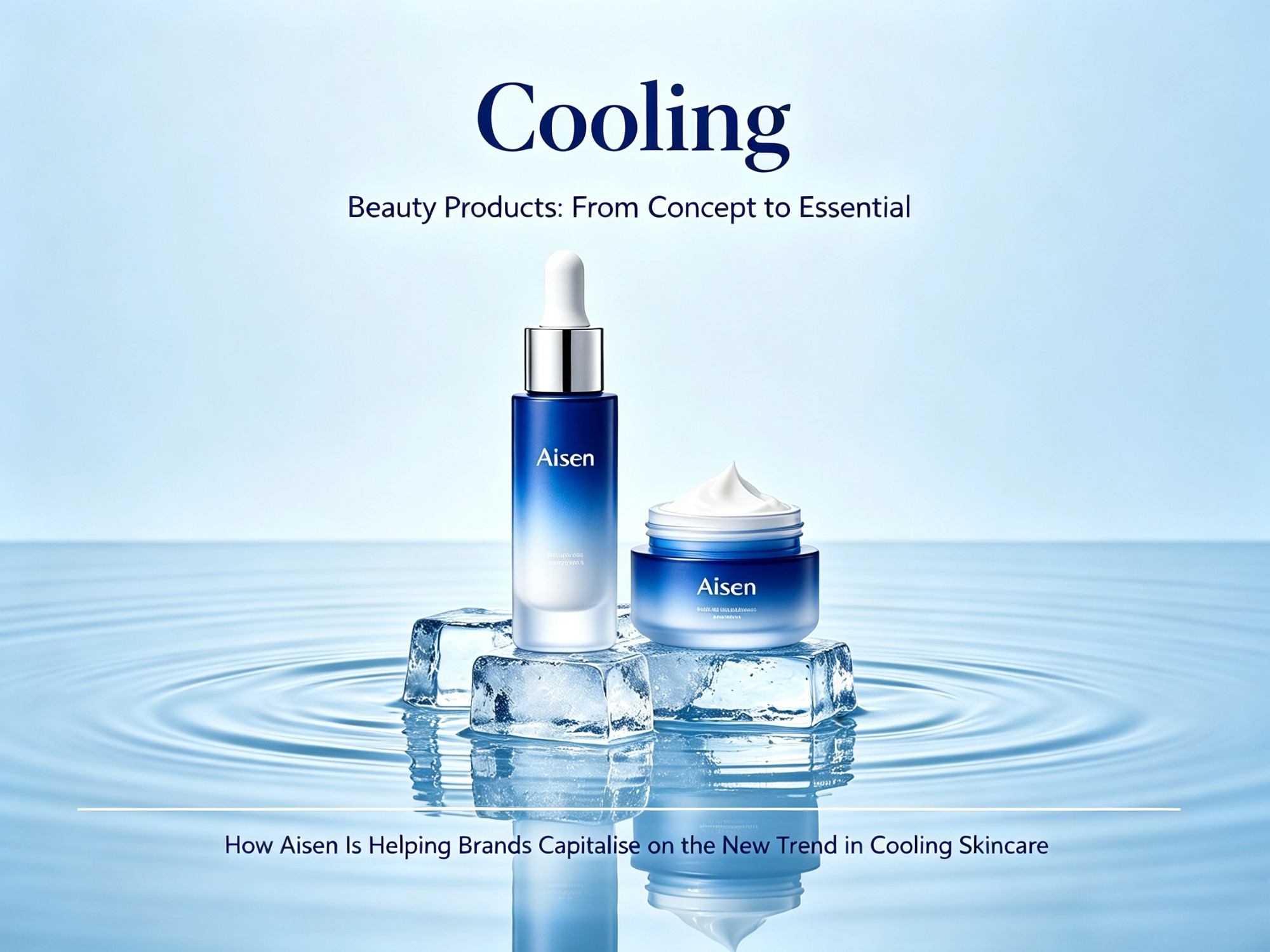
      With extreme heat becoming the new normal worldwide, cooling skincare—once merely a summer marketing gimmick—has now evolved into a functional skincare segment with long-term growth potential. Climate-adaptive cosmetics have become a core focus for the industry, and cooling skincare has transformed from an optional selling point into a market necessity.   At the Cosmet’Agora 2025 industry summit, BASF unveiled four key formulation themes for climate-adaptive skincare, with ‘Hydrating & Cooling’ explicitly identified as one of the core approaches to addressing heat-related damage. According to an industry report by GII (Global Information Intelligence), the global market for cooling skincare gels reached US$75.7 billion in 2024 and is projected to grow to US$105.89 billion by 2033, representing a compound annual growth rate (CAGR) of 3.8 per cent over the forecast period; Furthermore, according to a report by Coherent Market Insights, the global after-sun care market is valued at US$1.3 billion in 2026 and is expected to grow to US$2.3 billion by 2034, representing a compound annual growth rate of 7.1 per cent. The growth potential in these two key market segments is clear. In its 2026 K-beauty trend round-up, *Vogue* listed temperature-responsive cooling skincare as a key category of the year, highlighting its ability to address heat-induced ageing, skin redness and inflammation. Consumers are no longer solely focused on long-term skincare benefits; they increasingly value the soothing, cooling sensation felt the moment the product is applied, with sensory experience becoming a core criterion in skincare consumption.     Cooling skincare has become a necessity, underpinned by three key market drivers. Firstly, consumer demand has shifted towards immediate skin-feel repair; the instant cooling and soothing sensation provides rapid comfort to the skin, aligning with the current trend towards enhanced sensory experiences in skincare.   Secondly, extreme heat has fuelled demand for protection against heat-induced ageing, as high temperatures exacerbate skin oxidation and inflammation; cooling skincare has thus moved beyond being a summer-only category to become a year-round staple in skincare routines;   Thirdly, social media continues to amplify the category’s popularity. Statistics from the third-party beauty data platform Spate show that the frozen face mask category has seen a year-on-year increase of 692 per cent, with TikTok contributing 84 per cent of the buzz. Related content has grown by over 1,000 per cent year-on-year, with the platform averaging 590 Google searches and 40,300 TikTok views per week; the sector remains in its early growth phase.   Overseas beauty brands have already taken the lead in establishing a presence in this sector, with flagship products demonstrating market acceptance. Dr. Jart+’s Frozen Rubber Mask averages 2,800 Google searches per month, making it a benchmark in the category; in June 2026, the South Korean brand Rael launched at Ulta Beauty, introducing a soothing hydrogel frozen face mask formulated with cross-linked hyaluronic acid, peptides and mushroom extracts, designed to cool the skin and reduce puffiness; Some By Mi’s PDRN cooling mask attracts 33,500 platform views per week; Dermal’s cooling cotton pads were selected by *Vogue* as a representative cooling product; Aestura’s Repairing and Soothing Cream has undergone third-party clinical testing, demonstrating a 94 per cent reduction in skin redness and an 84 per cent increase in skin hydration, with data supporting its immediate cooling and soothing effects.     The core concept behind cooling skincare lies in delivering both a ‘sensory experience’ and ‘tangible benefits’—consumers seek not only an instant cooling sensation upon application, but also visible soothing, anti-redness and moisturising effects. Through its professional OEM/ODM model, Aisen offers brands three types of practical development solutions. 1. The cooling and soothing gel, cream and face mask range features centella asiatica, aloe vera and panthenol as its restorative base, combined with nano-encapsulated menthol derivatives to provide both an instant cooling sensation and long-lasting soothing effects. Functional Skincare OEM/ODM – R&D-Driven Contract Manufacturing | Aisen Bio-www.aisenproskin.com   2. These cooling cotton pads are suitable for a variety of situations, such as morning puffiness, post-workout redness and sunburn. Their refreshing, water-based formula leaves no sticky residue and is quickly absorbed.   3. The Cooling After-Sun Care Range capitalises on the rapidly growing after-sun market to create multi-functional skincare products formulated with hyaluronic acid, antioxidants and restorative ingredients.     Whilst most brands treat the cooling sensation merely as a short-term summer marketing gimmick, Aisen utilises its proven delivery technology and standardised formulation system to create scientifically validated, long-lasting cooling skincare products. This enables brands to capitalise on the global growth trend in cooling skincare and develop distinctive, long-lasting bestsellers.  
    Read More
  • From 9.3% CAGR to Milk Exosomes: Why This Ingredient Is Becoming a New Opportunity in Repair Skincare
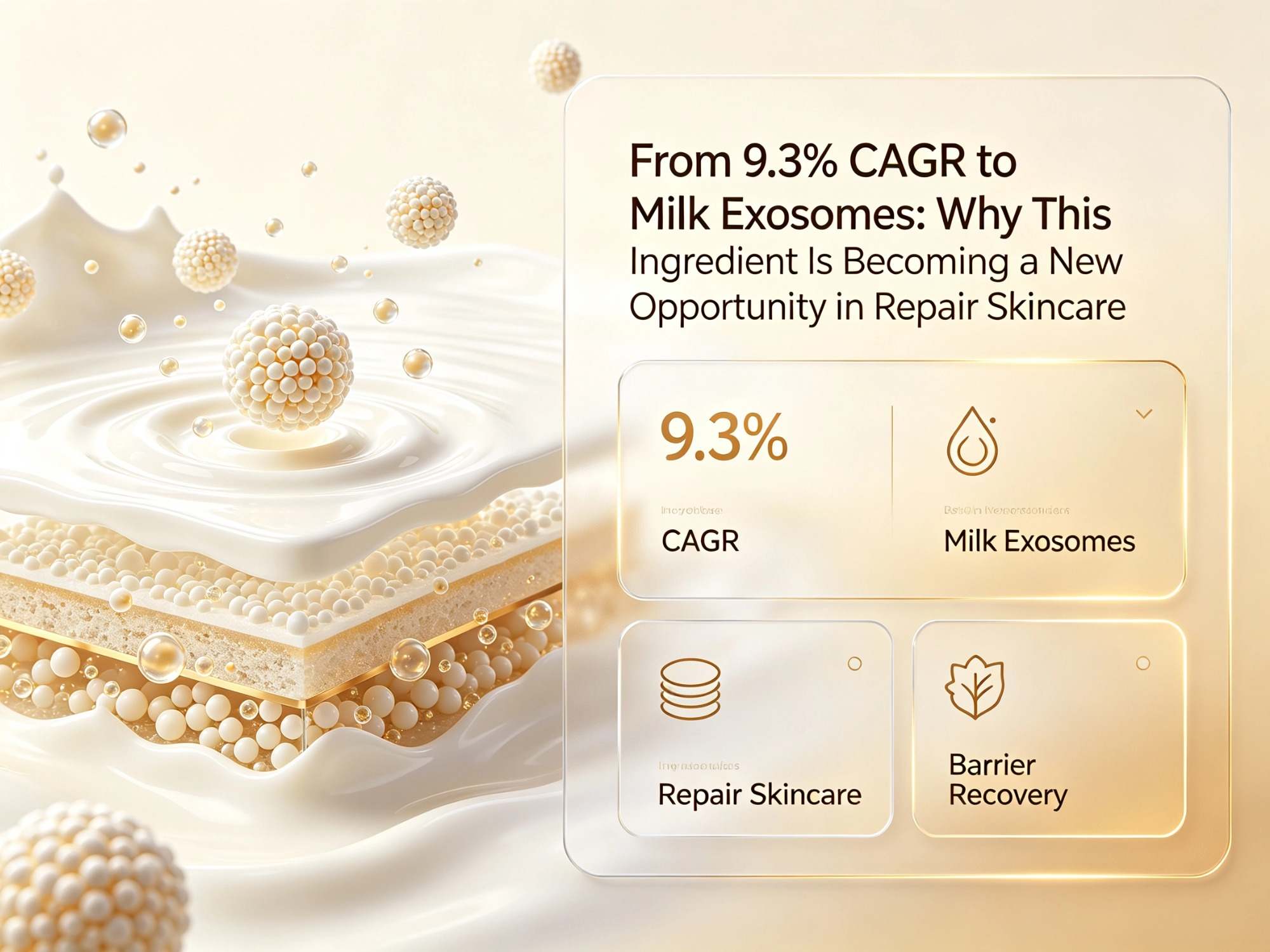
    From 9.3% CAGR to Milk Exosomes: Why This Ingredient Is Becoming a New Opportunity in Repair Skincare
    Jul 13, 2026
      According to Market.us, the global exosomes skincare market is projected to grow from USD 260.2 million in 2023 to USD 633.2 million by 2033, with an estimated CAGR of 9.3%. Another report from Coherent Market Insights estimates that the global exosomes skincare market will reach USD 460.0 million in 2026 and grow to USD 819.4 million by 2033, with a projected CAGR of 10.1%. These numbers show a clear direction: exosome skincare is no longer only a laboratory concept. It is entering brand development, functional skincare, professional care, and premium repair product competition. For global skincare brands, importers, cross-border e-commerce sellers, spa and salon channels, and private label customers, the real question is not only whether exosomes are trending. The better question is what kind of exosome concept is easier for consumers to understand, and what kind of exosome product can be developed into a sellable, export-ready, and repeat-order skincare solution. This is why milk exosomes are attracting more attention. For a skincare OEM/ODM factory like Aisen Pro Skin, exosomes are not only a concept for marketing traffic. They are also a product development direction that can be extended into serums, ampoules, creams, masks, and recovery skincare sets. Aisen already has a plant-derived active vesicles recovery serum solution and is also building product reserves around milk exosomes, allowing different customers to choose a more suitable exosome concept according to their market positioning.     1. Why Exosome Skincare Is Becoming a Hot Topic Over the past few years, many popular skincare ingredients have been concentrated in several familiar directions. Niacinamide is linked with brightening. Vitamin C is linked with antioxidant care and radiance. PDRN is linked with repair and elasticity stories. Peptides are linked with anti-aging and firming. Ceramides are linked with barrier care. As these ingredients become more mature, brands need new technology concepts to create differentiation. Exosomes fit this demand well because they can connect with advanced repair, barrier support, recovery-looking care, skin revitalizing, anti-aging support, sensitive skin comfort, and high-tech skincare positioning. The trend is also supported by a wider shift in consumer preference. Many customers are becoming more careful with aggressive products and are looking for formulas that feel advanced but still comfortable. Instead of only chasing a stronger exfoliating or whitening message, brands are increasingly building stories around barrier care, visible recovery, healthy-looking skin, glow, and long-term skin condition. This gives exosome concepts a stronger commercial role in repair skincare. However, brands need to be careful with cosmetic wording. Exosome skincare should not be described as a medical treatment. Claims such as cell repair, tissue regeneration, inflammation treatment, or wound healing should be avoided in cosmetic product communication. More suitable skincare language includes helping skin look healthier, smoother, more comfortable, more radiant, and better supported in barrier care.   2. Why Milk Exosomes Are Suitable for a Skincare Ingredient Story Milk exosomes, also called milk-derived exosomes or milk extracellular vesicles, are nano-sized extracellular vesicles naturally present in milk. Public research describes milk-derived exosomes as containing lipids, proteins, and microRNAs, and they are being studied in areas related to active delivery, skin barrier support, and comfort in skincare formulation science. Compared with some biotechnology ingredients that are difficult for consumers to understand, milk exosomes have one strong advantage: the source story is easier to remember. Milk naturally reminds consumers of nourishment, softness, comfort, nutrition, and premium repair. For brands, this source story is easier to translate into product pages, short videos, sales materials, and packaging concepts than a complex technical term alone. This also makes milk exosomes especially useful in content marketing. A brand can build an ingredient story around milk-derived technology, nano-vesicle care, nourishing repair, soft skin feel, and premium recovery skincare. For e-commerce and independent websites, this gives the product more search and storytelling angles than a basic moisturizing product. In repair-focused skincare, milk exosomes can naturally connect with dry and rough-looking skin, weak barrier feeling, seasonal sensitivity, post-treatment daily care concepts, fine lines, plumper-looking skin, dull and tired-looking complexion, reduced radiance, and premium spa care experiences.     3. Trend Analysis: Why Serums and Ampoules Are the Best First Step From a market perspective, exosome-related products are most suitable for serums and ampoules as the first development direction. Market.us reported that exosome serums accounted for about 33% of revenue share in the exosomes skincare market in 2023. Coherent Market Insights also projects that exosome serums will contribute the highest product-type share in 2026, at about 43.6%. This is not surprising. Serums already represent higher concentration, stronger efficacy positioning, and advanced active ingredients in the consumer mind. When a brand wants to introduce a new technology concept such as milk exosomes, a serum or ampoule gives the product a more natural premium position than a basic cleanser or toner. For B2B customers, this suggests a practical launch path. A startup brand can begin with a milk exosome repair serum. A spa channel can use an exosome ampoule as a professional-looking retail product. A premium brand can develop an exosome recovery cream or anti-aging repair set after the first serum gains recognition. Importers and wholesalers can also use serum-led launch logic to test demand before expanding into masks, creams, and sets. From a factory development perspective, Aisen tends to first apply exosome concepts to high-perception products such as serums, ampoules, and recovery creams. These categories make it easier to express the value of advanced active ingredients and help brands explain repair, barrier support, comfort, and radiance in product pages, independent-site content, and sales materials.     4. How Milk Exosomes Can Be Combined with Other Actives Milk exosomes should not be positioned as a single miracle ingredient. For products that need to be launched and sold, they should be combined with mature active ingredients to create a complete formula logic. This is also something Aisen pays close attention to in exosome product development. For B2B customers, exosomes can provide a high-tech ingredient story, but the real commercial value often depends on how they are combined with other proven skincare ingredients. A good exosome product should not only say contains exosomes. It should make it clear what skin concerns it targets, what usage scenario it fits, and why consumers should try it. Milk exosomes can be paired with ceramides for barrier support, hyaluronic acid for hydration and plumper-looking skin, peptides for anti-aging repair concepts, centella or panthenol for soothing care, PDRN for premium recovery and glow, or niacinamide for repair plus brightening. This formula logic makes the ingredient easier to translate into different product stories and price bands. For B2B customers, the real value is not only whether the formula contains milk exosomes. The value is whether the factory can develop them into a product with a clear formula logic, comfortable texture, complete selling points, supporting documents, and market-fit positioning.   5. Milk Exosomes Are Not Suitable for Every Brand Although milk exosomes have a strong premium repair story, they are not suitable for every brand. If a brand focuses on vegan, plant-based, 100% botanical, or strict plant-derived positioning, milk exosomes may not be the best fit. In some markets, customers may also need to consider animal-derived ingredient perception, dairy-source communication, allergen-related wording, halal requirements, label expression, and local regulatory expectations. This does not mean milk exosomes are a weakness. It means the source strategy should match the brand position. Therefore, when Aisen recommends exosome concepts to customers, it does not simply say that one source is always better. Instead, the team first considers the customer's target market, sales channel, brand positioning, and label requirements. If the customer wants to emphasize premium nourishment, milk-derived technology, and professional repair, milk exosomes can be a memorable direction. If the customer cares more about plant-derived skincare, clean beauty, or vegan storytelling, plant-derived active vesicles may be a better fit. This flexibility matters because the exosome trend is not one single formula route; it is a product concept platform that can be adapted to different markets.   6. How Aisen Helps Customers Develop Exosome Concept Products For many B2B customers, the challenge of exosome product development is not only finding a new ingredient. The harder part is turning the concept into a real product that can be sold. This requires source selection, formula combination, texture design, packaging, product documents, export files, and replenishment capability. Aisen Pro Skin already has a Next-Gen Exosome Technology Plant Peptide Recovery Serum solution, featuring plant-derived active vesicles, plant peptides, ceramides, and hyaluronic acid. It is suitable for barrier support, sensitive skin care, daily recovery, and private label development. At the same time, Aisen also has product reserves in the milk exosome direction and can further develop milk exosome serums, exosome ampoules, recovery creams, masks, or complete recovery sets according to customer needs. Aisen's advantage is not only offering a trending ingredient. The value is helping customers turn the exosome concept into a more complete OEM/ODM/OBM product solution. Customers can choose milk exosomes, plant-derived active vesicles, or combine exosome concepts with ceramides, hyaluronic acid, peptides, PDRN, centella, panthenol, and other ingredients to build clearer repair, barrier care, anti-aging, or post-care positioning. In production and delivery, Aisen has 3,000+ mature skincare formulas, 12 automated production lines, a 100,000-grade clean workshop, GMPC and ISO 22716 standards, and annual capacity of up to 80 million units. This allows Aisen to support global customers from sample development, small trial orders, and packaging selection to stable replenishment.     Conclusion: The Opportunity of Milk Exosomes Is Not Only That They Are New The exosome skincare market is growing, and consumers are paying more attention to high-tech repair, barrier support, sensitive skin care, and anti-aging recovery concepts. The value of milk exosomes is that they combine the advanced feeling of exosome technology with the nourishment, softness, and premium repair story of a milk-derived source. For B2B customers, however, the real opportunity is not only finding a new ingredient. It is finding a factory that can turn the ingredient into a mature skincare product. If you are developing a milk exosome serum, exosome ampoule, recovery cream, post-care skincare set, or private label exosome skincare line, share your target market, sales channel, source preference, packaging needs, and order quantity with Aisen. Aisen can recommend milk exosome, plant-derived active vesicle, or combined exosome OEM/ODM/OBM skincare solutions to help your brand turn a trending ingredient into a product better suited for global markets.   China Anti-Aging & Brightening Salmon PDRN Facial Serum Supplier | aisenproskin.com China Vitamin C12 Serum 12% Pure Vitamin C Salicylic Acid Supplier | aisenproskin.com  
    Read More
  • What Are Exosomes in Skincare? Why Milk Exosomes Are Becoming a New OEM/ODM Opportunity
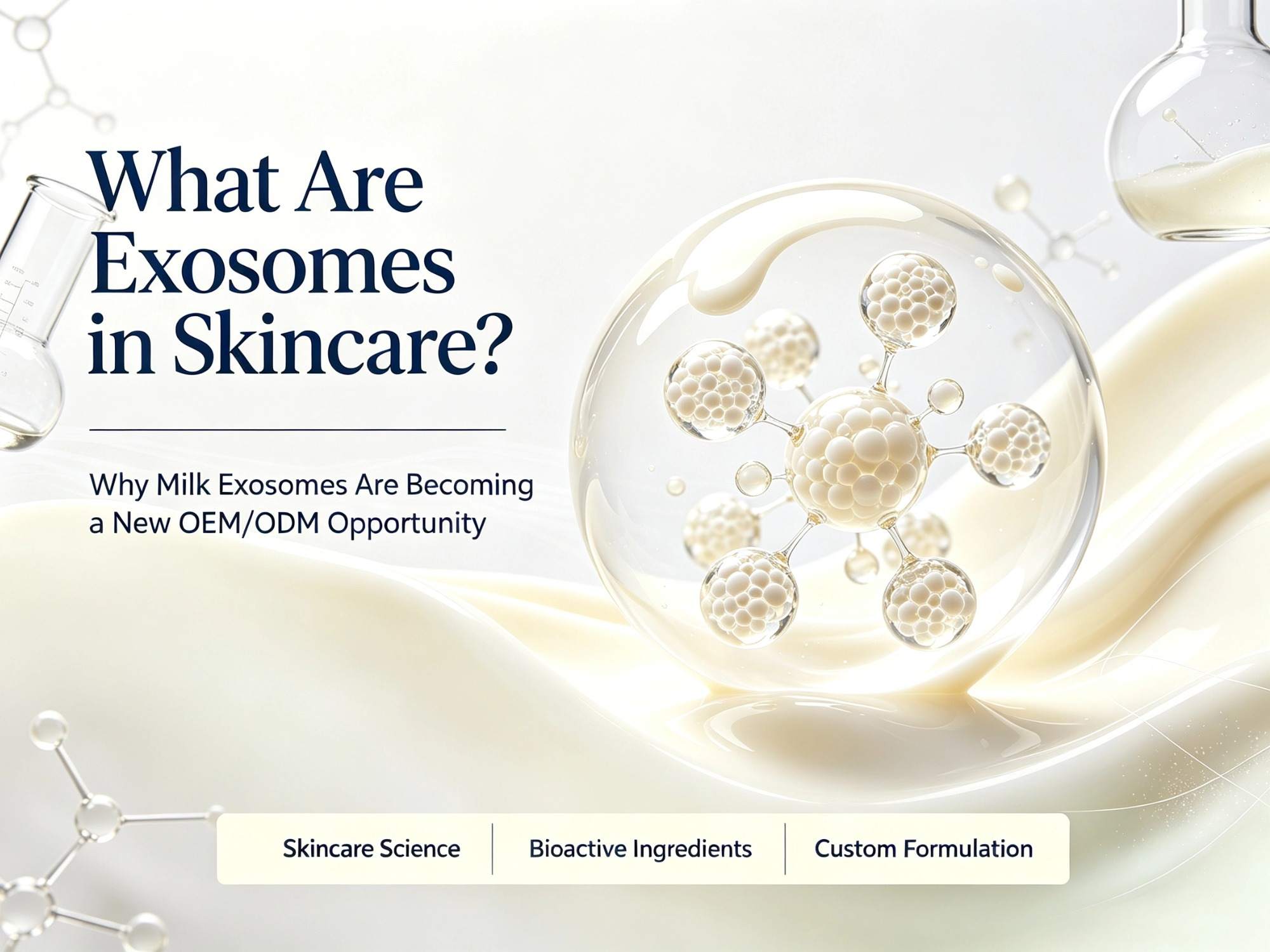
    What Are Exosomes in Skincare? Why Milk Exosomes Are Becoming a New OEM/ODM Opportunity
    Jul 09, 2026
      Many skincare brands have already heard about exosome skincare. But before developing an exosome serum, ampoule, cream, or repair set, many B2B customers still ask a practical question: what are exosomes, and why are they becoming relevant to cosmetic product development?   Exosomes are attractive because they connect skincare with a larger scientific background: how cells use vesicles to transport materials and communicate with their surrounding environment. In 2013, the Nobel Prize in Physiology or Medicine was awarded to James E. Rothman, Randy W. Schekman, and Thomas C. Sudhof for discoveries of machinery regulating vesicle traffic in cells. This does not mean that exosome skincare has received a Nobel Prize. However, it does show that vesicle transport is an important concept in modern life science.   Market attention is also rising beyond cosmetics alone. Grand View Research projects the global exosomes market to grow from USD 281.9 million in 2026 to USD 1,197.1 million by 2033, with a CAGR of about 23.0%. In the aesthetic field, Grand View Research projects the global aesthetic exosomes market to grow from USD 43.9 million in 2026 to USD 139.8 million by 2033, with a CAGR of about 18.0%. These figures are not skincare sales guarantees, but they show that exosome-related concepts are moving from research and biotechnology into broader beauty, aesthetic, and premium repair discussions.   For skincare brands, importers, e-commerce sellers, spas, salons, and product developers, the real opportunity is not only using a trending word. The opportunity is understanding what exosomes mean, why milk exosomes can be easier for consumers to remember, and how to turn the concept into a market-ready product.     1. What Are Exosomes, and Why Do They Fit Skincare Communication? Exosomes are commonly described as nano-sized extracellular vesicles released by cells. They are generally discussed as carrying bioactive components such as lipids, proteins, and nucleic acids. In scientific contexts, exosomes are often connected with cell-to-cell communication.   For cosmetics, the important point is not to turn exosomes into a medical treatment claim. Brands should avoid wording such as cell repair, tissue regeneration, inflammation treatment, or wound healing. These expressions may be too medical for skincare communication.   A safer and more useful way is to translate exosomes into cosmetic-friendly language: biotech-inspired skincare, nano-vesicle concept, advanced repair story, barrier support, recovery-looking care, healthier-looking skin, smoother and more radiant-looking complexion, and premium anti-aging care.   This is why exosome concepts are especially suitable for serums, ampoules, recovery creams, repair masks, and premium skincare sets. These product formats can better carry the value of a high-tech active story than low-perception categories.     2. Why Milk Exosomes Are Easier to Turn into a Consumer Ingredient Story Milk exosomes, also called milk-derived exosomes or milk extracellular vesicles, are extracellular vesicles naturally present in milk. Public research often describes milk-derived exosomes as containing lipids, proteins, and microRNAs.   For consumers, the word exosome can sound highly technical. Milk exosome is easier to understand because milk already carries familiar associations: nourishment, softness, comfort, gentle care, skin nutrition, and premium repair.   This source story matters for brands. A product does not sell only because an ingredient is advanced. It also needs to be easy to explain on an independent website, product detail page, short video, spa sales script, or private label packaging.   A milk exosome serum may be positioned around dry and rough-looking skin, weak barrier feeling, tired-looking complexion, post-care daily skincare, smoother-looking skin, plumper-looking skin, and premium repair care. For customers who want a different source story, Aisen also has plant-derived active vesicle recovery serum development experience and milk exosome product reserves.     3. Exosome Products Should Not Only Talk About High Technology Many brands want to describe exosome products with words such as high-tech, advanced, biotech, and nano-vesicle. These words can attract attention, but consumers still need to understand what the product is for.   The real question is: does the product fit dry skin, tired-looking skin, post-care routines, barrier support, anti-aging, brightening repair, or sensitive skin comfort? If the product only stays at the technical level, it may sound advanced but still feel hard to buy.   This is why exosome communication should move from technical terms to skin-feel language. The product story should help customers understand when to use it, what skin condition it supports, and why it is different from a basic repair serum.   4. What Brands Often Overlook When Developing Milk Exosome Products The challenge of exosome product development is not only finding an ingredient. Many customers focus on samples, price, and ingredient story at the beginning, but real launch preparation requires more decisions.   First, the source story should match the target market. Milk exosomes are suitable for premium repair, nourishment, spa care, anti-aging repair, and milk-derived technology stories. However, they may not be suitable for brands that focus strictly on vegan, plant-based, or botanical positioning.   Second, the product format should carry the ingredient value. Exosome concepts work better in serums, ampoules, recovery creams, masks, and repair sets than in low-value perception formats. Packaging should also support the premium story, such as ampoules, vials, droppers, airless pumps, or high-end sets. Third, product materials should be prepared before launch. Ingredient lists, specifications, COA, MSDS, label support, packaging files, carton information, and export documents can directly affect listing speed, importer communication, and channel trust.   Fourth, brands should think beyond the first sample. If the product sells well, stable replenishment, batch consistency, packaging adjustment, and long-term supply become very important.     5. From Concept to Product: How Aisen Supports Exosome Skincare Development For many B2B customers, the difficulty is not whether the exosome concept sounds attractive. The difficulty is turning that concept into a real skincare product that can be sampled, listed, exported, sold, and replenished.   Aisen Pro Skin already has a Next-Gen Exosome Technology Plant Peptide Recovery Serum solution featuring plant-derived active vesicles, plant peptides, ceramides, and hyaluronic acid. It is suitable for barrier support, sensitive skin care, daily recovery, and private label development. At the same time, Aisen also has milk exosome product reserves and can develop milk exosome serum, exosome ampoule, recovery cream, repair mask, post-care skincare set, and private label exosome skincare lines according to customer needs.   Aisen can support source strategy, formula development, texture adjustment, packaging selection, private label customization, product materials, export documents, and replenishment planning. The value is not only offering a trending concept, but helping customers turn that concept into a product development solution.   In factory capability, Aisen has 3,000+ mature skincare formulas, 12 automated production lines, a 100,000-grade clean workshop, GMPC and ISO 22716 standards, and annual capacity of up to 80 million units. These capabilities support global customers from sample development and trial orders to scaled production and stable replenishment.     Conclusion: Understanding Exosomes Helps Brands Develop Better Exosome Products Exosome skincare is attractive not only because it is a new word. It is attractive because it can support a high-tech repair, barrier care, anti-aging, and post-care product story. Milk exosomes add another advantage: a source story that consumers can connect with nourishment, softness, and premium repair.   For B2B customers, the key is not only choosing a trending ingredient. It is choosing the right source, product format, packaging, documentation support, export preparation, and factory capability.   If you are developing a milk exosome serum, exosome ampoule, recovery cream, repair mask, or private label exosome skincare line, share your target market, sales channel, source preference, packaging needs, and order quantity with Aisen. Aisen can recommend a suitable OEM/ODM/OBM exosome skincare solution for global markets.   Related products China Anti-Aging & Brightening Salmon PDRN Facial Serum Supplier | aisenproskin.com China Bakuchiol Peptide Firming Serum Gentle Sensitive Skin Supplier | aisenproskin.com China Natural Whitening Goat Milk Soap Bar Rose Carving Supplier | aisenproskin.com  
    Read More
  • Why Many Brightening Serums Look Similar, But Only Some Become Repeat-Order Products
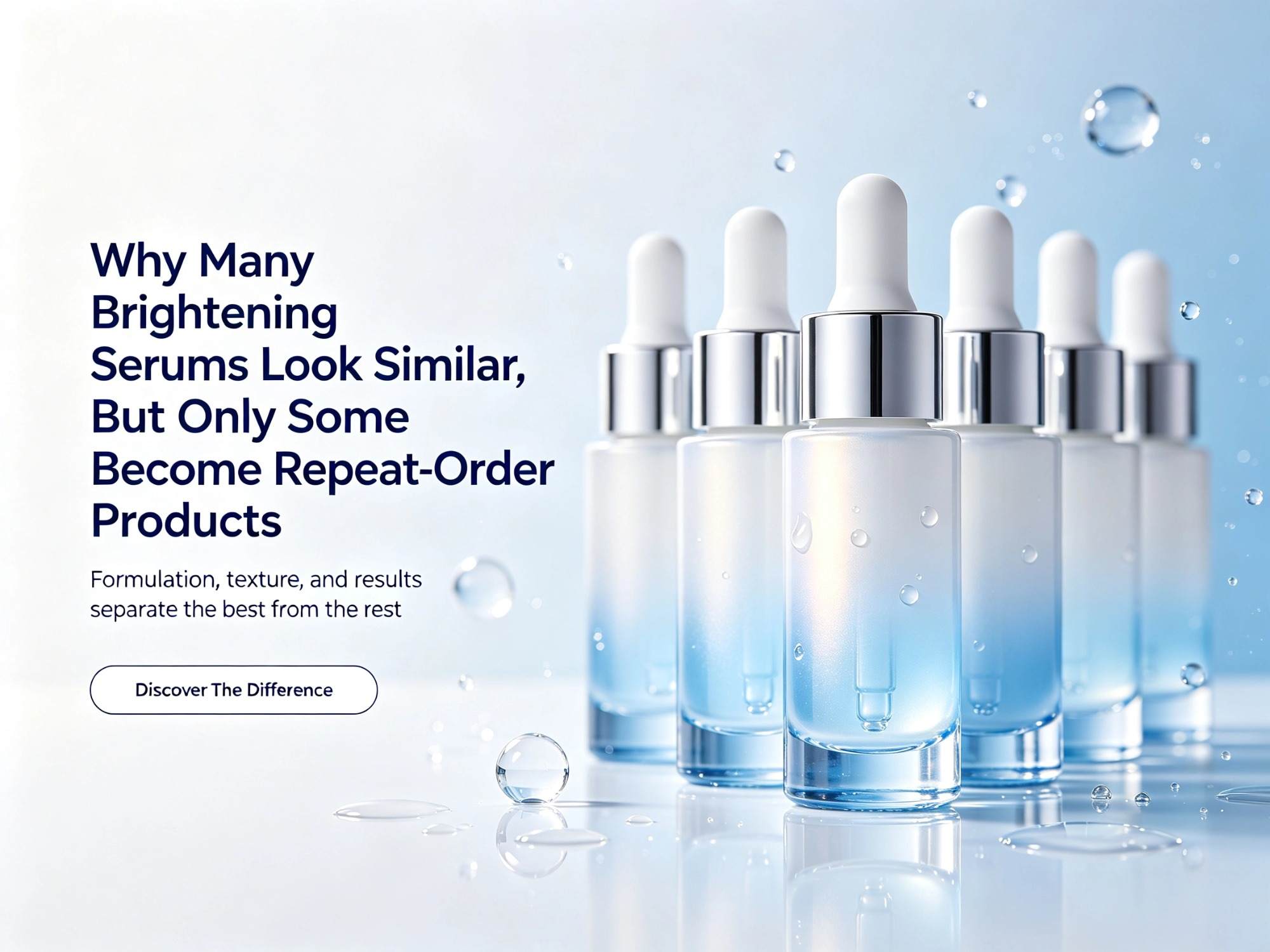
    Why Many Brightening Serums Look Similar, But Only Some Become Repeat-Order Products
    Jul 07, 2026
      The brightening serum market does not lack products. For many skincare brands, importers, cross-border e-commerce sellers, wholesalers, spas, salons, and private label customers, developing a brightening serum is no longer difficult. Niacinamide, vitamin C, dark spot care, post-acne marks, uneven skin tone, and pore care have become familiar words on product pages and sales materials.   The harder question is different: why do some brightening serums sell only during the first wave of traffic, while others keep generating replenishment orders? This question is especially important now that 15% niacinamide serums are becoming more common. Concentration can attract attention, but it does not automatically create repeat purchases. For B2B customers, a stronger question is whether the product has a clear position, a comfortable skin feel, enough real usage scenarios, complete product materials, stable supply, and channel logic that makes sense in different global markets.   This is also the development logic behind Aisen High-Potency 15% Niacinamide Spot-Lightening Serum MELA B3. It is not only a 15% niacinamide formula. It is a brightening serum solution designed for private label development, export-ready product preparation, and long-term replenishment potential.   1. A 15% Concentration Can Win the First Click, But It Cannot Carry the Whole Product 15% niacinamide is a memorable product message. Compared with ordinary daily-use niacinamide serums, it sounds more high-performance and easier to connect with dark spots, post-acne marks, dullness, uneven tone, visible pores, and oily-looking skin. For independent websites, marketplace listings, social content, and importer catalogs, this concentration gives the product an immediate hook.   But when more brands use similar messages, 15% itself becomes less rare. Consumers may see many products claiming high-potency niacinamide, brightening, spot care, acne mark care, and pore refining. If the packaging, texture, formula story, and usage experience feel too similar, the product can quickly fall into price comparison.   For brands, the important question is not only whether consumers click on the product the first time. It is whether they feel comfortable enough to keep using it, whether the product fits their daily skincare steps, whether it layers well with moisturizer, sunscreen, or makeup, and whether the product story is clear enough to support real reviews and repeat orders.     Aisen MELA B3 is not developed around concentration alone. It combines 15% high-purity niacinamide, low nicotinic acid positioning, spot-lightening direction, pore appearance care, and a more comfortable serum experience. This makes the product easier to position as a high-performance daily brightening serum instead of only a strong ingredient formula.   2. Repeat Purchase Starts with the Question: Will Consumers Dare to Use It Long Term? Many consumers want stronger brightening results, but they also worry about discomfort. They may want help with dullness, dark spots, post-acne marks, uneven tone, and visible pores, while also worrying about redness, dryness, stinging, pilling, or poor compatibility with the rest of their routine.   That is why B2B customers should not evaluate a 15% niacinamide serum only by concentration. More practical questions include: what grade of niacinamide is used, whether the product has a low nicotinic acid positioning, whether the texture is suitable for daily use, whether the product can be layered with common skincare steps, and whether the claims can be expressed in a cosmetic-friendly way for global markets.   Niacinamide is a mature brightening ingredient, but in a higher-concentration serum, ingredient quality and formula comfort become more important. In e-commerce, importer distribution, and spa retail channels, consumer feedback can directly affect reorder decisions. A product that only sounds strong may attract a trial, but a product that feels usable is more likely to support stable sales.   Aisen MELA B3 uses 15% high-purity niacinamide and highlights a low nicotinic acid positioning. For brands, this helps shift the product message from high concentration alone to high-performance brightening with daily-care potential. More suitable expressions include helps improve the appearance of dark spots, visibly improves uneven-looking skin tone, improves the look of post-acne marks, refines the look of pores, and supports a brighter, smoother-looking complexion.     3. Stronger Brightening Products Usually Cover Several Real Consumer Needs When consumers buy a brightening serum, the surface need may be brighter-looking skin. The real motivation is often more specific. Some people are dealing with dullness after late nights, stress, or sun exposure. Some care more about post-acne marks. Some feel their complexion looks uneven or tired. Others want a cleaner-looking face with less visible shine, roughness, and pore appearance.   This means that a commercially stronger niacinamide serum should not rely on the word brightening alone. It should translate brightening into several clear scenarios: dark spots, post-acne marks, uneven tone, visible pores, oily-looking skin, dullness, and smoother-looking texture. These keywords are easier for consumers to understand and easier for B2B customers to use on product pages, distributor introductions, sales training, and channel materials.     The advantage of Aisen MELA B3 is that it does not need to sit in only one narrow category. It can be positioned as a high-potency brightening serum, a post-acne mark serum, an uneven tone care serum, a pore-refining serum, or a hero serum in a brightening skincare line. For e-commerce sellers, this creates more keyword entry points. For importers and wholesalers, it helps the same product fit more retail scenarios. For spa and salon customers, it can work as a home-care retail product after professional treatments.   4. A Repeat-Order Product Needs More Than a Formula; It Needs Complete Launch Materials When customers first contact an OEM/ODM factory, they often focus on samples, price, and MOQ. These are important, but once the product moves toward real sales, many other materials become just as important. A customer may need ingredient information, product specifications, COA, MSDS, packaging information, carton details, label content, product selling points, export-related documents, and product descriptions for different channels. If these materials are incomplete, the project can slow down even when the formula itself is good. E-commerce sellers may delay launch pages. Importers may spend more time communicating with buyers. Distributors may struggle to explain the product clearly. Brand owners may find it harder to build professional trust.   Aisen Pro Skin supports more than formula and filling. For global customers, Aisen can provide product information, label support, specifications, COA, MSDS, packaging files, and export-related document support. This helps customers move from sample approval to product listing, importer communication, and channel sales more efficiently.   This is one difference between a sample product and a long-term sellable product. A repeat-order product needs both a good formula and a product preparation system that supports real commercial launch.   5. Different B2B Customers Judge Repeat-Order Value in Different Ways The same 15% niacinamide serum may be evaluated differently by different customers. Cross-border e-commerce sellers usually care about keyword potential, main image logic, product page clarity, review accumulation, and whether the product can be sold in bundles. Aisen MELA B3 can be developed around dark spot serum, post-acne mark serum, brightening serum, and pore-refining serum keywords, and it can also be paired with Vitamin C12 Serum or repair products to increase basket value.   Importers and wholesalers often care more about stable supply, batch consistency, product documents, label adaptation, carton information, and delivery coordination. Aisen is backed by 12 automated production lines, a 100,000-grade clean workshop, GMPC and ISO 22716 standards, and annual capacity of up to 80 million units, supporting customers from small trial orders to stable replenishment.   Brand owners may focus on differentiation, packaging customization, product story, and long-term product expansion. MELA B3's purple dropper packaging offers strong visual recognition, while Aisen supports logo, label, capacity, outer box, and private label customization. Spa and salon customers care about skin feel, professional image, and after-care retail value. For them, a 15% niacinamide serum can be paired with hydrating masks, repair creams, PDRN serum, or blue copper peptide products to build a more complete home-care recommendation.   Foreign cosmetic manufacturers and product development companies may want to quickly add a high-demand brightening SKU without starting from zero. With MOQ from 500 pieces and a typical lead time of 15-30 days, Aisen MELA B3 is suitable for market testing, category completion, and quick project response.   6. Why Aisen MELA B3 Is Suitable for Repeat-Order Brightening Projects A brightening serum with repeat-order potential needs several things at the same time: a clear market hook, a comfortable user experience, several sales scenarios, stable supply, complete product materials, and flexible customization support.   Aisen High-Potency 15% Niacinamide Spot-Lightening Serum MELA B3 is developed around these needs. First, 15% high-purity niacinamide gives the product a clear high-performance memory point. For consumers already familiar with niacinamide, 15% can communicate stronger brightening potential and better relevance to dullness, dark spots, and post-acne mark care.   Second, the low nicotinic acid positioning helps brands build a more professional, comfort-oriented brightening story. The product does not need to rely on a harsh or aggressive image. It can be explained through daily brightening, uneven tone care, pore appearance improvement, and smoother-looking skin.   Third, the product covers enough consumer needs to support multiple sales angles. Dullness, dark spots, post-acne marks, uneven tone, pores, oily-looking skin, and rough texture are long-term concerns in global skincare markets. This makes MELA B3 suitable as a single hero SKU or as the core serum in a broader brightening series.     Fourth, it offers private label flexibility. Aisen supports OEM/ODM/OBM development, including packaging, labels, logos, capacity, outer boxes, and set customization. Startup brands can begin with low-MOQ testing. Mature customers can extend the project into brightening serum, Vitamin C serum, PDRN repair-looking serum, blue copper peptide set, masks, and repair creams.   Finally, Aisen's factory capability supports long-term replenishment. With 12 automated production lines, a 100,000-grade clean workshop, GMPC and ISO 22716 standards, 3,000+ mature skincare formulas, and annual capacity of up to 80 million units, Aisen can support customers from sampling and trial orders to production, quality control, export documents, and repeated supply.   Conclusion: A Strong Brightening Serum Should Be Built for Reorder, Not Only for the First Sale 15% niacinamide can help a brightening serum win attention, but repeat purchases come from a more complete product experience. Aisen MELA B3 Serum can be a mature starting point for high-potency brightening projects. Whether you want to develop a dark spot serum, post-acne mark product, pore-refining serum, brightening set, or a complete private label skincare line, Aisen can recommend an OEM/ODM/OBM solution based on your target market, sales channel, packaging needs, order quantity, and brand positioning.   This article is for B2B industry reference only. Market data is sourced from publicly available reports. Aisen MELA B3 is a cosmetic product, not a pharmaceutical, and is not intended to treat or cure any medical condition. Product efficacy may vary. Brand owners are responsible for ensuring compliance with local regulations in their target markets.   Related products China Korean Blue Copper Peptide Brightening Toner Serum Set Supplier | aisenproskin.com China Microencapsulated Retinol Renewal Serum Supplier | aisenproskin.com China Bakuchiol Peptide Firming Serum Gentle Sensitive Skin Supplier | aisenproskin.com  
    Read More
  • A New Blue Ocean for Clean Beauty: How Aisen Helps Brands Capture the Teen Skincare Market
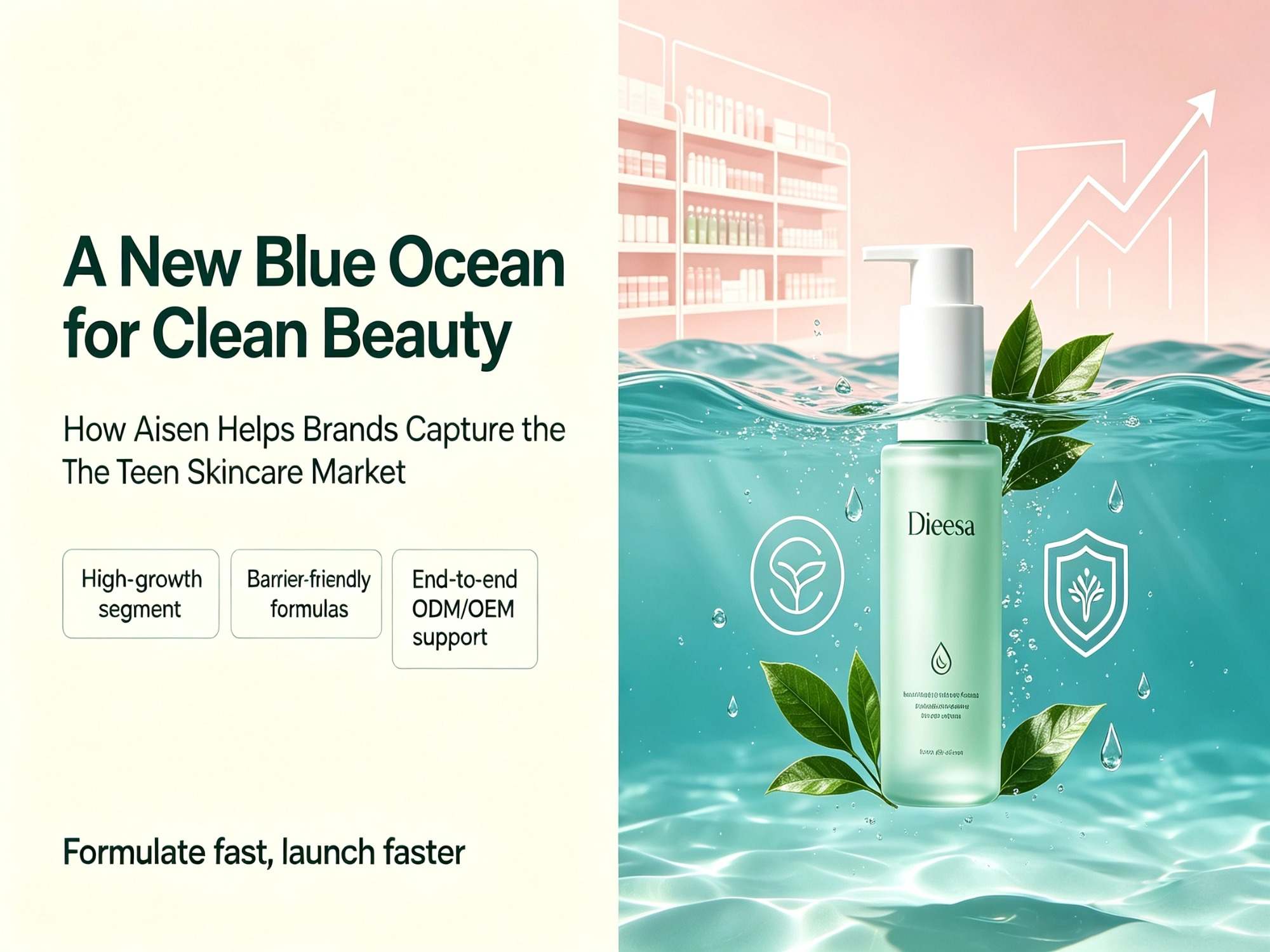
    A New Blue Ocean for Clean Beauty: How Aisen Helps Brands Capture the Teen Skincare Market
    Jul 06, 2026
      1. Market Opportunities: Natural Skincare for Young People Emerges as a Key Growth Driver in the European and American Beauty Markets Whilst competition in the adult clean beauty sector is becoming increasingly saturated, the teenage skincare segment is emerging at a rate far exceeding the industry average. According to Mordor Intelligence’s 2026 industry report, the global clean beauty market was valued at US$9.5 billion in 2025 and is projected to grow to US$24.8 billion by 2032, representing a compound annual growth rate (CAGR) of 14.7 per cent; within which the children’s and teenage skincare segment is projected to grow at a CAGR of 13.12 per cent. Data from Technavio indicates that the global teenage personal care market was valued at US$36.7 billion in 2024 and is forecast to reach US$47.5 billion by 2030; during the same period, the natural and organic personal care market is projected to reach US$23.54 billion in 2025 and is expected to exceed US$23.96 billion by 2032.   Social media has been the key catalyst for this wave of growth. The ‘Sephora Kids’ craze, fuelled by TikTok and Instagram, continues to gain momentum—with this trend still maintaining a year-on-year growth rate of 11.4 per cent in search queries in 2025. Research by Ulta Beauty shows that the average age at which Generation Alpha first tries beauty products is just 8 years old, far lower than the 15 years typical for Millennials. However, as large numbers of teenagers follow trends and use potent adult products such as retinol and high-concentration salicylic acid, concerns are being raised by dermatologists and parents alike—these ingredients may do more harm than good to young, developing skin. There is a severe imbalance between supply and demand in the market: on the one hand, there are children’s products with overly mild formulations; on the other, adult skincare containing potent active ingredients. Products catering to the ‘middle ground’—suitable for the oily, barrier-compromised skin typical of adolescence—are extremely scarce.     2. Three key growth drivers underpinning the sector’s long-term growth (1). Parents drive safe consumption, with pure formulations becoming a mandatory requirement. In Europe and the US, parents lead the decision-making process for family skincare purchases, with fragrance-free, alcohol-free, and preservative-free products—free from irritating preservatives and made with natural plant extracts—now serving as basic selection criteria. According to Piper Sandler’s Spring 2025 report, *Taking Stock With Teens*, annual beauty spending by teenagers reached US$374, representing a year-on-year increase of 10 per cent. Gen Z and Generation Alpha have adopted a ‘ingredients first, brand second’ approach to consumption—they prioritise checking the ingredients list when making purchases, with product transparency and mildness directly determining repurchase rates.   (2). There is a gap in the market, with a scarcity of products in the mid-range segment; current offerings are polarised: on the one hand, there are minimalist skincare products with limited efficacy, suitable only for very young children; on the other, there are adult skincare products targeting mature skin and containing potent active ingredients. The shortage of products with formulations specifically tailored to teenagers’ skin—which is characterised by excessive oil production, a fragile skin barrier, and a tendency towards redness and breakouts—presents an excellent window of opportunity for brands to enter the market.   (3). As the concept of clean beauty gains traction and demand for natural and organic products continues to expand, the global market for natural and organic personal care products is growing steadily, with clean skincare standards rapidly gaining ground amongst teenagers. Offline multi-brand stores in Europe and the US, cross-border e-commerce platforms and TikTok Shop have all introduced dedicated sections for teenage clean skincare, with channels proactively allocating resources to this segment; the conditions for commercialisation in this sector are now ripe.     3. International giants are leading the way, and the sector has officially entered a phase of mainstream competition   Sephora to exclusively launch the teen-focused, clean skincare brand ‘Sincerely Yours’ in September 2025, sending a key signal to the market (Official PR Newswire Release) PR Newswire: Developed by a father-daughter blogging duo in collaboration with dermatologists, the range comprises four core products (gentle cleanser, soothing mist, repair cream and mineral sunscreen), each priced under US$30 and all certified by Sephora Clean. are vegan, cruelty-free and free from comedogenic ingredients, whilst avoiding irritating anti-ageing acids. Instead, they combine sustained-release hyaluronic acid, ceramides and low-concentration niacinamide to repair the skin barrier. The range sold out within a single day at physical stores, and pop-up events attracted 87,000 teenagers. At the same time, Yes Day, a professional skincare brand targeting the 10–15-year-old Alpha Generation, was launched. Developed in collaboration between 13-year-olds and renowned cosmetic chemists, the products have undergone clinical dermatological testing and exclude highly irritating active ingredients, precisely tailored to the tolerance levels of adolescent skin. This move by Sephora sends a clear signal: clean skincare for teenagers has evolved from a niche demand into a mainstream category.     4. Aisen Formulation ODM/OEM Solutions: One-stop compliance with European and US standards As adolescents have active sebaceous glands and an immature skin barrier, the core philosophy behind the formulations is low irritation, gentle efficacy and powerful repair. Aisen can provide and customise four major product lines, all of which meet the compliance requirements for Clean Beauty certification in Europe and the US, as well as being vegan and cruelty-free: (1). The Pure Amino Acid Cleansing Range utilises APG and amino acid-based gentle surfactants. Free from soap bases, fragrances and alcohol, it is formulated with Centella asiatica and oat beta-glucan to soothe and reduce redness. It cleanses without disrupting the skin’s natural lipid barrier, making it suitable for oily, sensitive skin during adolescence.  (2). Lightweight Barrier Repair and Moisturising Range: Featuring refreshing textures such as gel and light lotion, enriched with panthenol, ceramides and low-molecular-weight hyaluronic acid. Designed to provide essential hydration and stabilise the skin without a heavy, suffocating feel, making it suitable for teenagers’ daily skincare routines. (3). Pure Physical Mineral Sunscreen Range: Featuring a physical sunscreen system comprising only zinc oxide and titanium dioxide, free from chemical sunscreen agents and fragrance-free to avoid irritation. Modeled on Sincerely Yours’ core best-sellers, this range is suitable for daily use at school and during commutes.  (4). Soothing and Repairing Cleansing Pads: Formulated with botanical soothing extracts and free from high-concentration acids, these pads provide both secondary cleansing and soothing in a single swipe, aligning with the popular format of quick skincare videos among teenagers.     5. Conclusion Clean skincare for teenagers in Europe and the US is not a short-lived trend, but rather a segment of the clean beauty market with assured growth potential. Leading retailers such as Sephora have already established their product ranges in this category, leaving only a limited window of opportunity in the market. Leveraging its mature formulation technology and experience in meeting overseas regulatory requirements, Aisen provides end-to-end ODM/OEM implementation services for cross-border brands, helping them rapidly capture the untapped market for teenage skincare with barrier-friendly, clean formulations.     Disclaimer: For B2B reference only. Aisen is an independent OEM/ODM manufacturer and not affiliated with any mentioned brands. Brand owners are responsible for ensuring local regulatory compliance.   Related Products China Natural Whitening Goat Milk Soap Bar Rose Carving Supplier | aisenproskin.com China Microencapsulated Retinol Renewal Serum Supplier | aisenproskin.com    
    Read More
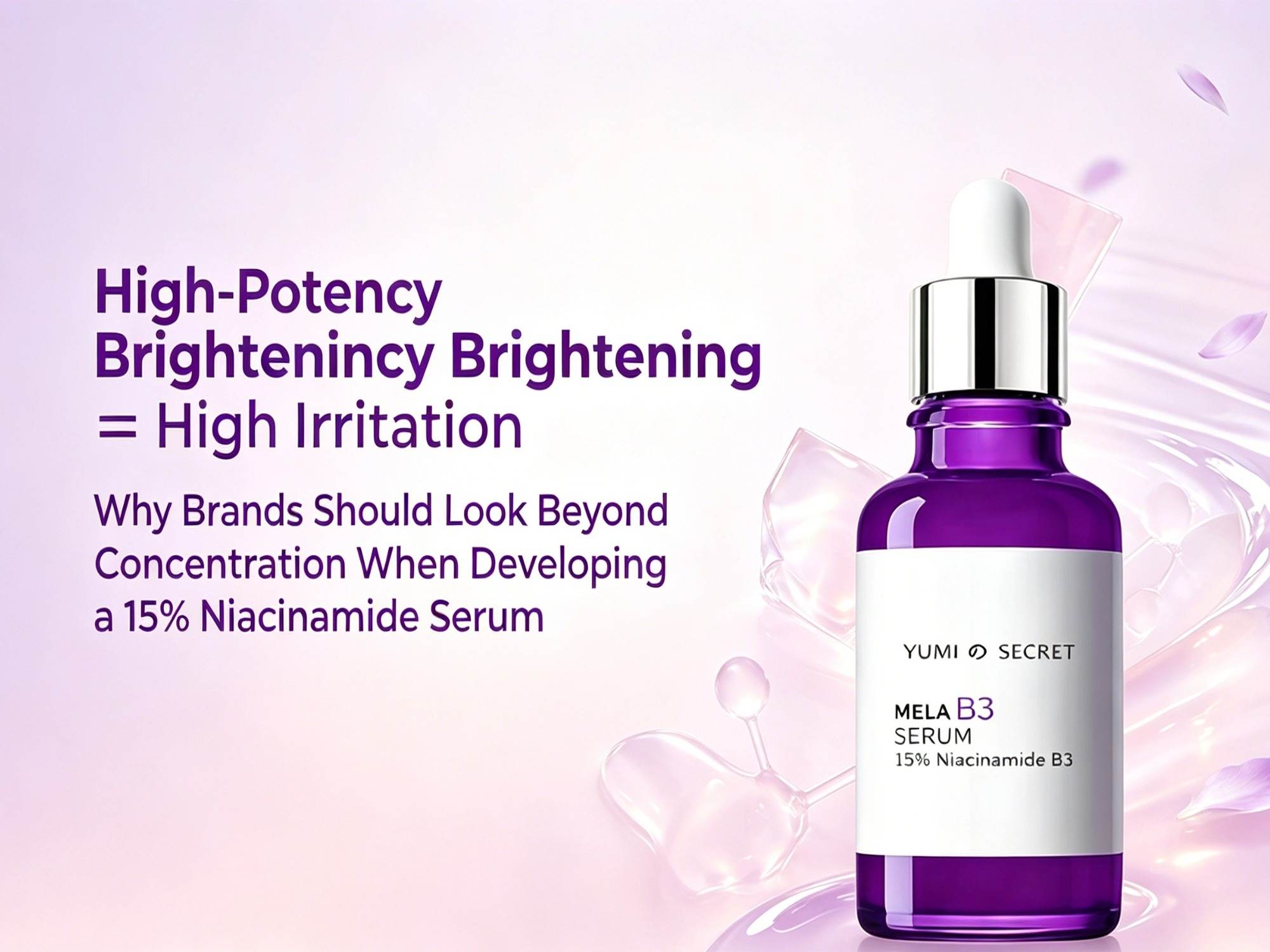
  • High-Potency Brightening ≠ High Irritation: Why Brands Should Look Beyond Concentration When Developing a 15% Niacinamide Serum
    High-Potency Brightening ≠ High Irritation: Why Brands Should Look Beyond Concentration When Developing a 15% Niacinamide Serum
    Jul 02, 2026
    For global skincare brands, brightening products are still one of the most reliable categories for traffic, trial, and repeat purchase. Consumers may describe their needs in different ways: dark spots, post-acne marks, dullness, uneven tone, oily-looking skin, visible pores, or rough texture. Behind these different words is the same commercial question for brands: how can a brightening serum look effective enough to attract attention, but still feel comfortable enough for daily use?   This is why high-potency niacinamide serums continue to attract B2B interest. Public market references show that niacinamide is not only a mature ingredient, but also a growing product opportunity. Grand View Research reported the niacinamide beauty products market at USD 558.9 million in 2023 and USD 590.2 million in 2024, with a projected value of USD 846.5 million by 2030. As a dedicated skincare manufacturer, Aisen Pro Skin develops high-potency formulas that help brands capitalize on this growth with products designed for real market performance.   Niacinamide Beauty Products Market   However, growth does not mean every niacinamide serum will sell. The global market already has many 5%, 10%, 15%, and even higher-dose niacinamide products. For private label brands, importers, e-commerce sellers, spa channels, salons, and cosmetic manufacturers, the key is no longer simply adding niacinamide to a formula. The real challenge is building a product that can communicate stronger efficacy, better comfort, clearer positioning, and reliable OEM/ODM supply.   1. High Concentration Creates Attention, But It Also Creates Questions Concentration is one of the easiest product messages for consumers to understand. A 15% niacinamide serum immediately sounds stronger than an ordinary daily-use brightening serum. For online stores, marketplaces, social content, and importer catalogues, this gives the product a clear entry point. It can help customers quickly understand that the serum is designed for visible brightening, dark spot care, post-acne mark improvement, pore appearance, and smoother-looking skin.   But concentration also raises expectations. When a product says 15%, customers may ask whether it will feel sticky, whether it will cause flushing, whether it can be layered with other products, and whether it is suitable for repeated use. For B2B buyers, these questions matter because the first order is only the beginning. A serum that attracts trial but creates poor user experience may not generate stable reorders.   This is the point many brands overlook. High-potency brightening should not be presented as a simple race toward a higher number. A stronger commercial product needs a balance of concentration, purity, texture, comfort, product story, packaging, and supply support. Aisen Pro Skin develops High-Potency 15% Niacinamide Spot-Lightening Serum MELA B3 around this balance, helping global customers position the product as high-performance, but not harsh or difficult to use.     2. Low Nicotinic Acid Positioning Is a Professional Detail Brands Should Notice When developing a high-potency niacinamide serum, the quality of niacinamide matters. One professional point is the control of nicotinic acid-related impurities. In skincare discussions, nicotinic acid is often associated with flushing or temporary redness concerns. This does not mean every niacinamide product will cause discomfort, but it does explain why ingredient purity and formula design become more important when the concentration rises.   For a 15% niacinamide serum, brands should not only ask whether the formula contains niacinamide. They should also ask what kind of niacinamide is used, how the formula supports comfort, what skin feel the product has, and whether the product can be explained professionally in sales materials. These details help a brand move from a basic ingredient claim to a more credible high-performance brightening concept — exactly what many wholesale skincare suppliers look for when selecting trend-driven products for their catalogs.   Aisen MELA B3 uses 15% high-purity niacinamide with low nicotinic acid positioning. This gives B2B customers a more professional story for product pages, distributor materials, spa introductions, and private label sales kits. Instead of only saying high concentration, the product can be positioned around visible brightening, spot-lightening care, smoother-looking skin, refined-looking pores, and a more comfortable high-potency serum experience.     3. The Value of 15% Niacinamide Is Broader Than Brightening Alone Brightening is usually the first reason brands choose niacinamide, but it should not be the only product angle. A good 15% niacinamide serum can connect several consumer concerns into one product story. Many customers who search for dark spot serum may also care about post-acne marks. People who worry about dullness may also notice rough texture. Oily-skin consumers often look for products that can improve the look of pores without making the face feel heavy.   This is where niacinamide has strong commercial value. It can support a brightening line, an oily-skin care line, a post-acne mark care product, a pore-refining serum, or a smoother-texture routine. For e-commerce sellers, this means more search entry points. For importers and wholesalers, it means the product can be introduced to more retail channels. For spa and salon customers, it can work as a retail serum after professional care. For private label brands, it can become the hero SKU in a complete brightening series.   Aisen can help customers build this series logic instead of only selling one serum. MELA B3 may be paired with Vitamin C12 Serum 12% Pure Vitamin C Salicylic Acid for radiance and texture renewal, Aisen Salmon PDRN Facial Serum for repair-looking glow care, Korean Blue Copper Peptide Brightening Toner Serum Set for premium brightening routines, or centella ampoules, collagen masks, and repair creams for more complete skincare sets. This allows brands to build a stronger category plan while still keeping the 15% niacinamide serum as the main traffic product.     4. Skin Feel Decides Whether a Brightening Serum Can Move from Trial to Reorder A serum may win attention with its concentration, but it wins repeat purchase through skin feel. In many global markets, consumers prefer brightening serums that absorb quickly, layer well with sunscreen or makeup, and do not leave a heavy film. In humid markets, a lightweight fresh texture may be more attractive. In spa and salon channels, the product may need a more refined sensory feel. In e-commerce channels, before-and-after storytelling is important, but reviews will often mention texture, stickiness, fragrance, and comfort.   This is why B2B customers should evaluate more than the active ingredient list. Texture, pH range, fragrance direction, serum viscosity, absorption feel, packaging compatibility, and routine pairing all affect whether a formula can become a sellable product. A 15% niacinamide serum should feel advanced, but it should also be easy to understand and easy to use. For private label skin care products , these sensory details often decide whether a brand gets repeat orders or one-time sales.   Aisen supports texture adjustment, packaging selection, logo customization, label support, and product set development according to the customer's target market and sales channel. With 12 automated production lines, a 100,000-grade clean workshop, GMPC and ISO 22716 standards, 3,000+ mature skincare formulas, and annual capacity of up to 80 million units, Aisen can support both low-MOQ trial orders and scalable production. For customers testing a brightening serum category, this flexibility reduces development pressure. For mature brands, it supports long-term replenishment and category expansion.     5. Market Wording Should Be Clear, Flexible, and Product-Side Ready Brightening products face different claim expectations in different markets and sales channels. Some customers sell through cross-border e-commerce. Some work with importers and distributors. Some serve spa, salon, or professional retail channels. This does not mean every market needs the same wording, and it also does not mean a factory should promise one universal claim style for all countries.   For global B2B development, the safer approach is to prepare product-side materials clearly and leave final wording to be confirmed according to the target market, product category, sales channel, platform policy, and local requirements. Suitable cosmetic expressions may include helps improve the appearance of dark spots, visibly improves uneven-looking skin tone, helps reduce the look of post-acne marks, refines the appearance of pores, and supports a brighter, smoother-looking complexion.   Aisen can support customers with ingredient information, product specifications, COA, MSDS, carton information, packaging files, label materials, and export-related documents. These materials help customers communicate with importers, distributors, platform teams, or local consultants more efficiently, while keeping the factory's role focused on product development, production, quality control, documentation, and delivery.     6. Why Aisen MELA B3 Fits Global Private Label Brightening Projects Aisen High-Potency 15% Niacinamide Spot-Lightening Serum MELA B3 is designed for customers who want a stronger brightening serum without building a formula from zero. Its core value is a clear product position: 15% high-purity niacinamide, low nicotinic acid positioning, spot-lightening direction, post-acne mark care, pore-refining appearance, smoother-looking texture, and a fresh serum experience.   The product is also practical for B2B testing. With MOQ from 500 pieces and a typical lead time of 15-30 days, it can support startup brands, e-commerce sellers, importers, wholesalers, spa channels, salons, and product development companies that want to test a high-potency brightening SKU before scaling. As the product grows, Aisen can support packaging adjustment, logo customization, label support, bulk replenishment, export materials, and related skincare set development.   For customers who want a broader brightening or repair line, Aisen can recommend combinations around MELA B3. A brand may use MELA B3 as the main spot-lightening serum, Vitamin C12 Serum for radiance and exfoliation-inspired renewal, PDRN Facial Serum for repair-looking glow, Korean Blue Copper Peptide Brightening Toner Serum Set for premium daily care, and repair creams or masks for routine completion. This makes the niacinamide serum more than a single product. It becomes the anchor of a sellable skincare system. For skin care suppliers serving multiple channels, this portfolio approach makes it easier to present a complete brightening solution to downstream buyers.     Conclusion: A Strong Niacinamide Serum Needs More Than a Strong Number The future opportunity of 15% niacinamide is not only the concentration itself. The real commercial value comes from a complete product logic: visible brightening, comfort-oriented formula design, low nicotinic acid positioning, clear product wording, flexible packaging, stable supply, and export-ready support.   For global skincare brands, importers, e-commerce sellers, spas, salons, and private label customers, Aisen MELA B3 offers a mature starting point for developing a high-potency brightening serum. Share your target market, sales channel, packaging needs, expected order quantity, and brand positioning with Aisen. Our team can recommend a suitable 15% niacinamide serum solution or a complete brightening skincare set to help your brand turn market demand into a real product.   Sources Grand View Research. Niacinamide Beauty Products Market Size, Share & Trends Analysis Report. Related Products China Korean Blue Copper Peptide Brightening Toner Serum Set Supplier | aisenproskin.com China Vitamin C12 Serum 12% Pure Vitamin C Salicylic Acid Supplier | aisenproskin.com
    Read More
  • Sephora’s 2026 Skincare Trends Analysis: How Aisen Helps Brands Seize the Initiative in the Global Luxury Skincare Market
    Sephora’s 2026 Skincare Trends Analysis: How Aisen Helps Brands Seize the Initiative in the Global Luxury Skincare Market
    Jul 01, 2026
    In 2026, Sephora will redefine luxury skincare through three key pillars: barrier-first skincare, clinical-grade therapeutic products and sensory experiences. At the same time, Sephora announced a strategic partnership with Olive Young, set to launch dedicated K-beauty sections in six markets—including the US, Canada and Singapore—in the autumn of 2026. Medical-grade ingredients such as PDRN, growth factors and NAD+ are making the transition from specialist clinics to everyday skincare counters. The following analysis explores Aisen’s product development direction based on four key trends.   Trend 1: PDRN – From aesthetic clinics to Sephora’s shelves PDRN (poly-deoxyribonucleotide) is the fastest-growing ingredient in the skincare sector in 2026—with Google search volume surging by 510 per cent, year-on-year growth in the US market reaching 322.3 per cent, and the global market for PDRN repair ampoules projected to reach US$540 million by 2026 (CAGR 12.7 per cent).   This trend has now taken Sephora by storm: Anua’s PDRN serum, Rejuran’s Turnover Ampoule (containing 0.5% c-PDRN, $52) and Dual Effect Ampoule (c-PDRN + Ceramide NP, $55) are now available in approximately 380 Sephora stores; Medicube’s PDRN Pink Peptide Ampoule has been introduced to Sephora stores across Europe; innisfree and IOPE have also successively launched their own PDRN product ranges. PDRN first gained popularity in the medical aesthetics sector as the ‘salmon injection’; its core value lies in triggering the skin’s own repair pathways, supporting cell renewal and strengthening the skin barrier.   Product categories offered by Aisen: 1. PDRN Barrier Repair Ampoule: PDRN + 5-fold ceramides + Centella asiatica; liposome encapsulation technology enhances transdermal absorption 2. PDRN Soothing & Repairing Pads: Contains vegan PDRN, combining toner, serum and gentle exfoliation in one product 3. PDRN + NAD+ Cellular Energy Serum: A blend of PDRN and NAD+ for dual synergistic effects of repair and energy metabolism     Trend 2: Growth Factors – The Next Generation of Anti-Ageing Growth factors are at the forefront of anti-ageing in 2026. Sephora has launched the Biossance Squalane + Growth Factor Firming Moisturiser (priced at AUD 98), which utilises growth factor technology that mimics the signalling mechanisms of youthful skin to help improve skin laxity, elasticity and fine lines. The product is vegan, cruelty-free and has been awarded Sephora’s Clean Beauty certification. These ingredients act directly at the cellular level to promote collagen production and are regarded as the next generation of anti-ageing solutions.   Product categories offered by Aisen: 1. Growth Factor Firming Face Cream: Centred around a growth factor complex and formulated with squalane and peptides, this product is positioned as a premium anti-ageing face cream. Aisenko utilises a nano-emulsion delivery system to enhance the stability and transdermal absorption of the growth factors.   2. Growth Factor Repair Serum: Development of a repair serum containing a blend of growth factors and peptides, targeting consumers seeking cutting-edge technology.     Trend 3: Barrier Repair – ‘Barrier First’ from Face to Body Barrier repair is one of Sephora’s key skincare themes for 2026. The A-CICA365 range from South Korean brand Aestura has joined the Sephora line-up, focusing on soothing irritation and supporting the damaged skin barrier. British brand BYOMA has launched at Sephora Canada with its ‘barrier-first’ philosophy. Barrier repair is rapidly expanding from facial care to body care.   Product categories offered by Aisen: 1. Centella Asiatica Barrier Repair Cream: Formulated with Centella Asiatica extract at its core, this cream is enriched with a blend of five types of ceramides, cholesterol and fatty acids, mimicking the skin’s natural lipid ratio to deliver a dual-action approach of ‘anti-inflammation and physical barrier repair’.   2. Ceramide Bio-Mimetic Repair Range: A comprehensive range of barrier-repair products, including face creams, serums and body lotions, utilising a ceramide complex with a lipid ratio identical to that of the human stratum corneum to precisely repair barrier damage.     Trend 4: Skin Longevity – From ‘Anti-Ageing’ to ‘Cell-Level Anti-Ageing’ The industry is shifting from traditional ‘anti-ageing’ towards skin longevity. Paula’s Choice CellularYouth Longevity Serum is now available at Sephora (exclusively at Sephora from 22 January 2026); this product utilises NAD+ support technology to maintain the skin’s natural energy cycle, improving skin laxity and complexion. NAD+ is a key molecule in cellular energy production and repair, and supporting NAD+ levels has become an interdisciplinary field at the intersection of longevity science and skincare innovation. By slowing down skin ageing at the cellular energy metabolism level, ingredients of this kind represent the next frontier in anti-ageing.   Product categories offered by Aisen: 1. NAD+ Skin Longevity Serum: Centred on NAD+, this formula combines nicotinamide riboside (NR, a precursor to NAD+) and PDRN to delay skin ageing at the level of cellular energy metabolism.   2. Cellular Energy Repair Cream: Combining NAD+ with growth factors and peptides, this product is positioned as a ‘cellular-level anti-ageing’ solution, targeting high-end consumers seeking cutting-edge technology.     How does Aisen help brands capitalise on Sephora trends? Four major trends—PDRN, growth factors, barrier repair and skin longevity—all point in the same direction: consumers are no longer seeking merely superficial enhancements, but measurable, biologically driven skincare results.   Relying on its patented nano-encapsulation technology and a library of over 3,000 proven formulations, Aisen offers brands four key product categories: PDRN Range: Ampoule Serums, Repairing Pads, Repairing Creams; available in both vegan and animal-derived PDRN variants Growth Factor Range: Firming Creams, Repairing Serums; stability ensured by a nano-emulsion delivery system Barrier Repair Range: Centella Asiatica Cream, Ceramide-inspired products, Repairing Pads   NAD+ Range: Cellular Energy Serum, Longevity Cream, targeting the high-end anti-ageing market In 2026, competition in the premium skincare sector has shifted from a ‘race for ingredient concentration’ to a contest over ‘who can be the first to deliver medical-grade ingredients to consumers in stable, highly effective formulations’. Sephora’s shelves are sending a clear signal—PDRN, growth factors and NAD+ are the next battleground. Aisen is committed to helping brands seize the initiative with its proven delivery technologies and formulation expertise. Disclaimer: This article is for B2B industry reference only. All brand names mentioned are trademarks of their respective owners and are cited solely for trend analysis. Aisen is not affiliated with or endorsed by any of these brands. Product categories listed are development directions and do not represent currently available stock formulations. Brand owners are responsible for ensuring compliance with local regulations in their target markets.   Related products: China Anti-Aging & Brightening Salmon PDRN Facial Serum Supplier | aisenproskin.com China Korean Blue Copper Peptide Brightening Toner Serum Set Supplier | aisenproskin.com China Brightening Body Lotion 72h Hydration Non Greasy Supplier | aisenproskin.com Related articles:Stabilizing Skincare Actives: Liposomes, NLCs & Cyclodextrins-www.aisenproskin.com  
    Read More
  • Why 15% Niacinamide Is Becoming a Stronger Brightening Serum Opportunity for Brands
    Why 15% Niacinamide Is Becoming a Stronger Brightening Serum Opportunity for Brands
    Jun 26, 2026
    Ms Shi: A B2B guide for global skincare brands, importers, e-commerce sellers, spas, salons, private label customers, and product developers on why 15% high-purity niacinamide serum can support spot-lightening, acne mark care, uneven tone, pore refining, and OEM/ODM brightening product development. When brands develop brightening products, niacinamide is almost always one of the first ingredients to consider. The ingredient is mature, widely recognized by global consumers, and relevant to several skincare needs: dullness, uneven tone, oily-looking skin, visible pores, and barrier comfort. From mass-market skincare to high-performance serums, niacinamide remains one of the most important ingredients in brightening product development.   But there is also a clear challenge: ordinary niacinamide serums are everywhere. Daily-use 2%-5% niacinamide serums are common, and 10% niacinamide serums have already built strong consumer recognition in the global market. For global brands, cross-border e-commerce sellers, importers, spa channels, private label customers, and product development companies, launching another basic niacinamide serum may not be enough to create a memorable product.   This is why 15% high-potency niacinamide serum is becoming a stronger product development opportunity. It is not a basic daily brightening product, but it is also not an extreme concentration that only targets a narrow expert audience. A 15% niacinamide serum can be positioned as a high-performance brightening serum for dark spots, acne marks, uneven tone, dullness, pores, and oily-looking skin.   Aisen High-Potency 15% Niacinamide Spot-Lightening Serum MELA B3 is developed around this opportunity. Its value is not only that it contains niacinamide. It combines 15% high-purity niacinamide, low nicotinic acid positioning, spot-lightening direction, and barrier-comfort thinking to help B2B customers develop a more differentiated brightening serum.     1. Data Context: Why Niacinamide Still Deserves a Place in Brightening Serum Development In Vogue's 2025 brightening serum article, we reviewed the key ingredients of the 10 listed products. Seven of the 10 included niacinamide among the key ingredients, or about 70% within this small editorial-list sample. This number does not represent the full market, but it shows that niacinamide appears frequently in mainstream brightening serum content.   Future Market Insights reports that tone-evening and brightening is expected to account for about 48% of the niacinamide serum market's function share in 2025. Grand View Research reports that niacinamide serums held about 62% revenue share within niacinamide beauty products in 2023. Together, these references show a strong commercial connection between niacinamide, brightening, and serum formats.   Public references show that niacinamide is closely connected with brightening, tone-evening, and serum product formats.   2. Why Ordinary Niacinamide Serums Are Becoming Harder to Differentiate Niacinamide's strength is also the source of competition. It is mature, familiar, and easy for consumers to understand. Because it is so common, brands need a clearer product position. In the global market, many niacinamide products already focus on oil control, pore refining, brightening, and uneven texture. Some 10% products emphasize oily skin and pores. Higher-dose products focus on stronger efficacy feel. Dark spot serums may combine niacinamide with other brightening ingredients.   This does not mean the niacinamide market is weak. It means brands need a sharper route. For B2B customers, the question is not simply whether a factory can make a niacinamide serum. The better question is: why would this product be chosen over another ordinary brightening serum?   The opportunity of 15% niacinamide is that it can help brands move from a general brightening product to a high-performance brightening product. It creates a clearer memory point around concentration, dark spots, post-acne marks, uneven tone, pores, and texture management.   Aisen MELA B3 places 15% niacinamide into a fuller development logic: high-purity ingredient selection, low nicotinic acid positioning, spot-lightening direction, fresh serum feel, and global private label customization support.   3. The Commercial Value of 15% Niacinamide: Stronger Efficacy Feel and Better Keyword Potential In global skincare markets, consumer demand for brightening products is becoming more specific. Consumers do not only search for brightening serum. They also look for dark spots, post-acne marks, uneven skin tone, dull skin, large pores, oily skin, and rough texture. The more specific the skin concern is, the easier it becomes to build product logic and sales materials.   15% niacinamide is well suited to these needs. Niacinamide has multi-functional value. It can connect with oily skin, acne marks, pores, dullness, and texture management. For e-commerce sellers, this means more keyword entry points. For importers and distributors, it means the product can serve more channels. For private label brands, it can become the core serum in a brightening line.   The advantage of Aisen MELA B3 is that it gathers these needs into one clearer product position: high-performance brightening, spot-lightening, pore refining, smoother-looking texture, and a more comfortable user experience.     Aisen can also help customers build product combinations around MELA B3. Customers can pair it with Vitamin C12 Serum 12% Pure Vitamin C Salicylic Acid for radiance and texture renewal, Aisen Salmon PDRN Facial Serum for repair-looking care and glow, or centella ampoules, collagen masks, and repair creams for set development. In this way, a 15% niacinamide serum is not only a single product. It can become the hero SKU of a global brightening skincare line.   4. 15% Is Not Just a Higher Number: Purity and Comfort Matter High-concentration niacinamide products have one important challenge: the higher the concentration sounds, the more consumers may worry about discomfort. Many consumers are interested in high-potency brightening products, but they may worry about flushing, stinging, dryness, or barrier pressure. If a product only emphasizes 15% high potency, some buyers may hesitate.   Therefore, the real development focus of a 15% niacinamide serum is not only concentration. It also needs high purity, low nicotinic acid positioning, soothing support, fresh skin feel, and product stability. Aisen MELA B3 highlights highly purified niacinamide and low nicotinic acid on the product side. This is important for global B2B customers because brands do not only need a high-concentration formula. They need a product with a strong efficacy feel that is also easier for consumers to accept.     Cosmetic language should also stay safe and realistic. Brands should avoid absolute or medical-sounding claims such as no irritation, cure dark spots, or remove acne marks. More suitable global-market expressions include helps reduce the appearance of dark spots, visibly improves uneven skin tone, improves the look of post-acne marks, visibly refines the look of pores, and supports a brighter and smoother-looking complexion.   In OEM/ODM development, Aisen can help prepare ingredient information, product specifications, label content, COA, MSDS, and export-related documents, giving customers a stronger foundation for product pages, import materials, and channel introductions.     5. Aisen MELA B3 Compared with Common Niacinamide Serum Positions The purpose of this comparison is not to say that one type of niacinamide product is wrong. It is to help B2B customers understand the commercial position of different niacinamide serum routes. From a B2B perspective, Aisen MELA B3 has several clear advantages: the 15% concentration is memorable, the product position is specific, and it can work as a brightening hero SKU for private label brands or import distribution customers.   Aisen can also provide more than this one serum. With 3,000+ mature skincare formulas, 12 automated production lines, a 100,000-grade clean workshop, GMPC and ISO 22716 standards, and annual capacity of up to 80 million units, Aisen can help customers move from testing to series development.   Customers can start with MELA B3 to test the market. If feedback is positive, they can continue developing brightening toner and lotion, vitamin C serum, PDRN repair-looking serum, blue copper peptide products, repair cream, collagen masks, sunscreen products, or gift sets.   Aisen MELA B3 is positioned as a high-potency, private-label-friendly brightening serum for global B2B customers.   6. Why 15% Niacinamide Works Well as a Private Label Brightening Hero Serum Private label brands need products with clear memory points. If a product is only called a brightening serum, consumers may not remember it. If it is positioned as a 15% Niacinamide Spot-Lightening Serum, the value becomes clearer: concentration, specific skin concern, and extension potential into acne marks, dullness, pores, and oily-skin care.   For global brands, this clarity helps the product fit website pages, e-commerce product pages, importer catalogs, spa retail introductions, and private label skincare lines. Aisen MELA B3 can serve different customer types. E-commerce sellers can build product pages around 15% niacinamide, dark spots, acne marks, and pores. Importers and distributors can add it to new product catalogs. Private label brands can use it as a hero serum and extend into sets. Spa and salon channels can position it as a retail product after professional brightening care.   Aisen supports the product side according to the customer's channel. Packaging options can include clear bottles, dropper bottles, customized colors, logo customization, outer boxes, and sets. Product materials can include specifications, label information, ingredient details, COA, MSDS, and export documents. Production support can include MOQ 500 and a 15-30 day lead time.   7. What Brands Should Confirm Before Developing a 15% Niacinamide Serum A 15% niacinamide serum should not be developed by looking at concentration alone. Brands should confirm several details before starting.   First, the product position must be clear. Will the serum focus on dark spots, brightening, acne marks, oil control, pores, or smoother-looking texture? Second, the formula logic should match the target market. 15% niacinamide already creates a high-potency feeling, but the formula may still need soothing, hydration, barrier support, or other brightening directions. Third, packaging format matters. Dropper bottles are suitable for e-commerce and daily serum positioning. Clear bottles can show texture. Gift boxes and sets fit private label brands and higher-value products. Small packages can work for trial sizes, spas, and channel samples. Fourth, order planning should be discussed early. Is the customer testing a small batch first, or preparing for long-term replenishment? Aisen's MOQ 500 and 15-30 day lead time give global customers more flexibility when testing the brightening category. Fifth, product materials are important. For importers, distributors, and global brands, COA, MSDS, ingredient lists, product specifications, label information, and carton details can affect communication and order development. Aisen can support basic product materials and export document assistance.     Conclusion: The Opportunity of 15% Niacinamide Is Not Only Concentration. It Is Clearer Brightening Positioning. Niacinamide remains an important ingredient in the global brightening market. However, ordinary niacinamide products are becoming harder to differentiate.   The opportunity of a 15% high-potency niacinamide serum is that it combines a familiar ingredient base with stronger brightening positioning. When connected with spot-lightening, acne marks, uneven tone, pore refining, and skin smoothing, it becomes easier for global B2B customers to understand.   Aisen High-Potency 15% Niacinamide Spot-Lightening Serum MELA B3 combines 15% high-purity niacinamide, low nicotinic acid positioning, brightening and spot-lightening direction, pore and texture management, and OEM/ODM/OBM customization support.   For B2B customers, the real opportunity is not another ordinary niacinamide serum. It is a high-performance brightening product with clear positioning, specific selling points, complete product materials, and global private label development potential.    
    Read More
  • Why Some PDRN Serums Are Easier to Sell: Product Development Details Brands Should Prepare Before Launch
    Why Some PDRN Serums Are Easier to Sell: Product Development Details Brands Should Prepare Before Launch
    Jun 24, 2026
    B2B takeaway: Aisen helps from the product-development side: formula direction, packaging choice, product materials, export documents, and scalable supply. Many brands believe that once a PDRN serum is produced, the product is ready to sell. In reality, whether a PDRN serum is easy to sell is often decided much earlier, during the product development stage. A formula can contain PDRN, but if the product direction is unclear, the packaging does not support the positioning, and the product materials are incomplete, customers may still find it difficult to introduce, list, distribute, or reorder the product.   For overseas brands, importers, e-commerce sellers, spas, salons, foreign cosmetic manufacturers, and product development companies, PDRN is not only an ingredient trend. It is a product project that needs to be prepared clearly from formula to packaging, from product information to export support.   Aisen Pro Skin does not replace a customer's advertising, platform operation, or traffic strategy. Its core value is helping customers develop PDRN products that are clearer, more complete, and better prepared for sales and export.     1. Product Selling Points Should Be Designed During Development, Not Added After Launch Many brands assume that selling points can be written after the product is finished. In reality, whether a product is easy to sell is often decided during development. If the formula only says contains PDRN, the product page, catalog description, and sales introduction may all feel weak. A stronger approach is to define the product direction from the beginning: anti-aging and brightening, professional care, repair-looking revitalization, small-package trial size, spa retail, or premium private label serum.   This matters because different B2B customers need different product logic. An e-commerce seller may need a clear hero SKU with easy-to-understand skin benefits. An importer may need a product that is simple to explain to downstream retailers. A spa or salon may care more about professional presentation. A private label brand may need a product that can become the core of a premium skincare line.   The value Aisen can provide is helping customers prepare the PDRN product more clearly from the product side, including formula direction, packaging format, and basic product information. This gives customers a stronger foundation when they later create website pages, e-commerce product pages, importer catalogs, or downstream sales introductions.     2. Formula Logic Should Be Easy to Explain PDRN has strong market interest, but a sellable product cannot rely only on the ingredient name. The formula should help customers understand what the product is designed for.   For example, a PDRN serum can be developed around anti-aging and brightening, combining PDRN with ingredients that support a smoother-looking, more radiant complexion. It can also be developed around repair-looking care, focusing on tired-looking skin, dryness, and barrier comfort. For spa or salon channels, the formula can be positioned as a professional-care serum with a refined texture and small-package presentation.   This does not mean every formula needs to be overly complex. The key is that the formula direction should be clear enough for a brand, distributor, or sales team to explain. A product that tries to say everything may end up being difficult to position.   Aisen Salmon PDRN Facial Serum can be used as a mature starting point for anti-aging and brightening serum development. According to the customer's target market, Aisen can also support formula discussions around hydration, soothing care, brightening, firming, professional care, or set development.     For customers who want broader product combinations, Aisen can also support related products such as Korean Blue Copper Peptide Brightening Toner Serum Set, High-Potency 15% Niacinamide Spot-Lightening Serum, Vitamin C12 Serum 12% Pure Vitamin C Salicylic Acid, hyaluronic acid serum, centella repair ampoule, collagen mask, and repair cream.   3. Packaging Is Not Just Decoration. It Is Part of Product Positioning. PDRN naturally connects with high-performance skincare, professional care, and aesthetic-inspired skincare concepts. If the packaging looks too ordinary, it becomes harder for customers to sell the product with a clear difference.   That is why brands should consider packaging during the development stage. Dropper bottles are suitable for daily serum products and e-commerce sales. Vials, small-dose packaging, and ampoules can strengthen a more professional care feeling. Gift boxes and product sets are more suitable for higher price positioning, spa channels, and private label brand extension.   Packaging also affects how B2B customers use the product. E-commerce sellers need product images that are easy to recognize. Importers and distributors need packaging that works for product catalogs and retail display. Spa and salon customers may prefer formats that look clean, professional, and suitable for treatment-related retail. Private label brands need packaging that can carry their own visual identity.   Aisen can support different packaging options, including vials, small packages, ampoules, dropper bottles, product sets, and gift box customization. Aisen does not replace the customer's marketing operation. Instead, Aisen helps from the product side by preparing formats that are easier to display, sample, introduce, and sell.   4. B2B Customers Need Sellable Product Materials, Not Empty Concepts For importers, distributors, spa customers, and overseas brands, receiving a product sample is only the first step. They still need to explain the product to their own customers, sales teams, retailers, or local channels.   This is why product materials matter. These materials may include product name, core selling points, ingredient list, product specifications, usage directions, packaging information, label details, COA, MSDS, carton information, and export-related documents. They are not advertising or platform operation services. They are basic product materials that an export-oriented skincare OEM/ODM project should prepare.   When these materials are clear, the customer can communicate with downstream channels more smoothly. When they are missing or incomplete, the product may still be good, but the sales process becomes slower and more uncertain.     5. Supply Chain Preparation Is Part of Product Readiness A PDRN project should not be judged only by the first sample. Once the product enters the market, customers will care about reorder speed, batch consistency, packaging stability, documentation, quality control, and whether the factory can support future product extensions.   This is especially important for export business. If an e-commerce product begins to sell but replenishment is slow, the listing may lose momentum. If an importer needs repeat shipments but documentation is not prepared smoothly, the project becomes harder to scale. If a private label brand wants to extend from PDRN serum to cream, ampoule, mask, or gift set, the factory needs to support more than one product format.   Aisen Pro Skin is backed by 12 automated production lines, a 100,000-grade clean workshop, GMPC and ISO 22716 standards, 3,000+ mature skincare formulas, and annual capacity of up to 80 million units. This allows Aisen to support both low-MOQ trial orders and scalable production.     For overseas customers, this means the PDRN product can start as a test order and later be extended into more product forms, packaging options, and product combinations if the market feedback is positive.   6. An Easier-to-Sell PDRN Product Usually Has Formula, Packaging, Materials, and Supply Chain Prepared Together PDRN popularity can attract market attention, but real orders depend on whether the product itself is well prepared. A more mature PDRN project should have several things ready. The formula direction should be clear, so customers know whether the product focuses on anti-aging, brightening, repair-looking care, or professional skincare. The packaging format should be clear, so customers know whether it is suitable for e-commerce, spa channels, import distribution, or private label development.   The product materials should be complete, so customers can prepare product pages, catalogs, labels, and sales introductions more smoothly. The supply chain should be stable, so customers can reorder, adjust packaging, or extend the product into a full series later.   Aisen Pro Skin provides one-stop PDRN skincare OEM/ODM/OBM support for overseas brands, importers, e-commerce sellers, spas, salons, foreign cosmetic manufacturers, and product development companies. Services can include formula development, sampling, packaging selection, logo customization, label support, quality control, export documents, and scalable production.   Conclusion A PDRN serum is not guaranteed to sell simply because it has been produced. Products that are easier for customers to accept are usually prepared clearly during the development stage, including formula logic, packaging format, product materials, and supply chain support.   Aisen Salmon PDRN Facial Serum can be a mature starting point for overseas customers entering the PDRN market. It combines salmon-derived PDRN, anti-aging and brightening positioning, multiple active ingredients, professional small-package feeling, and OEM/ODM/OBM customization support. It is suitable for high-performance serums, private label hero products, spa retail products, import distribution, and gift set development.   Aisen's core value is not replacing customers' traffic operation. It is helping customers develop PDRN products that are clearer, more complete, and better prepared for sales and export.  
    Read More
  • Why PDRN Serums Are Easier to Position as Premium Skincare Products
    Why PDRN Serums Are Easier to Position as Premium Skincare Products
    Jun 24, 2026
    B2B takeaway: PDRN should not be developed as another low-price serum. Its commercial value comes from premium story, cosmetic-safe positioning, channel fit, and reliable supply. When many beauty brands see the rising interest in PDRN, their first reaction is simple: this ingredient is trending, so should we develop a PDRN serum too?   For B2B customers, however, the more important question is not only whether to launch a PDRN product. The real question is whether PDRN can become a product with stronger margin, clearer differentiation, and long-term repeat value.   The skincare market is not lack of serums. There are many hydrating serums, niacinamide serums, vitamin C serums, peptide serums, and repair serums. If a brand develops only another basic serum, it can easily fall into price competition. PDRN is different because it naturally carries several labels that support a higher value position: scientific story, repair concept, aesthetic-inspired skincare, high-performance anti-aging, skin revitalizing, and professional care feeling.   These are exactly the reasons why many overseas consumers may be willing to pay more for a well-positioned PDRN product.   For overseas brands, importers, e-commerce sellers, spas, salons, foreign cosmetic manufacturers, and product development companies, the real value of PDRN is not only that the ingredient is popular. The bigger value is that it can help a brand enter a higher price tier in the skincare market.   Premium PDRN positioning is built from ingredient story, formula logic, packaging value, and supply confidence.   1.Behind the PDRN Trend Is the Demand for High-Performance but Gentle Skincare Anti-aging skincare has been a strong category for years, but consumer attitudes toward traditional anti-aging actives are changing.   Retinol is well known, but some consumers worry about irritation, dryness, peeling, or the need to build tolerance. High-strength acid products can create a resurfacing effect, but they are not suitable for every skin type. Vitamin C and niacinamide remain important, but they have become so common that many brands find it difficult to build a fresh story with these ingredients alone.   This is where PDRN fits a new consumer expectation. Consumers are looking for anti-aging products that feel more professional, more repair-oriented, and gentler than aggressive active formulas.   PDRN is often connected with keywords such as skin booster, regenerative skincare, repair, glow, elasticity, and skin longevity. Behind these words is a larger demand: consumers do not only want wrinkle care. They want skin that looks healthier, more stable, smoother, more refined, and more radiant.   This is why PDRN can support premium positioning. It is not easily perceived as a low-cost basic moisturizing ingredient, and it does not create the same irritation concern that some strong anti-aging actives may bring. It sits between daily skincare and professional care, giving brands a more elevated product story.   Aisen Salmon PDRN Facial Serum is developed around this demand. It is not positioned as a simple hydrating serum. It combines salmon-derived PDRN with anti-aging, brightening, repair-oriented care, and a professional product feeling, making it suitable for overseas brands, spa retail, e-commerce hero SKUs, private label core products, and gift set development.     2. PDRN's Premium Value Comes from Aesthetic-Inspired Positioning, but Claims Must Stay Cosmetic-Safe One reason PDRN is easy for consumers to remember is its connection with professional aesthetic care. In certain markets, PDRN has been used in skin management, injectable skin booster concepts, or professional care settings. As a result, when consumers see PDRN in skincare products, they naturally connect it with skin booster, repair, revitalizing, firming, and glow concepts.   This is a strong source of premium value for brands. A basic serum sells daily care, while an aesthetic-inspired PDRN serum sells a more professional care feeling. Consumers may not fully understand every scientific mechanism behind PDRN, but they can quickly sense that the ingredient is different from an ordinary moisturizing serum.   However, this also creates a risk. Cosmetic brands cannot simply copy medical or injectable claims into skincare marketing. Brands should avoid expressions such as regenerates skin, repairs wounds, treats inflammation, or provides injection-like results. This is especially important for export business because different countries and regions have different cosmetic claim requirements. Overly medical language can create review issues, product listing risks, or customer complaints.   A better approach is to translate the professional background into cosmetic-safe language. For example, brands can say the product helps skin look plumper, supports visible radiance, improves the appearance of fine lines, supports barrier comfort, or creates an aesthetic-inspired daily high-performance skincare experience.   This type of language keeps the professional feeling of PDRN while making it more suitable for international cosmetic marketing. In its OEM/ODM/OBM service, Aisen does more than product manufacturing. According to the customer's target market and sales channel, Aisen can support product information, ingredient lists, label content, COA, MSDS, product specifications, and export-related documents, helping customers reduce communication cost during product development and overseas distribution.     3. A Premium PDRN Product Cannot Rely Only on the Ingredient Name Some brands assume that once a product name includes PDRN, the product can automatically be sold at a higher price. In reality, consumers do not pay more only because of one ingredient name. They pay more when the whole product looks and feels worth the price.   This depends on four factors: ingredient story, formula logic, packaging format, and usage scenario. First, the ingredient story must be clear. Salmon-derived PDRN is easier to connect with premium repair, elasticity, skin revitalizing, and professional care, making it suitable for anti-aging serums, spa products, and premium private label hero products. However, not every market must choose salmon-derived PDRN. If the target audience values vegan, plant-based, cruelty-free, or specific cultural preferences, brands may need to reconsider the source strategy.     Second, the formula logic must support the price. If PDRN stands alone, the product can feel thin and easy to copy. A stronger premium strategy is to combine PDRN with other active ingredients through a clear skin concern logic.   PDRN can be paired with hyaluronic acid to support hydration, plumpness, and glow. It can be combined with niacinamide, vitamin C, or tranexamic-acid-inspired brightening directions for a more even-looking complexion. It can also be paired with peptides, blue copper peptide, centella asiatica, panthenol, ceramide, or other barrier-supporting ingredients for anti-aging, firming, or repair-oriented positioning.   This is where Aisen can help customers build differentiation. In addition to Aisen Salmon PDRN Facial Serum, customers can develop combinations with Korean Blue Copper Peptide Brightening Toner Serum Set, High-Potency 15% Niacinamide Spot-Lightening Serum, Vitamin C12 Serum 12% Pure Vitamin C Salicylic Acid, hyaluronic acid serum, centella repair ampoule, collagen mask, and repair cream.   Third, packaging must communicate professional value. If a PDRN product uses very ordinary packaging, consumers may see it as just another serum. But vial-style packaging, small-dose formats, ampoules, refined dropper bottles, and gift sets can help consumers connect the product with high-performance care, professional beauty channels, and aesthetic-inspired skincare.   Aisen supports vial-style packaging, small-package customization, ampoule packaging, and gift set options. For e-commerce, this can improve product image click-through and short-video presentation. For spas, salons, importers, and distributors, it can make the product look more professional in treatment menus, catalogs, and product displays.   4. PDRN Is Better Used as a High-Margin Entry Product, Not a Low-Price Volume Product When working with trending ingredients, some brands instinctively choose a low-price strategy to chase fast sales. PDRN does not always fit this route.   The strength of PDRN lies in professional feeling and high-performance recognition. If it is positioned as a very low-price product from the beginning, the ingredient's value perception may be weakened. In overseas markets where consumer understanding of PDRN is still growing, brands should use this window to build a high-value ingredient impression instead of entering low-price competition too early.   A better strategy is to use PDRN as a high-margin entry product. For e-commerce sellers, PDRN can become a hero SKU that attracts traffic through keywords such as anti-aging serum, PDRN serum, skin booster serum, glow serum, and brightening serum. Masks, repair creams, hydrating serums, and vitamin C serums can then help increase average order value.   For overseas brands, PDRN can improve professional image and price tier. For spas and salons, it can become an at-home follow-up product after professional care. For importers, distributors, foreign manufacturers, and product development companies, it can quickly add a high-interest, high-performance skincare solution to the catalog.     Aisen can provide different development routes according to each customer's business model. Startup brands can begin with low-MOQ trial orders. Mature brands can develop PDRN serum, PDRN cream, PDRN ampoule, PDRN mask, or premium gift sets. Importers can combine PDRN with brightening, repair, hydration, body care, and scalp care products.   5. Supply Chain Stability Decides Whether a Premium PDRN Product Can Last Many brands focus heavily on the first sample: whether the texture looks good, whether the price is acceptable, and whether the packaging feels premium. But after the product enters the sales stage, profit is often decided by supply chain stability.   If the first batch sells well but the second batch takes too long, an e-commerce listing may run out of stock. If batch consistency is unstable, consumer experience can change. If export documents are incomplete, importers and distributors face more communication cost. If the factory cannot support future product extensions, the brand will struggle to turn one hero product into a long-term category.   For B2B customers, choosing a PDRN OEM/ODM factory should not be based only on the first sample. It should also be based on whether the factory can support long-term cooperation.   Aisen Pro Skin is backed by 12 automated production lines, a 100,000-grade clean workshop, GMPC and ISO 22716 standards, 3,000+ mature skincare formulas, and annual capacity of up to 80 million units. This allows Aisen to support both small trial orders and scalable production. For export customers, formula development, sampling, packaging selection, label support, quality control, export documents, and global delivery can be managed within one supply chain system.   This is the key to making a premium PDRN product last. In the early stage, the trend brings clicks. In the middle stage, formula and packaging drive conversion. In the long term, stable supply and product extension create repeat orders.     Conclusion: PDRN Is Not Only Traffic. It Can Help Brands Enter a Higher Price Tier. PDRN has a professional ingredient story, aesthetic-inspired background, and multiple directions for anti-aging, brightening, repair, and glow. It can also create stronger visual value through packaging and product combinations.   However, brands should not treat PDRN as only a trending keyword. Real conversion comes from a clear source strategy, reasonable formula logic, channel-appropriate packaging, cosmetic-safe overseas communication, and stable OEM/ODM supply.   Aisen Salmon PDRN Facial Serum can help overseas brands, importers, e-commerce sellers, spas, salons, foreign cosmetic manufacturers, and product development companies enter the PDRN category faster. It is suitable for high-performance anti-aging and brightening serum development, professional care products, private label hero SKUs, small-package trial sizes, gift sets, and future series extension.   If a brand wants more than a follow-the-trend product, Aisen can support formula, packaging, documents, production, and export service to help develop a PDRN product that looks more valuable, communicates more clearly, and is better prepared for long-term overseas sales.  
    Read More

1 2 3 4

leave a message

leave a message
If you are interested in our products and want to know more details,please leave a message here,we will reply you as soon as we can.
submit

home

products

WhatsApp

CONTACT US

Start a Conversation

Hi! Click one of our members below to chat on