

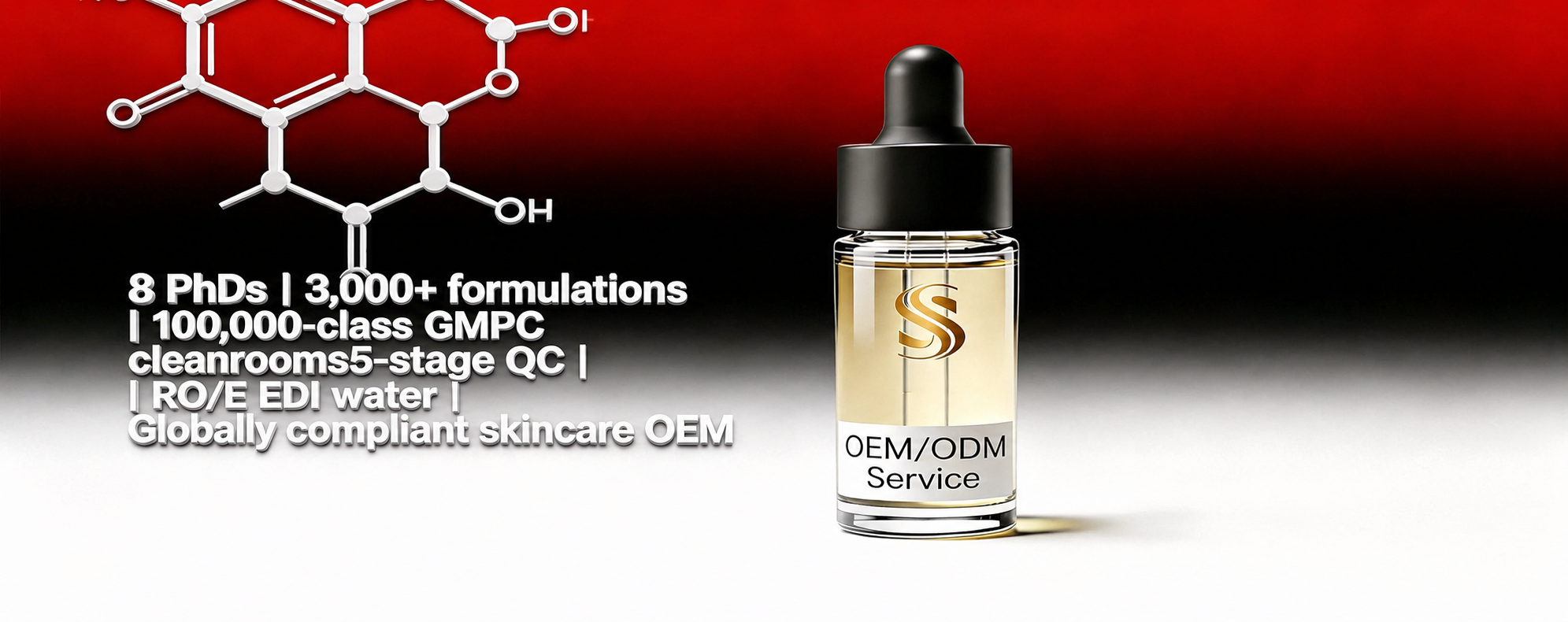
A New Blue Ocean for Clean Beauty: How Aisen Helps Brands Capture the Teen Skincare Market

1. Market Opportunities: Natural Skincare for Young People Emerges as a Key Growth Driver in the European and American Beauty Markets
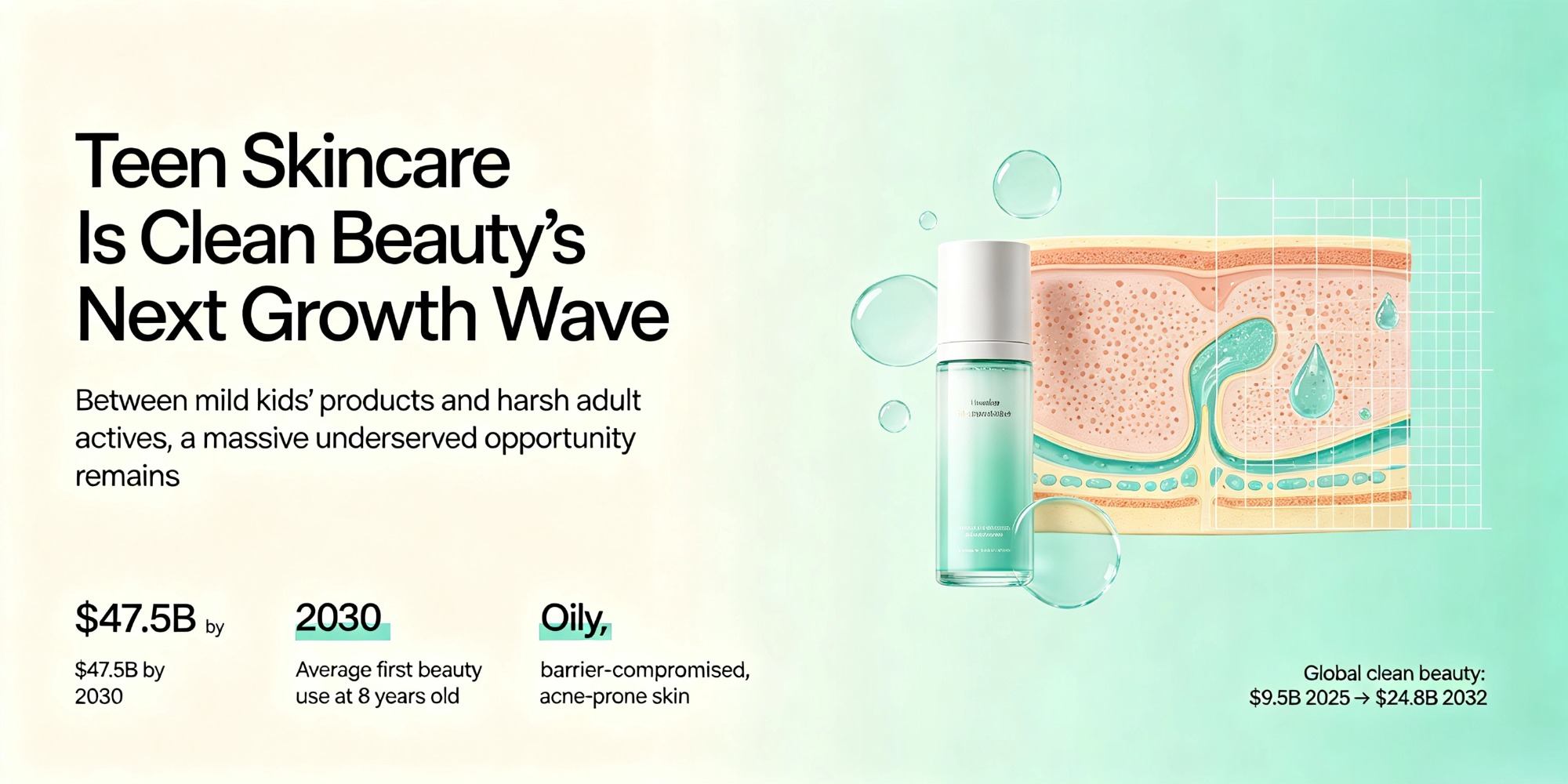
Whilst competition in the adult clean beauty sector is becoming increasingly saturated, the teenage skincare segment is emerging at a rate far exceeding the industry average. According to Mordor Intelligence’s 2026 industry report, the global clean beauty market was valued at US$9.5 billion in 2025 and is projected to grow to US$24.8 billion by 2032, representing a compound annual growth rate (CAGR) of 14.7 per cent; within which the children’s and teenage skincare segment is projected to grow at a CAGR of 13.12 per cent. Data from Technavio indicates that the global teenage personal care market was valued at US$36.7 billion in 2024 and is forecast to reach US$47.5 billion by 2030; during the same period, the natural and organic personal care market is projected to reach US$23.54 billion in 2025 and is expected to exceed US$23.96 billion by 2032.
Social media has been the key catalyst for this wave of growth. The ‘Sephora Kids’ craze, fuelled by TikTok and Instagram, continues to gain momentum—with this trend still maintaining a year-on-year growth rate of 11.4 per cent in search queries in 2025. Research by Ulta Beauty shows that the average age at which Generation Alpha first tries beauty products is just 8 years old, far lower than the 15 years typical for Millennials. However, as large numbers of teenagers follow trends and use potent adult products such as retinol and high-concentration salicylic acid, concerns are being raised by dermatologists and parents alike—these ingredients may do more harm than good to young, developing skin. There is a severe imbalance between supply and demand in the market: on the one hand, there are children’s products with overly mild formulations; on the other, adult skincare containing potent active ingredients. Products catering to the ‘middle ground’—suitable for the oily, barrier-compromised skin typical of adolescence—are extremely scarce.
2. Three key growth drivers underpinning the sector’s long-term growth
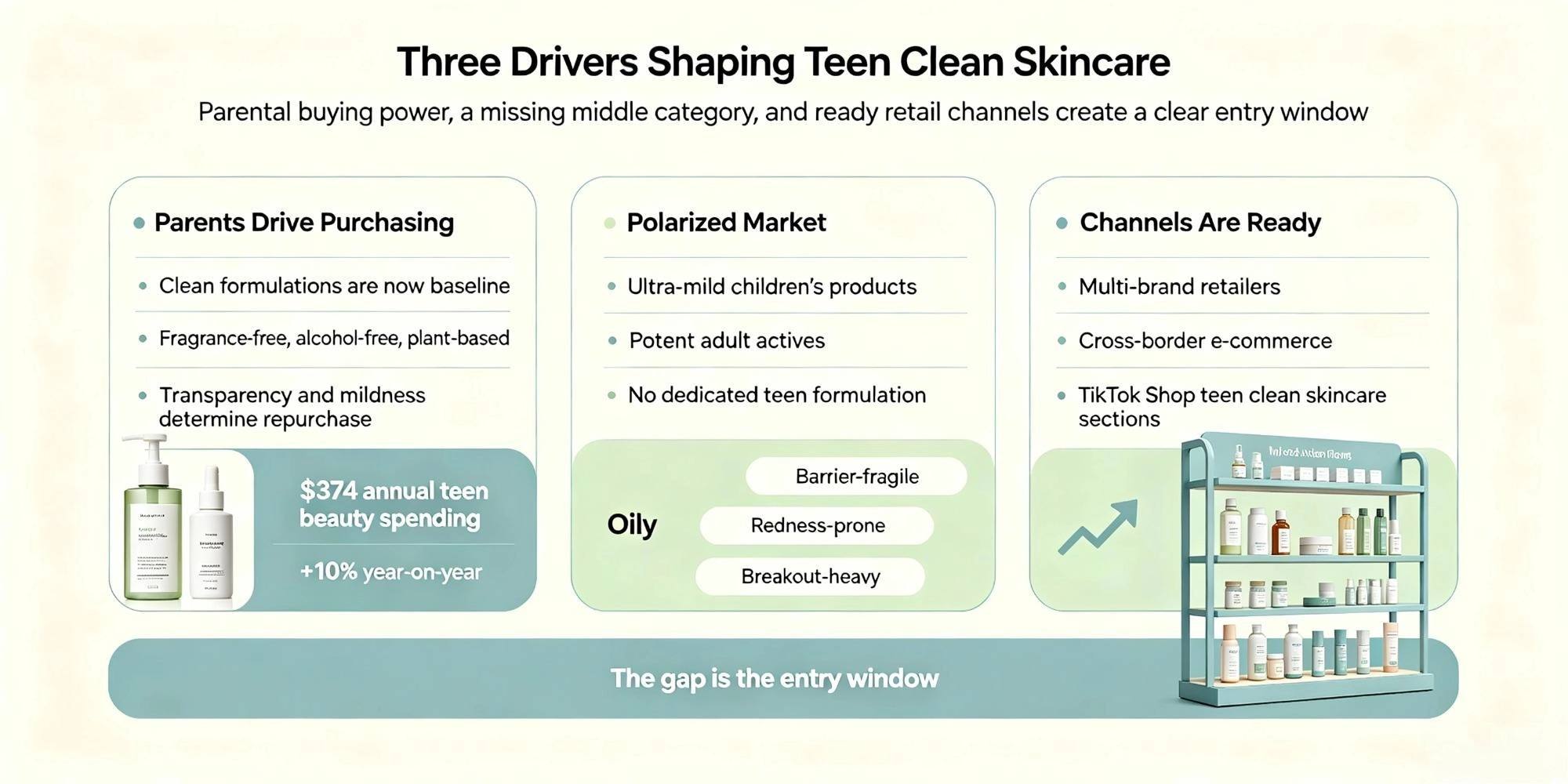
(1). Parents drive safe consumption, with pure formulations becoming a mandatory requirement. In Europe and the US, parents lead the decision-making process for family skincare purchases, with fragrance-free, alcohol-free, and preservative-free products—free from irritating preservatives and made with natural plant extracts—now serving as basic selection criteria. According to Piper Sandler’s Spring 2025 report, *Taking Stock With Teens*, annual beauty spending by teenagers reached US$374, representing a year-on-year increase of 10 per cent. Gen Z and Generation Alpha have adopted a ‘ingredients first, brand second’ approach to consumption—they prioritise checking the ingredients list when making purchases, with product transparency and mildness directly determining repurchase rates.
(2). There is a gap in the market, with a scarcity of products in the mid-range segment; current offerings are polarised: on the one hand, there are minimalist skincare products with limited efficacy, suitable only for very young children; on the other, there are adult skincare products targeting mature skin and containing potent active ingredients. The shortage of products with formulations specifically tailored to teenagers’ skin—which is characterised by excessive oil production, a fragile skin barrier, and a tendency towards redness and breakouts—presents an excellent window of opportunity for brands to enter the market.
(3). As the concept of clean beauty gains traction and demand for natural and organic products continues to expand, the global market for natural and organic personal care products is growing steadily, with clean skincare standards rapidly gaining ground amongst teenagers. Offline multi-brand stores in Europe and the US, cross-border e-commerce platforms and TikTok Shop have all introduced dedicated sections for teenage clean skincare, with channels proactively allocating resources to this segment; the conditions for commercialisation in this sector are now ripe.
3. International giants are leading the way, and the sector has officially entered a phase of mainstream competition
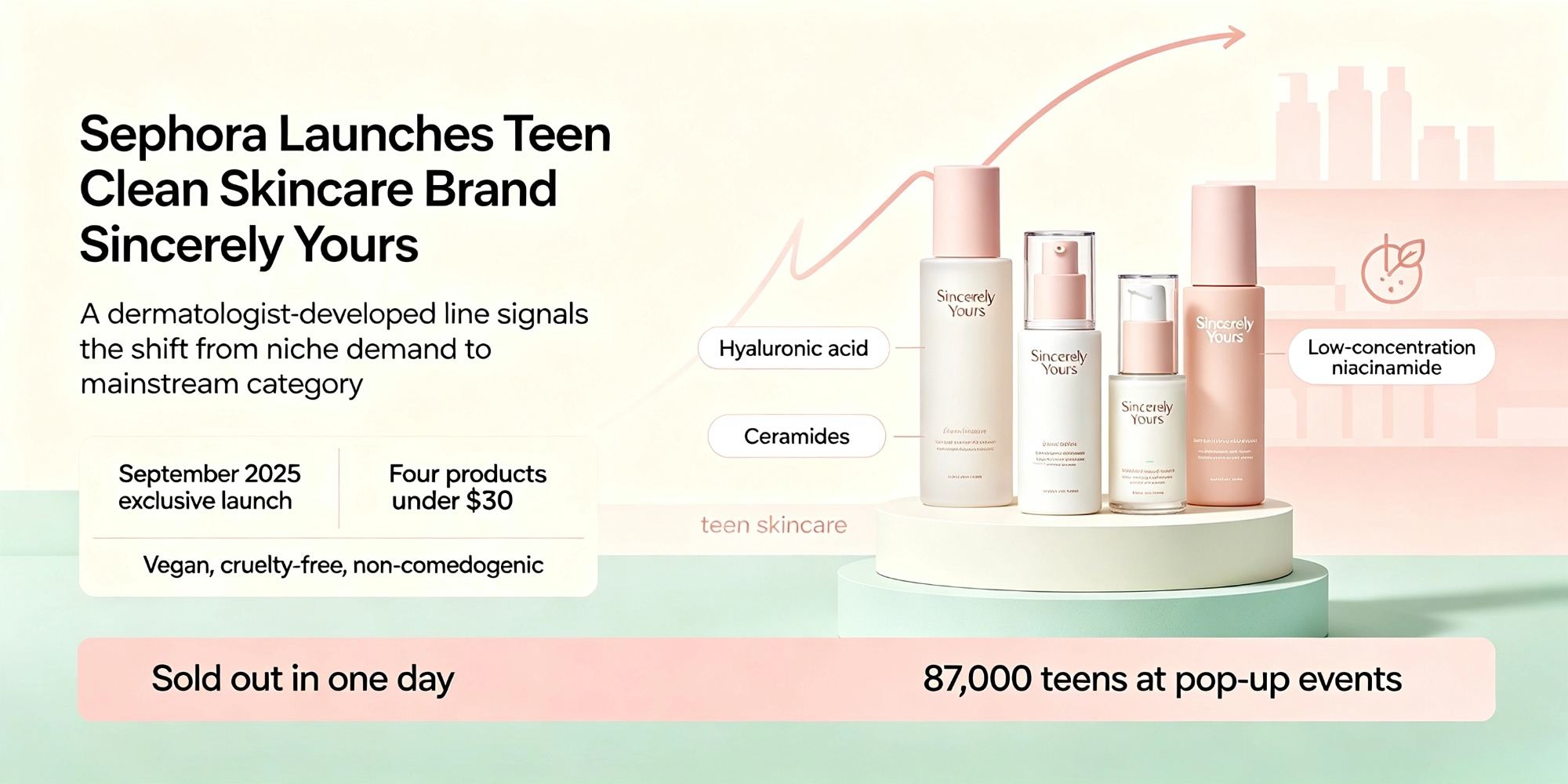
Sephora to exclusively launch the teen-focused, clean skincare brand ‘Sincerely Yours’ in September 2025, sending a key signal to the market (Official PR Newswire Release) PR Newswire: Developed by a father-daughter blogging duo in collaboration with dermatologists, the range comprises four core products (gentle cleanser, soothing mist, repair cream and mineral sunscreen), each priced under US$30 and all certified by Sephora Clean. are vegan, cruelty-free and free from comedogenic ingredients, whilst avoiding irritating anti-ageing acids. Instead, they combine sustained-release hyaluronic acid, ceramides and low-concentration niacinamide to repair the skin barrier. The range sold out within a single day at physical stores, and pop-up events attracted 87,000 teenagers. At the same time, Yes Day, a professional skincare brand targeting the 10–15-year-old Alpha Generation, was launched. Developed in collaboration between 13-year-olds and renowned cosmetic chemists, the products have undergone clinical dermatological testing and exclude highly irritating active ingredients, precisely tailored to the tolerance levels of adolescent skin. This move by Sephora sends a clear signal: clean skincare for teenagers has evolved from a niche demand into a mainstream category.
4. Aisen Formulation ODM/OEM Solutions: One-stop compliance with European and US standards
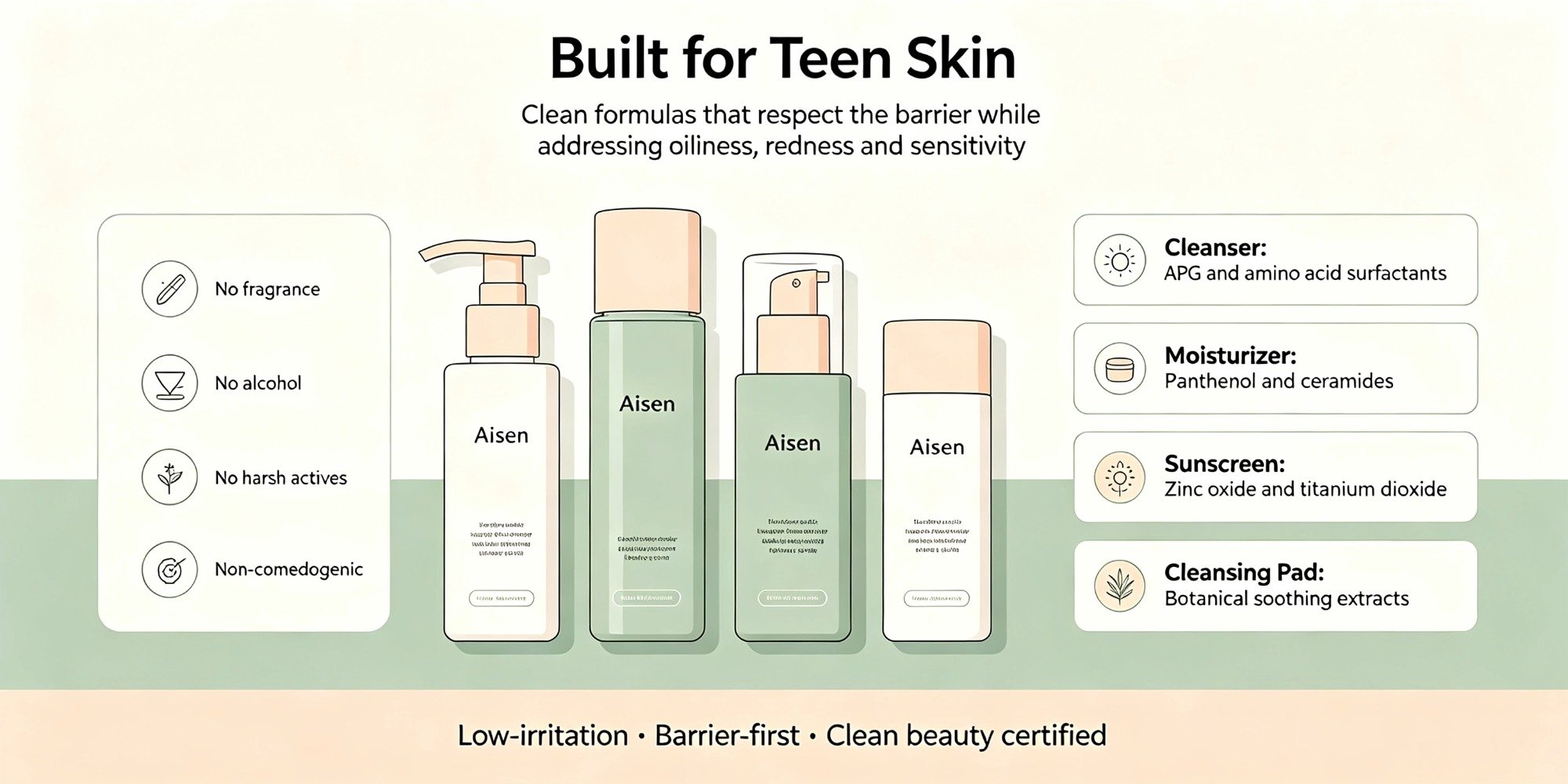
As adolescents have active sebaceous glands and an immature skin barrier, the core philosophy behind the formulations is low irritation, gentle efficacy and powerful repair. Aisen can provide and customise four major product lines, all of which meet the compliance requirements for Clean Beauty certification in Europe and the US, as well as being vegan and cruelty-free:
(1). The Pure Amino Acid Cleansing Range utilises APG and amino acid-based gentle surfactants. Free from soap bases, fragrances and alcohol, it is formulated with Centella asiatica and oat beta-glucan to soothe and reduce redness. It cleanses without disrupting the skin’s natural lipid barrier, making it suitable for oily, sensitive skin during adolescence.
(2). Lightweight Barrier Repair and Moisturising Range: Featuring refreshing textures such as gel and light lotion, enriched with panthenol, ceramides and low-molecular-weight hyaluronic acid. Designed to provide essential hydration and stabilise the skin without a heavy, suffocating feel, making it suitable for teenagers’ daily skincare routines.
(3). Pure Physical Mineral Sunscreen Range: Featuring a physical sunscreen system comprising only zinc oxide and titanium dioxide, free from chemical sunscreen agents and fragrance-free to avoid irritation. Modeled on Sincerely Yours’ core best-sellers, this range is suitable for daily use at school and during commutes.
(4). Soothing and Repairing Cleansing Pads: Formulated with botanical soothing extracts and free from high-concentration acids, these pads provide both secondary cleansing and soothing in a single swipe, aligning with the popular format of quick skincare videos among teenagers.
5. Conclusion
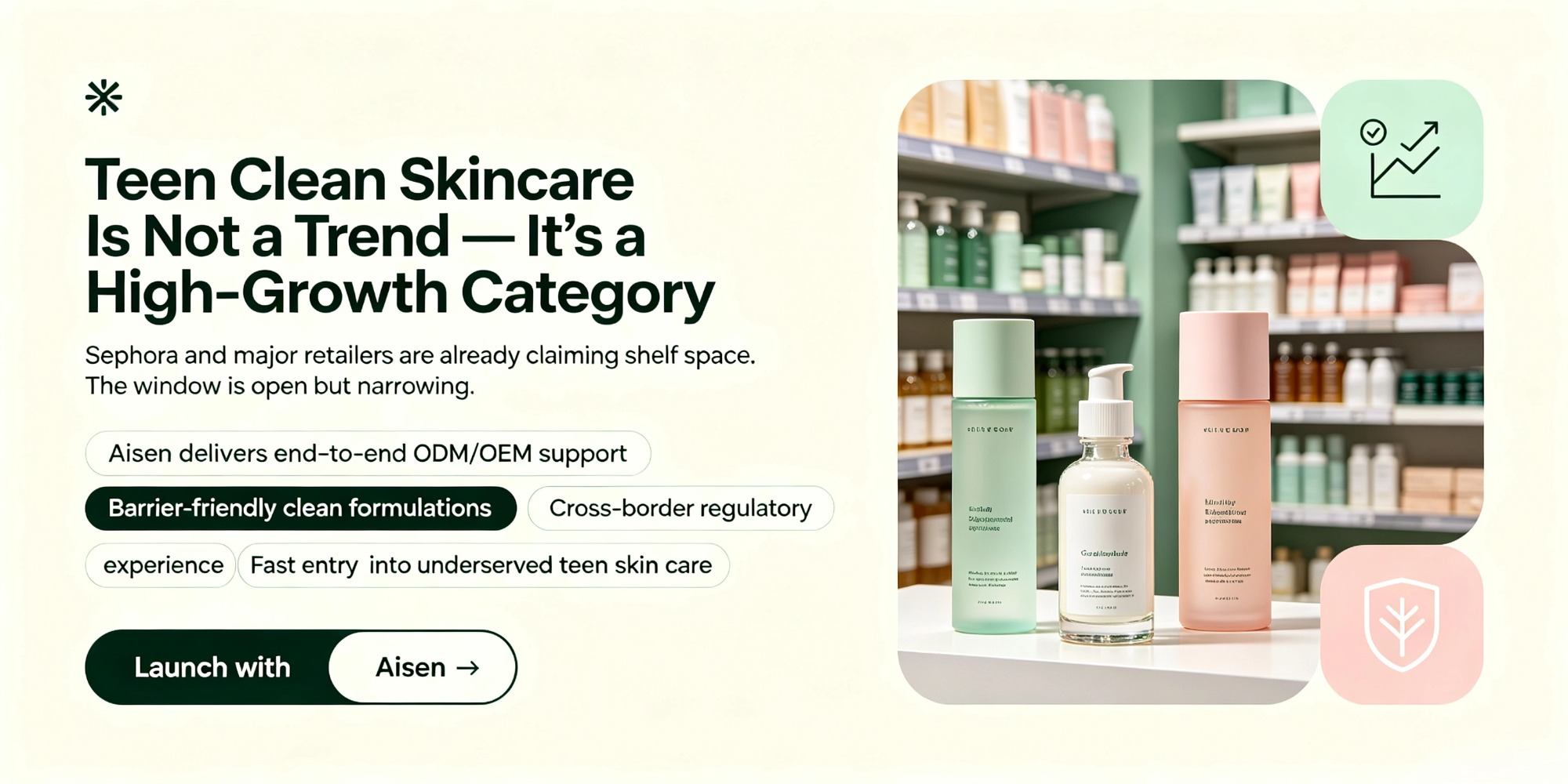
Clean skincare for teenagers in Europe and the US is not a short-lived trend, but rather a segment of the clean beauty market with assured growth potential. Leading retailers such as Sephora have already established their product ranges in this category, leaving only a limited window of opportunity in the market. Leveraging its mature formulation technology and experience in meeting overseas regulatory requirements, Aisen provides end-to-end ODM/OEM implementation services for cross-border brands, helping them rapidly capture the untapped market for teenage skincare with barrier-friendly, clean formulations.
Related Products
China Natural Whitening Goat Milk Soap Bar Rose Carving Supplier | aisenproskin.com
China Microencapsulated Retinol Renewal Serum Supplier | aisenproskin.com