Comprehensive Report on the Peptide Skincare Market in Europe and the US: A Sure-Fire Opportunity from 4.8 Billion to 10.4 Billion
Apr 22, 2026
1. The Stability and Explosion of the Peptide Market
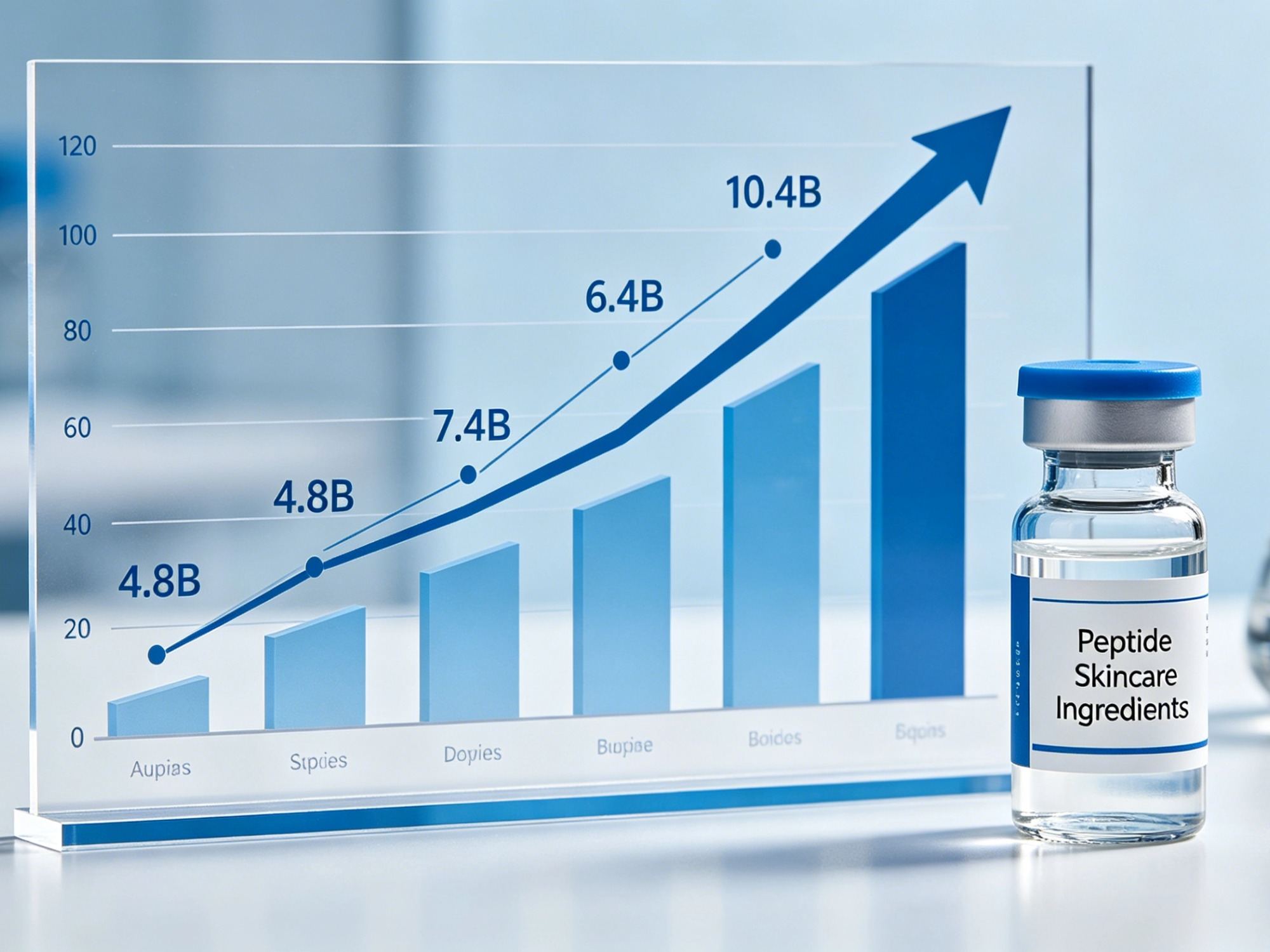
In 2024, the global peptide skincare market delivered an impressive performance with a valuation of USD 4.8 billion, projected to exceed USD 10.4 billion by 2033, reflecting a robust compound annual growth rate (CAGR) of 9.5%. Within the skincare ingredient landscape, peptides may not be the fastest-growing segment, but they are undoubtedly the most stable. More importantly, peptides have surpassed all other ingredient categories to become the single largest category in the global specialty cosmetic ingredients market. They have decisively shed the label of a "niche luxury" and emerged as the core infrastructure of modern skincare formulations. This signifies a decade-long tailwind of deterministic growth rather than a fleeting trend.
2. The Underlying Logic of the Western Boom — Why Peptides?
The surge in European and American markets is no coincidence. In the United States, the hashtag #peptide has garnered over 233 million views on TikTok, fueling a nationwide anti-aging movement. 77% of U.S. consumers actively seek clinical data before purchasing, and the concept of "preventative aging" is deeply ingrained. In Europe, growth is driven by the world's strictest regulations and a consumer base where 80% are willing to pay a premium for scientifically validated efficacy. Whether it is the arid climate of the American West, the harsh winters of Northern Europe, or the intense sun of Southern Europe, peptides' dual-action benefits of "barrier repair and wrinkle reduction" perfectly address cross-regional pain points. In short, peptides align with the Western consumption ethos of "evidence over hype and long-term health over quick fixes."
3. Evolution and Technological Trends — From Luxury Ingredient to Foundational Infrastructure
Peptides have undergone a historic shift from pharmaceutical-grade "luxury ingredients" to mass-market accessibility and scientific transparency. Disruptor brands like The Ordinary have driven prices down to the $10–$20 range, while social media has turned ingredient transparency into the most compelling sales narrative. Looking ahead, four key trends will define the winners: First, a structural shift from "reversing aging" to maintaining "functional longevity." Second, the rise of Cyclic Peptides, which offer superior penetration (CAGR of 11.89%). Third, the deep integration of Biomimetic Peptides with the Microbiome. Fourth, the emergence of Gold-Enhanced Peptides in luxury scientific skincare. For OEM/ODM manufacturers, establishing a competitive moat requires a strategic bet on these technological frontiers.
4. Formulation Application and Blending Reference — Common Industry Practices
In formulation practice, peptide selection and dosage vary significantly by product category and target claim. Based on publicly available product disclosures and industry benchmarks, common approaches include facial serums targeting firming and wrinkle reduction (often utilizing Matrixyl or Argireline variants in the 2–8% range); creams formulated for dual anti-aging and barrier support, frequently combining peptides with ceramides or hyaluronic acid (1–5%); eye-area formulations addressing expression lines and puffiness (Eyeseryl or similar, typically 1–3%); and rinse-off or treatment masks incorporating copper peptides for repair-focused applications (0.5–2%). Peptides also exhibit broad compatibility with complementary actives—combinations such as peptides with ceramides and amino acids for barrier support, or peptides with encapsulated retinol for balanced anti-aging regimens, are increasingly documented in commercial formulations. Manufacturers with established formulation libraries may offer accelerated development pathways, though specific product performance remains subject to independent clinical evaluation and stability testing.
5. Market Communication Considerations — Observations on Western Consumer Preferences
Marketing communication in Western markets tends to favor evidence-based narratives over abstract or emotional claims. Observed consumer behavior—particularly in the U.S. and Europe—suggests that efficacy claims supported by third-party clinical data, before-and-after case studies, and transparent ingredient disclosure resonate more effectively with informed audiences. Additionally, positioning peptides within the broader "skin longevity" framework, rather than hyperbolic anti-aging language, appears increasingly aligned with consumer sentiment. For brand development, this suggests an opportunity to segment offerings across price tiers—from accessible entry-level formulations to premium, technology-differentiated lines—while ensuring that marketing collateral (including ingredient summaries, key claim language, and supporting test documentation) is both substantiated and regionally compliant. Manufacturers that can facilitate this evidence-to-claim pipeline may reduce the compliance burden for brand partners, though ultimate responsibility for marketing claims rests with the brand owner.
6. Conclusion and Actionable Guide for Manufacturers
Peptides are no longer an optional ingredient; they are foundational infrastructure. For OEM/ODM manufacturers, the product strategy must align with market positioning: "Palmitoyl Tripeptide" combinations for entry-level brands and "Copper Peptides + Cyclic Peptides" for premium offerings. Cost control is achieved through economies of scale and formulation reuse, enabling clients to achieve a luxury feel at accessible price points. Marketing enablement spans from compliance certifications (FDA/CPNP) to building a scientific narrative. The opportunity in the peptide sector lies in technological differentiation (Cyclic Peptides), formulation flexibility (Peptide+), and full-category coverage. For those seeking rapidly deployable formulations or tailored solutions for the US, Europe, or Middle East, this is the optimal window for market entry.
Disclaimer: This article is for industry analysis only and does not constitute professional formulation, medical, or legal advice. Formulation percentages cited are general industry references and should be independently verified for specific product development. The author assumes no liability for actions taken based on this content.
Read More