Leave A Message
If you are interested in our products and want to know more details,please leave a message here,we will reply you as soon as we can.
submit
Custom Facial Skincare

Copper Peptide Repair Serum

Home

Copper Peptide Repair Serum

  • A New Blue Ocean for Clean Beauty: How Aisen Helps Brands Capture the Teen Skincare Market
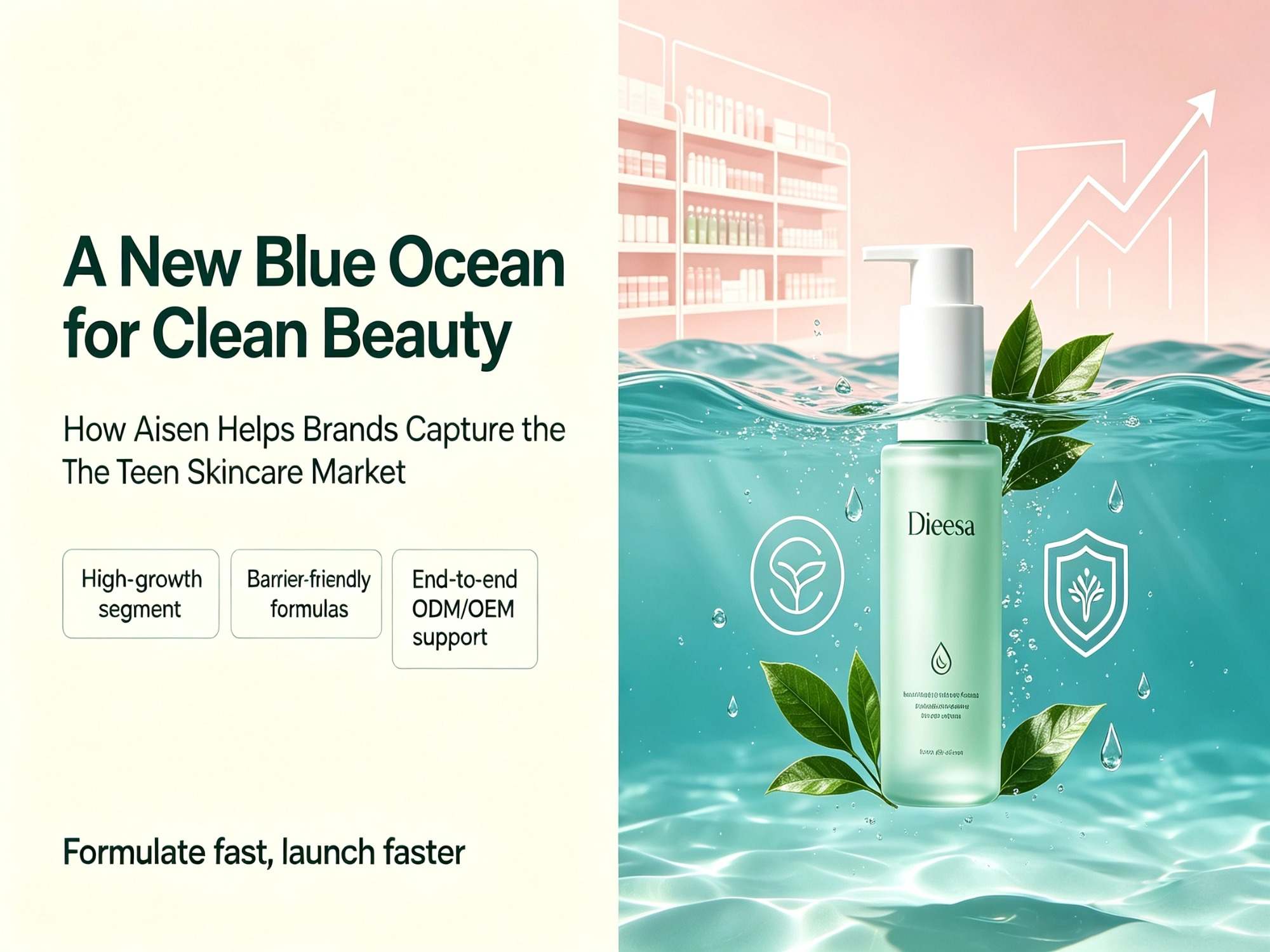
    A New Blue Ocean for Clean Beauty: How Aisen Helps Brands Capture the Teen Skincare Market
    Jul 06, 2026
      1. Market Opportunities: Natural Skincare for Young People Emerges as a Key Growth Driver in the European and American Beauty Markets Whilst competition in the adult clean beauty sector is becoming increasingly saturated, the teenage skincare segment is emerging at a rate far exceeding the industry average. According to Mordor Intelligence’s 2026 industry report, the global clean beauty market was valued at US$9.5 billion in 2025 and is projected to grow to US$24.8 billion by 2032, representing a compound annual growth rate (CAGR) of 14.7 per cent; within which the children’s and teenage skincare segment is projected to grow at a CAGR of 13.12 per cent. Data from Technavio indicates that the global teenage personal care market was valued at US$36.7 billion in 2024 and is forecast to reach US$47.5 billion by 2030; during the same period, the natural and organic personal care market is projected to reach US$23.54 billion in 2025 and is expected to exceed US$23.96 billion by 2032.   Social media has been the key catalyst for this wave of growth. The ‘Sephora Kids’ craze, fuelled by TikTok and Instagram, continues to gain momentum—with this trend still maintaining a year-on-year growth rate of 11.4 per cent in search queries in 2025. Research by Ulta Beauty shows that the average age at which Generation Alpha first tries beauty products is just 8 years old, far lower than the 15 years typical for Millennials. However, as large numbers of teenagers follow trends and use potent adult products such as retinol and high-concentration salicylic acid, concerns are being raised by dermatologists and parents alike—these ingredients may do more harm than good to young, developing skin. There is a severe imbalance between supply and demand in the market: on the one hand, there are children’s products with overly mild formulations; on the other, adult skincare containing potent active ingredients. Products catering to the ‘middle ground’—suitable for the oily, barrier-compromised skin typical of adolescence—are extremely scarce.     2. Three key growth drivers underpinning the sector’s long-term growth (1). Parents drive safe consumption, with pure formulations becoming a mandatory requirement. In Europe and the US, parents lead the decision-making process for family skincare purchases, with fragrance-free, alcohol-free, and preservative-free products—free from irritating preservatives and made with natural plant extracts—now serving as basic selection criteria. According to Piper Sandler’s Spring 2025 report, *Taking Stock With Teens*, annual beauty spending by teenagers reached US$374, representing a year-on-year increase of 10 per cent. Gen Z and Generation Alpha have adopted a ‘ingredients first, brand second’ approach to consumption—they prioritise checking the ingredients list when making purchases, with product transparency and mildness directly determining repurchase rates.   (2). There is a gap in the market, with a scarcity of products in the mid-range segment; current offerings are polarised: on the one hand, there are minimalist skincare products with limited efficacy, suitable only for very young children; on the other, there are adult skincare products targeting mature skin and containing potent active ingredients. The shortage of products with formulations specifically tailored to teenagers’ skin—which is characterised by excessive oil production, a fragile skin barrier, and a tendency towards redness and breakouts—presents an excellent window of opportunity for brands to enter the market.   (3). As the concept of clean beauty gains traction and demand for natural and organic products continues to expand, the global market for natural and organic personal care products is growing steadily, with clean skincare standards rapidly gaining ground amongst teenagers. Offline multi-brand stores in Europe and the US, cross-border e-commerce platforms and TikTok Shop have all introduced dedicated sections for teenage clean skincare, with channels proactively allocating resources to this segment; the conditions for commercialisation in this sector are now ripe.     3. International giants are leading the way, and the sector has officially entered a phase of mainstream competition   Sephora to exclusively launch the teen-focused, clean skincare brand ‘Sincerely Yours’ in September 2025, sending a key signal to the market (Official PR Newswire Release) PR Newswire: Developed by a father-daughter blogging duo in collaboration with dermatologists, the range comprises four core products (gentle cleanser, soothing mist, repair cream and mineral sunscreen), each priced under US$30 and all certified by Sephora Clean. are vegan, cruelty-free and free from comedogenic ingredients, whilst avoiding irritating anti-ageing acids. Instead, they combine sustained-release hyaluronic acid, ceramides and low-concentration niacinamide to repair the skin barrier. The range sold out within a single day at physical stores, and pop-up events attracted 87,000 teenagers. At the same time, Yes Day, a professional skincare brand targeting the 10–15-year-old Alpha Generation, was launched. Developed in collaboration between 13-year-olds and renowned cosmetic chemists, the products have undergone clinical dermatological testing and exclude highly irritating active ingredients, precisely tailored to the tolerance levels of adolescent skin. This move by Sephora sends a clear signal: clean skincare for teenagers has evolved from a niche demand into a mainstream category.     4. Aisen Formulation ODM/OEM Solutions: One-stop compliance with European and US standards As adolescents have active sebaceous glands and an immature skin barrier, the core philosophy behind the formulations is low irritation, gentle efficacy and powerful repair. Aisen can provide and customise four major product lines, all of which meet the compliance requirements for Clean Beauty certification in Europe and the US, as well as being vegan and cruelty-free: (1). The Pure Amino Acid Cleansing Range utilises APG and amino acid-based gentle surfactants. Free from soap bases, fragrances and alcohol, it is formulated with Centella asiatica and oat beta-glucan to soothe and reduce redness. It cleanses without disrupting the skin’s natural lipid barrier, making it suitable for oily, sensitive skin during adolescence.  (2). Lightweight Barrier Repair and Moisturising Range: Featuring refreshing textures such as gel and light lotion, enriched with panthenol, ceramides and low-molecular-weight hyaluronic acid. Designed to provide essential hydration and stabilise the skin without a heavy, suffocating feel, making it suitable for teenagers’ daily skincare routines. (3). Pure Physical Mineral Sunscreen Range: Featuring a physical sunscreen system comprising only zinc oxide and titanium dioxide, free from chemical sunscreen agents and fragrance-free to avoid irritation. Modeled on Sincerely Yours’ core best-sellers, this range is suitable for daily use at school and during commutes.  (4). Soothing and Repairing Cleansing Pads: Formulated with botanical soothing extracts and free from high-concentration acids, these pads provide both secondary cleansing and soothing in a single swipe, aligning with the popular format of quick skincare videos among teenagers.     5. Conclusion Clean skincare for teenagers in Europe and the US is not a short-lived trend, but rather a segment of the clean beauty market with assured growth potential. Leading retailers such as Sephora have already established their product ranges in this category, leaving only a limited window of opportunity in the market. Leveraging its mature formulation technology and experience in meeting overseas regulatory requirements, Aisen provides end-to-end ODM/OEM implementation services for cross-border brands, helping them rapidly capture the untapped market for teenage skincare with barrier-friendly, clean formulations.     Disclaimer: For B2B reference only. Aisen is an independent OEM/ODM manufacturer and not affiliated with any mentioned brands. Brand owners are responsible for ensuring local regulatory compliance.   Related Products China Natural Whitening Goat Milk Soap Bar Rose Carving Supplier | aisenproskin.com China Microencapsulated Retinol Renewal Serum Supplier | aisenproskin.com    
    Read More
  • How to choose anti-ageing retinol ingredients? From retinol, retinaldehyde, HPR to psoralen—everything you need to know in one article
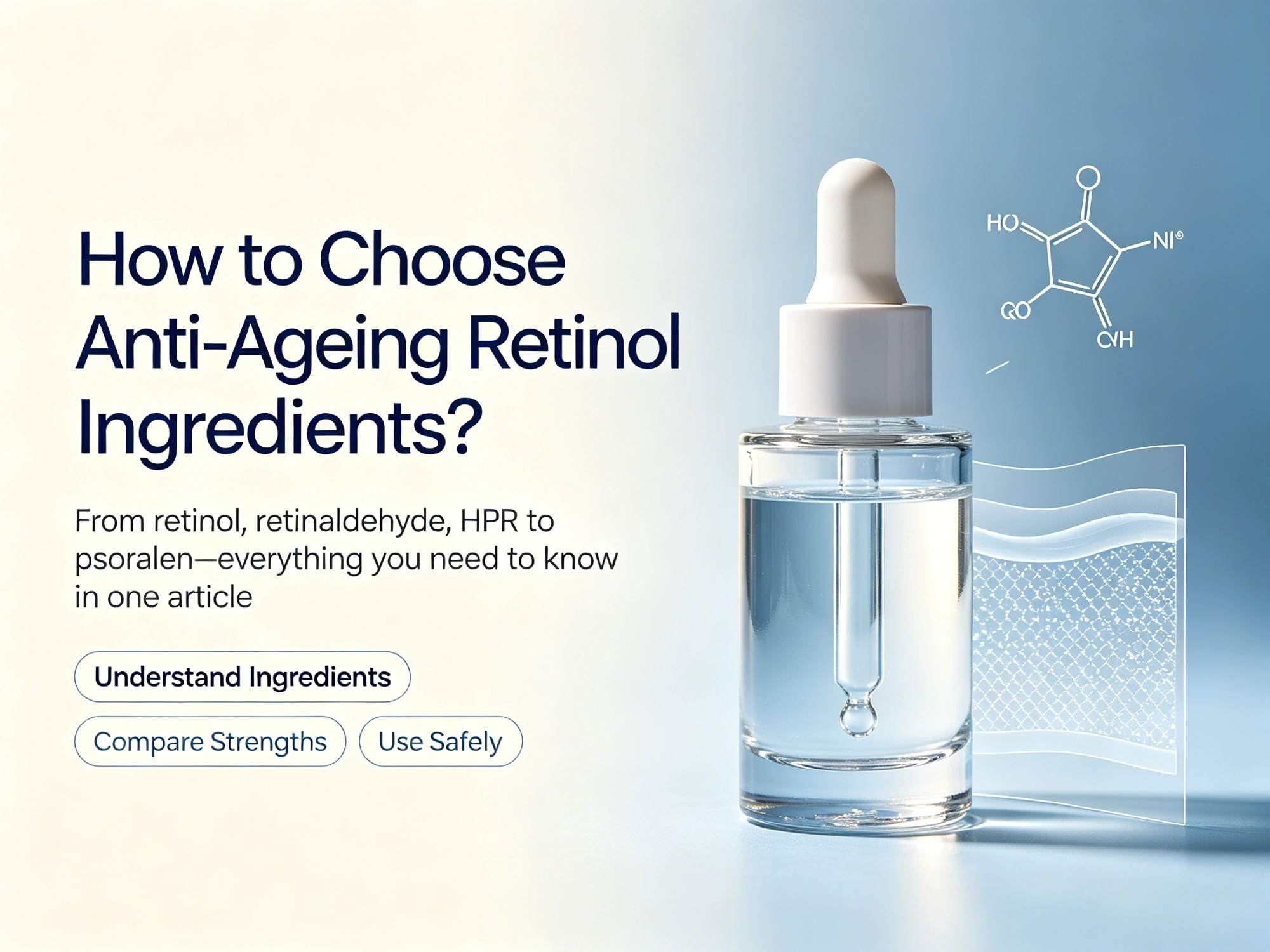
    How to choose anti-ageing retinol ingredients? From retinol, retinaldehyde, HPR to psoralen—everything you need to know in one article
    Jun 22, 2026
      ‘Vitamin C in the morning, Vitamin A in the evening’ is a classic anti-ageing skincare routine that is widely recognised globally; however, many consumers and beauty professionals find it difficult to distinguish between the main Vitamin A ingredients: retinol, retinaldehyde, HPR and psoralen. These four ingredients differ significantly in terms of their mechanisms of action, gentleness and formulation challenges. The following section provides an objective analysis based on skin physiology, accompanied by formulation recommendations from Aisen. Vitamin A Metabolism Pathway: The Metabolic Pathway Influences Efficacy and Irritation The key active ingredient responsible for its effects on the skin is retinoic acid, a prescription-only medical ingredient that is highly irritating; as such, regulations in various countries prohibit its inclusion in general skincare products. All vitamin A ingredients available on the market are precursors to retinoic acid and must undergo enzymatic conversion within the skin to become active. The conversion pathway is as follows: retinol esters → retinol → retinaldehyde → retinoic acid. As a general rule: the more conversion steps involved, the lower the risk of irritation, but the theoretical upper limit of efficacy at the same concentration is lower; the fewer conversion steps, the higher the theoretical anti-ageing potential, whilst the likelihood of irritation increases accordingly. Ultimately, the user experience is determined by the formulation’s delivery technology.   1. Retinol (Retinol A): The classic entry-level form of vitamin A It requires a two-step oxidation process to convert into retinoic acid before it becomes effective; there is ample clinical research on this, and it is widely used in the market. Drawbacks: It is prone to oxidation and inactivation when exposed to light, oxygen or high temperatures, and may cause dryness, redness and flaking in first-time users. Suitable for: those with a healthy skin barrier and good tolerance, and those trying retinol for the first time.   2. Retinaldehyde: An Advanced, Highly Effective Anti-Ageing Ingredient It becomes active after just a single oxidation step, and at equivalent concentrations, its bioavailability is significantly higher than that of retinol. Visible improvements in fine lines, dullness and enlarged pores can be observed after 6 weeks of continuous use at low concentrations. Drawbacks: It is sensitive to light and oxygen; without a sustained-release formulation, it may irritate the skin, and it requires sophisticated manufacturing processes. Suitable for: Those with healthy skin who have been using vitamin A long-term and are seeking rapid anti-ageing results.   3. HPR (hydroxypinacolone retinoate): a low-irritation vitamin A derivative It binds directly to the skin's vitamin A receptors without the need for conversion. It is exceptionally stable, retaining over 90% of its activity after 12 weeks of storage at 40°C under light, and is far less irritating than traditional vitamin A. Drawback: its fat-soluble nature results in relatively poor transdermal absorption, so it requires the use of delivery technologies to enhance bioavailability. Suitable for: sensitive skin and those with vitamin A intolerance. For brands targeting the sensitive-skin anti-aging segment, a peptide-based alternative such as a Copper Peptide Repair Serum offers a complementary route—supporting collagen production and barrier repair without any vitamin A-related irritation.   4. Psoralen: A gentle, plant-based alternative for anti-ageing Extracted from Psoralea corylifolia seeds, its structure differs from that of retinol, yet it can regulate genes associated with anti-ageing. A controlled trial published in the British Journal of Dermatology showed that, after 12 weeks of use, there was no significant difference in wrinkle reduction or skin brightening between 0.5% psoralen and 0.5% retinol; the psoralen group demonstrated better tolerability and no photosensitivity, making it suitable for daytime use. Suitable for: those with sensitive skin, those who prefer natural ingredients, and those seeking daytime anti-ageing care. Aisen's Bakuchiol + Peptide Firming Serum is built on this logic, delivering retinol-comparable firming without irritation, making it ideal for clean beauty and pregnancy-safe skincare lines.   A quick guide in one table: how to choose between four types of retinol Dimensions of comparison Retinol Retinal HPR (hydroxypinacolone retinoate) psoralen Speed of anti-ageing results A gradual process requiring long-term commitment Fast-acting Intermediate A slow start, but promising long-term results Gentleness on the skin Generally, may be poorly tolerated Moderate; non-sustained-release; may cause irritation Excellent, suitable for sensitive skin Excellent; very little stinging or peeling Composition Stability Poor; prone to oxidation and failure Generally speaking, there are certain storage requirements. Excellent Excellent, no risk of photosensitivity Suitable for the following skin types Healthy, resilient skin Healthier, More Radiant Skin Suitable for all skin types (including sensitive skin) Suitable for all skin types; ideal for sensitive skin and during pregnancy   Aisen Formula Combination Options Drawing on its patented nano-encapsulation technology and a portfolio of over 3,000 market-proven, mature formulations, Aisen specifically addresses the formulation challenges associated with each type of ingredient:   1. Retinol / Retinaldehyde: Encapsulated in NLC (nanolipid) nanoparticles and liposomes to shield the active ingredients from light and oxygen, ensuring sustained release to minimise irritation and reduce peeling and redness. This approach powers our Microencapsulated Retinol Renewal Serum, which delivers high-potency anti-aging benefits with significantly reduced irritation. EU regulations stipulate that the maximum concentration of retinol-based ingredients in leave-on skincare products is 0.3 per cent, and formulations are developed in accordance with local compliance standards.   2. HPR (hydroxypinacolone retinoate): Combined with a nano-emulsion and a mild penetration-enhancing system, it improves transdermal absorption and enhances formulation stability;   3. Psoralen: Liposomes / nano-emulsions improve water dispersibility and absorption rates; combined with Centella asiatica for simultaneous anti-ageing and repair. For brands building a complete morning-and-evening routine, our Vitamin C12 Serum makes an ideal daytime companion—combining 12% pure vitamin C with salicylic acid for brightening and antioxidant protection.   Rather than relying solely on high-concentration ingredients to enhance efficacy, we strike a balance between effectiveness, gentleness and long-lasting stability. Drawing on our proven delivery technologies and formulation expertise, Aisen develops anti-ageing skincare products tailored to all skin types worldwide.  
    Read More
  • PDRN Serums Are Booming: How Beauty Brands Can Stand Out in a Crowded Market
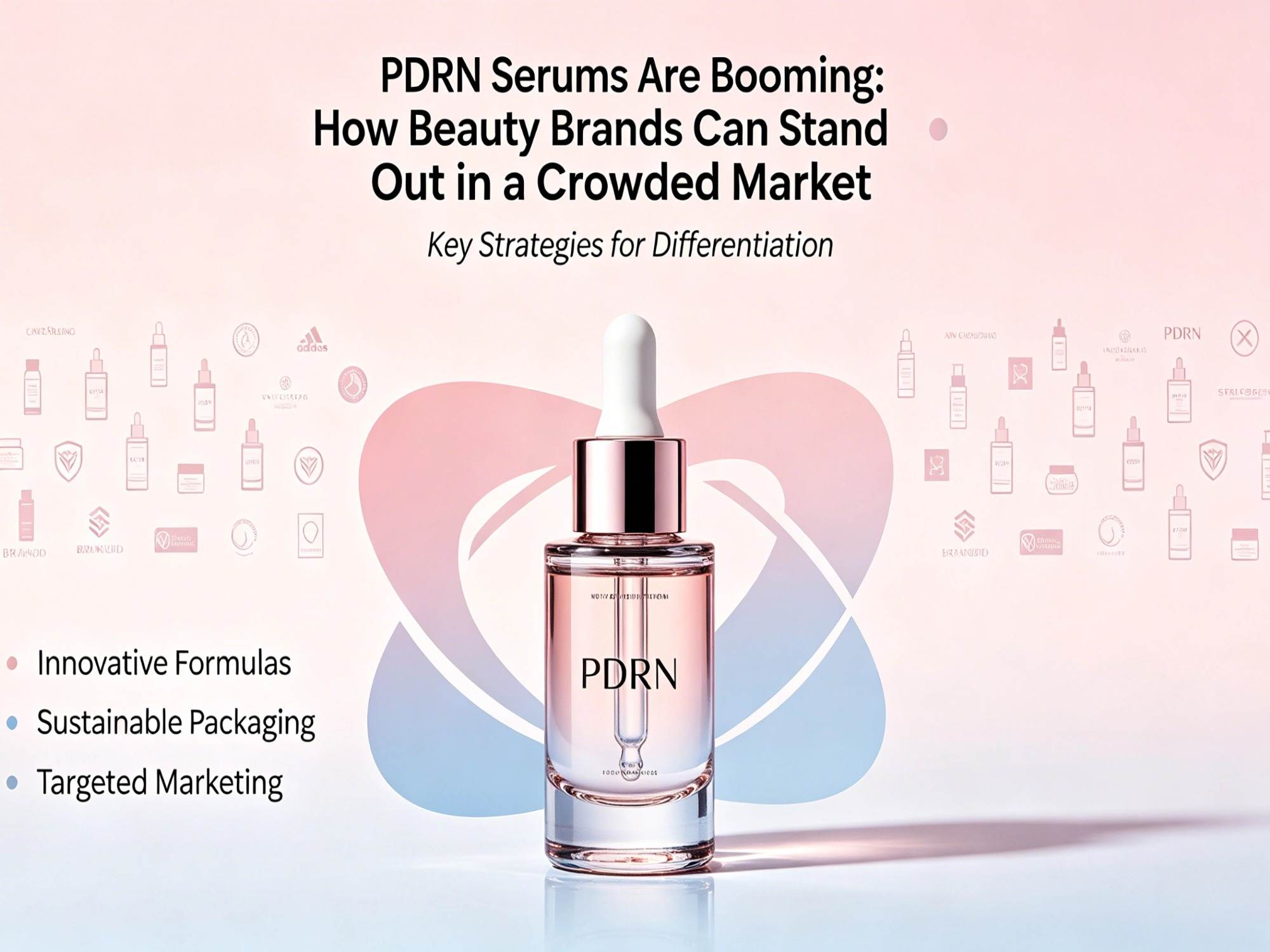
    PDRN Serums Are Booming: How Beauty Brands Can Stand Out in a Crowded Market
    Jun 16, 2026
    Meta Description: A B2B guide for skincare brands, importers, e-commerce sellers, spas, salons, and cosmetic manufacturers on how to develop differentiated PDRN serums with clear source strategy, formula logic, product positioning, and OEM/ODM support. PDRN serum is clearly gaining attention in the global skincare market. From beauty media and e-commerce product pages to aesthetic-inspired skincare and premium anti-aging lines, keywords such as PDRN, salmon DNA, skin booster serum, and PDRN ampoule are appearing more often. Beauty trend coverage citing Spate has reported that digital media interest in PDRN face serums increased more than tenfold year over year.   But for brands, a hot ingredient also creates a new problem. When more companies launch PDRN serums, products can quickly start to look the same. Many formulas claim “contains PDRN,” “anti-aging,” “repair,” and “glow.” If a brand follows the trend without a clear source story, formula structure, product route, channel positioning, and supply chain support, it may become just another ordinary serum in a crowded category.   For overseas skincare brands, importers, e-commerce sellers, spa channels, salons, and foreign cosmetic manufacturers, the key question is no longer simply whether to develop a PDRN product. The real question is: how can you develop a PDRN serum that is actually competitive?   1. Start by Deciding Whether PDRN Fits Your Target Market PDRN is not limited to one product format. It can be developed as an anti-aging serum, brightening repair serum, skin booster-inspired ampoule, professional care vial, premium cream, or complete skincare set.   Different markets may respond to PDRN in different ways. European and North American markets often care about ingredient transparency, anti-aging logic, gentle care, and healthier-looking skin. Southeast Asian markets may prefer PDRN with brightening, repair, and lightweight texture. Middle Eastern markets may value premium packaging, professional care, and spa usage. E-commerce channels need clear selling points, strong visuals, and an ingredient story that is easy to explain in short content.   Before developing a PDRN product, brands should not only ask a supplier, “Do you have a PDRN serum?” They should first define the business direction: target market, main benefit, channel, price range, and whether the product will be an e-commerce hero item, wholesale product, spa treatment, or private label series.     2. The PDRN Source Should Match the Brand Strategy One reason PDRN products become generic is that many brands only say “PDRN” without explaining the source or the market logic behind it.   The market now includes salmon-derived PDRN, trout-derived PDRN, plant or fermentation-derived alternatives, ginseng-derived PDRN concepts, and vegan PDRN positioning. These sources should not be understood as simply “one is always better.” They serve different brand strategies.   If a brand focuses on vegan skincare, plant-based beauty, sustainability, or animal-free positioning, plant-derived or fermentation-derived PDRN concepts may be more suitable. This is especially important in markets where consumers actively look for vegan, cruelty-free, or animal-free claims. For these brands, salmon-derived PDRN may not be the best fit.   However, if a brand wants to build a premium anti-aging, aesthetic-inspired repair, spa care, or skin booster concept, salmon-derived PDRN often has stronger market recognition. Salmon PDRN has long been associated with repair, skin booster, regeneration-inspired care, and high-performance anti-aging concepts. Industry materials also often cite that the base composition of salmon DNA is highly similar to human DNA, commonly reported at around 98%, helping support a premium repair-oriented story.   Aisen Salmon PDRN Facial Serum is developed around this premium repair direction, using salmon-derived PDRN as the core story while combining anti-aging, brightening, and high-performance skincare positioning.   PDRN source strategy should match the brand position: salmon-derived PDRN is suitable for premium repair and aesthetic-inspired care, while plant or fermentation-derived concepts may fit vegan or botanical brands.   3. A PDRN Serum Needs More Than One Active Ingredient As more PDRN products enter the market, almost every product can claim repair, anti-aging, glow, or skin booster benefits. If a brand simply adds PDRN into a formula and uses the same common marketing words, consumers will struggle to understand why that product is different.   The real competitiveness of a PDRN serum is not only whether it contains PDRN. It is about what role PDRN plays in the full formula system and how other active ingredients support that role.   A mature PDRN serum should be built with three layers of logic. The first layer is the core story ingredient. PDRN is suitable as the hero ingredient for repair-oriented anti-aging, helping brands build a story around skin revitalization, elasticity, smoother-looking skin, youthful appearance, and aesthetic-inspired care. Salmon-derived PDRN is especially suitable for premium serums, spa products, and skin booster-inspired positioning.   The second layer is the supporting active system. PDRN can create the story, but consumers still care about more specific visible benefits. For anti-aging positioning, the formula may need elasticity, firmness, and collagen-related support. For brightening positioning, it may need ingredients that help improve the look of dullness and uneven tone. For repair positioning, moisturizing, soothing, and barrier-supporting ingredients become important. In this way, the product becomes more than "contains PDRN." It becomes a complete anti-aging and brightening solution built around PDRN. Brands looking to diversify their anti-aging lineup may also explore complementary routes—for example, a Bakuchiol + Peptide Firming Serum for a plant-based retinol alternative, or a Copper Peptide Repair Serum for peptide-based barrier support and skin renewal.     The third layer is user experience and channel fit. A serum must not only look good on an ingredient list. It also needs suitable texture, absorption, comfort, usage scenario, and packaging expression. E-commerce customers need a product that is easy to explain and show in content. Spa and salon channels need a stronger professional care feeling. Importers and wholesalers need a product that downstream customers can quickly understand and reorder.   Aisen Salmon PDRN Facial Serum follows this structure. It is designed around salmon-derived PDRN, anti-aging, brightening, and a multi-active formulation. For B2B customers, this structure can be used in product pages, short video scripts, distributor materials, SEO content, and sales training. Instead of only saying “we have PDRN,” the brand can communicate a complete serum solution built around salmon PDRN, anti-aging, brightening, repair, and high-performance small-package skincare.   PDRN can act as the core repair-oriented story ingredient, while brightening, hydration, barrier support, soothing, and firming actives complete the formula system.   4. Build a Clear Differentiation Route Before Choosing Packaging Packaging is important, but for a hot ingredient like PDRN, the product route matters even more. A brand should not put every possible selling point into one serum. It should first decide how the product will be remembered in its channel.   For an e-commerce hero product, the route may be Salmon PDRN Brightening Serum, focusing on high ingredient interest, texture, visible glow, short-video content, and keyword strategy. For spa or salon channels, the route may be PDRN Professional Ampoule Care, emphasizing small vials, treatment feeling, care sets, and premium service scenarios. For a premium private label brand, the route may be Premium PDRN Anti-Aging Set, extending from serum to cream, mask, ampoule, and gift box. For importers and wholesalers, the route may be PDRN Repair & Glow Line, balancing trend value, price range, packaging efficiency, and catalog expansion.   Aisen can support different PDRN product routes according to the customer’s market and channel. Customers can start with the mature Aisen Salmon PDRN Facial Serum to test market response. If the product performs well, Aisen can help extend the line into PDRN ampoules, creams, masks, gift sets, or professional care products. This lowers early development risk while leaving room for future expansion.   PDRN products can be differentiated by channel strategy, such as e-commerce hero serum, professional ampoule care, premium private label set, or wholesale repair-and-glow line.   5.Choose a Supplier That Can Support Trial Orders, Product Expansion, and Scalable Productio Many brands begin PDRN product development with a small trial order. Once the product gains market traction, however, stable replenishment, batch consistency, packaging flexibility, export documentation, and long-term manufacturing support become essential.   Aisen Pro Skin supports this growth with one-stop OEM/ODM/OBM services. With 12 automated production lines, a 100,000-grade clean workshop, GMPC and ISO 22716 standards, over 3,000 mature formulas, and annual capacity of up to 80 million units, Aisen can support both low-MOQ market testing and large-scale repeat orders.   Brands can start with the Aisen Salmon PDRN Facial Serum and gradually develop a broader anti-aging and brightening collection. The Korean Blue Copper Peptide Brightening Toner Serum Set can extend the line into firming, repair, and daily brightening care. The High-Potency 15% Niacinamide Spot-Lightening Serum offers a more targeted option for dark spots and uneven skin tone, while the Vitamin C12 Serum with 12% Pure Vitamin C and Salicylic Acid adds antioxidant, radiance, and skin-refining appeal to the collection.   This portfolio approach allows e-commerce sellers to create bundles, helps spas and salons combine professional and retail products, and gives importers, wholesalers, and established brands a broader product range for different customer needs.     This end-to-end capability ensures brand consistency, regulatory compliance, and stable supply—whether launching in one market or expanding globally. Aisen’s  R&D team iterates rapidly on stability, efficacy, and sensory profiles, aligning each formulation with target consumer needs and regional preferences.   6. How Aisen Salmon PDRN Facial Serum Can Be Developed for Different Channels Aisen Salmon PDRN Facial Serum can be used as a mature starting point for brands entering the PDRN category.   For e-commerce, it can be positioned around keywords such as salmon PDRN, anti-aging serum, brightening serum, skin booster, and glow serum. For premium private label brands, it can become the core serum in a wider anti-aging and repair series. For spas, salons, and skin management centers, its small vial-style format can create a more professional care feeling for treatment programs, sets, or retail add-ons.   For importers and wholesalers, it can be added as a trend-driven product to anti-aging, brightening, repair, and premium skincare catalogs. For foreign cosmetic manufacturers and product development companies, Aisen’s mature formula direction and customization support can help reduce development time and expand PDRN product offerings faster.   According to the customer’s target market, sales channel, price range, packaging needs, and brand positioning, Aisen can also support PDRN serum, ampoule, cream, mask, and set product development.   Conclusion: PDRN Is Hot, but Differentiation Is What Sells PDRN is a skincare trend worth watching, but the hotter the category becomes, the higher the risk of product sameness. A brand that only launches a generic “contains PDRN” serum may struggle to stand out.   A competitive PDRN serum needs a clear source story, focused positioning, formula logic, product route, stable supply chain, and room for product line expansion.   Aisen Salmon PDRN Facial Serum combines salmon-derived PDRN, anti-aging and brightening positioning, multi-active formulation, and small vial-style packaging. It helps overseas brands, e-commerce sellers, importers, wholesalers, spas, salons, and foreign cosmetic manufacturers enter the PDRN trend with a more complete product solution.   If you are developing a PDRN serum, share your target market, sales channel, expected quantity, packaging needs, and brand positioning with Aisen. Our team can recommend a suitable PDRN serum, ampoule, cream, mask, or skincare set solution to help your brand turn PDRN popularity into a market-ready product.  
    Read More

  • Guangzhou Aisen: More than just a contract manufacturer; a research and development partner for global brands
    Guangzhou Aisen: More than just a contract manufacturer; a research and development partner for global brands
    Jun 15, 2026
      In the field of functional skincare, choosing a contract manufacturer essentially means selecting one based on the depth of its R&D, its quality control standards and its ability to collaborate. Guangzhou Aisen Biotechnology Co., Ltd. (Aisen), situated in Guangzhou’s Baiyun district—the heart of China’s beauty industry—does not define itself merely as a ‘contract manufacturer’. Instead, it uses scientific research as its foundation and a transparent supply chain as its commitment, empowering global brands to achieve sustained growth from inception to scale. Below, we explore four key dimensions to help you understand how Aisen has become the trusted technological engine behind these brands.   1.Led by nine PhDs, building a ‘superbrain’ for formulation research and development Aisen's core asset is a research and development team comprising nine professional PhDs and senior formulators, covering the entire chain from raw material research and development to formulation development and testing and certification. This "superbrain" has not only accumulated over 3,000 proven, effective formulations (covering the full range of categories including brightening, anti-ageing, repair, acne treatment and sun protection)—many of which have already been commercialised into market-validated products such as our Copper Peptide Repair Serum and Microencapsulated Retinol Renewal Serum—but also ensures that every product is "got right first time" from the laboratory to mass production. Furthermore, Aisen has established internship bases in collaboration with Jinan University and Guangzhou University, and has set up joint research institutes with Beijing Technology and Business University and South China Normal University, driving the "instant" translation of academic research into product efficacy. Industry-academia-research collaboration is not merely a slogan, but is embodied in the 3,000-plus validated solutions within Aisen's formulation library.     2.Patented technology combined with world-class ingredients sets new standards for efficacy Aisen adheres to a global sourcing strategy—working exclusively with leading suppliers (such as BASF, DSM and Hoda) to ensure that every batch of raw materials is traceable and its efficacy verifiable. From molecular encapsulation to raw material quality control, Aisen has resolved the apparent contradiction between "high efficacy" and "gentleness". Our Bakuchiol + Peptide Firming Serum, for instance, delivers retinol-like firming without irritation, while the PDRN Salmon DNA Ampoule accelerates barrier repair with zero downtime—both demonstrating this balance in practice.     3.Pharmaceutical-grade quality control system: delivering on our ‘transparency pledge’ through data Aisen adheres to the principle of a "transparent supply chain": its production facilities comply with GMPC standards and implement comprehensive quality control throughout the entire process, from raw material intake and emulsification/filling to the release of finished products. Every batch of products must pass stability testing (including a 6-month accelerated test at 40°C and freeze-thaw cycles at -10°C), preservative challenge tests and human patch safety tests, with traceable test reports issued for each batch. Quality control is not merely a slogan, but a set of verifiable data that Aisen delivers to every client. It is for this very reason that Aisen's products are exported to numerous markets across Europe, the Americas and Southeast Asia, and have helped many brands successfully pass local regulatory compliance reviews. Products ranging from our 12% Vitamin C + Salicylic Acid Serum to the Turmeric & Kojic Acid Cleansing Set have been routinely shipped to the US, Germany, and the Middle East with full CPNP/FDA/Halal documentation.     4.End-to-End Services: A one-stop service supporting brand growth from concept to market launch Aisen offers more than just contract manufacturing; we provide end-to-end support from concept to launch: 1. Strategic positioning – Based on market insights and efficacy trends, we assist brands in defining differentiated products; 2. Customised R&D – We incubate exclusive products from a library of over 3,000 formulations, rapidly developing formulations with high barriers to entry; 3. Eye-catching Design — We support the optimisation of standard packaging and the development of bespoke moulds, ensuring products have built-in viral appeal; 4. Flexible Production — Daily production capacity reaches 100,000 tubes of cream and 200,000 sheets of face masks (including customisable formats such as our Goat Milk & Silk Protein Soap Bar and Nourishing Skin Body Lotion), whilst supporting small-batch rapid response to reduce brand inventory pressure; 5. Global Compliance — We assist with the completion of MSDS, CPNP, FDA and other registrations, helping products reach the market swiftly.     Whether you are a start-up or an established business, Aisen can serve as your trusted long-term partner, offering flexible order sizes and professional technical support. Aisen’s philosophy is simple: to ensure every penny of your budget is spent on active ingredients, and to enable every brand to access R&D and quality control on a par with international luxury brands at an affordable cost. If you are seeking a skincare contract manufacturer that understands technology, values transparency and is committed to supporting you every step of the way, Aisen looks forward to discussing your needs with you.    
    Read More
  • Capitalising on new industry trends, Aisen helps brands create best-selling products
    Capitalising on new industry trends, Aisen helps brands create best-selling products
    Jun 12, 2026
      According to the ‘2026 Global Skincare & Personal Care Trends’ report, the skincare industry is undergoing a fundamental shift: the once-prevalent focus on competing with single ‘star’ ingredients and high-concentration formulations is gradually coming to an end. Consumers no longer blindly pursue short-term, immediate results; instead, new concepts such as skin longevity management, biocompatible formulations, microbiome synergy, neurocosmetics and sustainable beauty have become the core drivers, setting new standards for product development, user experience and brand value creation. As an R&D-focused enterprise deeply rooted in the beauty OEM/ODM sector, Guangzhou Aisen Biotechnology remains at the forefront of global skincare technology. Leveraging technologies such as nano-encapsulation, multiple national invention patents and a comprehensive library of over 3,000 formulations, the company aligns closely with the mainstream trends of 2026, providing global brands with one-stop solutions ranging from custom formulation to mass production.   Trend 1: Skin Longevity Management – From ‘Anti-Ageing’ to ‘Extending the Healthy Lifespan’ Traditional anti-ageing treatments often focus on superficial improvements such as reducing wrinkles and firming the contours, whereas the new trend advocates 'skin longevity'—delaying cellular ageing, strengthening the skin's natural repair capabilities, and extending the skin's healthy cycle. Aisen utilises liposome encapsulation technology to slowly release active ingredients such as retinol and HPR, minimising irritation and making the products suitable for long-term daily use—an approach exemplified by our Microencapsulated Retinol Renewal Serum , which delivers high-potency anti-ageing benefits without the redness or peeling. Simultaneously, Aisen combines signalling peptides (such as palmitoyl pentapeptide-4) with a complex antioxidant system to work in synergy from both inside and out to combat oxidative damage. Our Copper Peptide Repair Serum further demonstrates this logic, harnessing peptide science to support collagen production and skin renewal while remaining gentle enough for sensitive skin. Furthermore, the "Skin Longevity Serum", centred on EGF, NAD and ectodine, prolongs the retention time of active ingredients within the skin to continuously activate its self-healing functions; for brands looking to add brightening to their longevity range, our 12% Vitamin C + Salicylic Acid Serum offers antioxidant protection alongside visible radiance improvement. Paired with a barrier repair series featuring a lipid composition mimicking the body's natural lipids, Aisen establishes an integrated product matrix combining "anti-ageing and repair".     Trend 2: Biocompatible Formulations – Enabling the Skin to ‘Understand’ the Ingredients Powerful ingredients can easily cause sensitivity and inflammation if they conflict with the skin’s natural physiology. The core of a biocompatible formulation lies in the use of lipids and signalling molecules that are identical or similar to the skin’s own structure, gently ‘persuading’ the skin to initiate repair. Aisen adheres to this principle, creating a complex of biomimetic ceramide repair products (a blend of ceramides NP, AP and EOP with cholesterol and free fatty acids) to precisely seal cracks in the skin barrier. For highly active ingredients such as retinol and acids, we employ NLC or cyclodextrin inclusion technology—selected based on the characteristics of each ingredient—to achieve sustained-release and reduced irritation. These are further combined with soothing signalling molecules such as bisabolol, ensuring a true balance between potency and gentleness.     Trend 3: Microecological Synergistic Care – From ‘Sterilisation’ to ‘Harmonious Coexistence’ By 2026, microbiome-based skincare will no longer rely on harsh antimicrobial agents, but will instead use scientifically formulated products to create conditions conducive to the growth of beneficial bacteria, thereby achieving homeostasis through the skin's own ecosystem. Aisen has established a comprehensive microbiome product line covering cleansing and serums: its cleansers utilise mild surfactants such as amino acids and APG to minimise disruption to the skin's microbiome, as seen in our Goat Milk + Silk Protein Soap Bar —a solid cleanser formulated with caprine milk lipids and silk fibroin that cleans without stripping. Subsequent leave-on products (such as toners and serums) are enriched with prebiotics like inulin and α-glucan oligosaccharides, as well as postbiotics such as Bifidobacterium bifidum ferment lysate and Lactobacillus ferment lysate, to simultaneously repair both the physical and microbial barriers. For those with sensitive skin, Aisen offers a full range of hypoallergenic microbiome care sets, which are safe and gentle, suitable for long-term maintenance.     Trend 4: Neuro-aesthetics and personalised holistic care – creating a unique experience As a sensory organ, the skin is closely connected to the brain, and regulating the ‘skin-brain axis’ has become a cutting-edge area of research. Aisen has developed a Neuro-Soothing Serum, enriched with neuroactive ingredients such as GABA (gamma-aminobutyric acid), to help alleviate stress-related skin discomfort. For those seeking portability and instant relaxation, Aisen has also launched a range of soothing essential oil roll-ons. Formulated with aromatherapeutically validated soothing essential oils such as lavender, Roman chamomile and bergamot, the roll-on design allows for precise application to pulse points such as the temples, behind the ears and the wrists. Upon application, volatile aromatic molecules influence the limbic system via the olfactory pathway. Combined with physical massage, this synergistically soothes tension and improves stress-related skin concerns. Aisen offers flexible customisation options for essential oil roll-on formulations (single or blended) and packaging styles (minimalist, therapeutic, or premium), helping brands create convenient skincare products that combine neurocosmetic benefits with a sense of ritual.     How does Aisen empower brands? Leveraging its extensive technical expertise and flexible production model, Aisen is able to freely combine technologies and formulations to suit the positioning, target audience and efficacy claims of different brands. We support small-batch trial production (lowering the barrier to entry for new products) and can also undertake large-scale mass production. From stability testing and preservative challenge tests to regulatory compliance testing and packaging material selection, we provide end-to-end support services, significantly reducing the costs and risks associated with bringing a brand to market.   In the skincare market of 2026, competition will ultimately return to the fundamentals of dermatological science. If you wish to develop targeted functional skincare ranges (anti-ageing, microbiome, neuro-soothing, etc.) based on the latest trends, please contact the Aisen team for a free formulation consultation and sample production service. Let us work together to create best-selling products with enduring appeal.   Related products Bakuchiol + Peptide Firming Serum  
    Read More
  • Anti-Aging Is No Longer Just Anti-Wrinkle: Why PDRN Brightening Serum Is a New Product Opportunity
    Anti-Aging Is No Longer Just Anti-Wrinkle: Why PDRN Brightening Serum Is a New Product Opportunity
    Jun 11, 2026
      Skin aging is often linked with collagen loss, barrier damage, dryness, oxidative stress, dullness, and uneven tone. Many consumers looking for anti-aging skincare products are not only trying to reduce wrinkles. What they really want is a better overall skin condition: less tired-looking skin, more radiance, improved smoothness, better elasticity, more even tone, and a fresher, younger-looking appearance.   This is why anti-aging and brightening are increasingly connected in modern skincare development. For overseas skincare brands, importers, e-commerce sellers, spa channels, and foreign cosmetic manufacturers, the product opportunity is no longer limited to a traditional “anti-wrinkle serum.” A more attractive direction is a multi-benefit serum that can speak to aging, dullness, dryness, uneven tone, repair, and glow at the same time.   PDRN serum fits this shift well. It can carry a repair-oriented anti-aging ingredient story while also working with brightening, moisturizing, barrier-supporting, and multi-active formulation systems. For B2B customers, PDRN is not only a trending ingredient. It is a product development opportunity that can be positioned as an Anti-Aging & Brightening Serum for multiple sales channels.     1. Why Aging Skin Often Looks Dull and Uneven Skin aging is not a single process. As age increases, collagen and elastin gradually decline, making skin look less firm, less full, and more prone to fine lines. At the same time, the skin barrier may become weaker, water retention decreases, and the skin can appear drier, rougher, and less radiant.   External stress also accelerates visible aging. UV exposure, pollution, lack of sleep, stress, frequent makeup, harsh cleansing, and oxidative stress can all affect skin quality. These factors may contribute not only to fine lines, but also to dullness, uneven skin tone, spots, dryness, and a tired-looking complexion.   This is why many consumers feel they “look older” even before deep wrinkles appear. The visual problem is often a combination of dehydration, reduced elasticity, dull tone, barrier discomfort, and uneven radiance. A competitive skincare product should therefore not focus only on wrinkle appearance. It should also support hydration, smoother-looking skin, brighter-looking tone, elasticity, and overall skin vitality.   For brands, this creates a stronger product language. Instead of relying only on “anti-wrinkle,” product pages and marketing content can also use benefit directions such as youthful-looking skin, radiance, repair, elasticity, glow, skin booster-inspired care, and barrier support.     2. Why PDRN Fits Anti-Aging and Brightening Positioning PDRN, or polydeoxyribonucleotide, is a DNA-derived active composed of low-molecular-weight nucleotide fragments. In skincare and aesthetic-inspired products, salmon-derived PDRN is especially easy to connect with repair, elasticity, skin revitalization, and premium anti-aging care. Industry materials often cite that the base composition of salmon DNA is highly similar to human DNA, commonly reported at around 98%, which helps brands build a stronger ingredient story.   For cosmetic products, PDRN should not be promoted with medical treatment claims. However, its research background and aesthetic-market recognition can be translated into suitable skincare benefits, such as helping skin look smoother, more radiant, more elastic, and more revitalized, while improving the appearance of tired skin and fine lines.   This makes PDRN a strong story ingredient for anti-aging and brightening formulas. It does not need to work alone. In fact, a more marketable PDRN serum should combine PDRN with moisturizing, brightening, antioxidant, soothing, firming, or barrier-supporting ingredients to create a complete anti-aging + brightening + repair concept.   Aisen Salmon PDRN Facial Serum was developed around this logic. It combines salmon-derived PDRN, multiple active ingredients (such as soluble collagen) , and an anti-aging and brightening position, making it suitable for brands that want to develop high-performance serums, e-commerce hero products, spa care items, or private label skincare lines.       3. Why a Multi-Active PDRN Serum Is Easier to Sell Consumers are becoming more ingredient-aware. Simply writing one popular ingredient on a label is no longer enough to support long-term sales. A good PDRN serum needs a complete formula logic and a clear product position.   If the goal is anti-aging, the formula should support elasticity, firmness, and repair-oriented care. If the goal is brightening, it should address dullness and uneven tone. If the product targets sensitive or tired-looking skin, soothing and barrier-supporting ingredients become important. If the product is designed for e-commerce, texture, absorption, visible glow, packaging, and content-friendly selling points all matter.   This is where Aisen’s product structure gives B2B customers a practical advantage. Salmon-derived PDRN helps build a premium repair and aesthetic-clinic story. The anti-aging and brightening position covers a wider consumer need than a single-function serum. The multi-active formulation makes the benefit story more complete. The small vial-style packaging helps protect freshness, strengthens the professional care feeling, and makes the product suitable for sample sets, spa and salon treatments, gift boxes, e-commerce bundles, and premium serum programs.   For brands, these are not only product details. They can become product page claims, sales talking points, short-video angles, distributor materials, and channel-specific product strategies. This is especially valuable for B2B customers who need products that are not only attractive in formulation, but also easy to explain, easy to display, and flexible enough for different retail and professional channels. Beyond serums, a complete brand portfolio often benefits from complementary categories—a Copper Peptide Repair Serum adds a peptide-based repair dimension for sensitive and post-procedure skincare routines.   PDRN can be developed into serums, ampoules, creams, masks, gift sets, and private label skincare lines.   4. How Different B2B Customers Can Use the PDRN Trend PDRN anti-aging and brightening serum can serve different types of B2B customers. For overseas skincare brands, it can become a hero serum that upgrades an existing product line and creates differentiation from traditional retinol, peptide, niacinamide, or hyaluronic acid products. For e-commerce sellers, PDRN naturally supports content around salmon PDRN, anti-aging serum, brightening serum, glow serum, repair serum, and skin booster-inspired skincare.   For importers and wholesalers, PDRN serum can refresh an existing catalog with a trend-driven product that fits anti-aging, brightening, repair, premium care, and spa channels. For salons, spas, and skin management centers, the small vial-style packaging creates a more professional treatment feeling and can be used in care sets, trial kits, premium customer programs, or retail add-ons.   For foreign cosmetic manufacturers and product development companies, Aisen can provide mature formula options, custom development, packaging selection, label support, export documents, and global delivery. This helps customers add a PDRN category faster without starting from zero. It also allows them to test the market with a ready product direction first, then expand into cream, ampoule, mask, or set products after the concept proves successful.       5. What Brands Should Check Before Developing a PDRN Brightening Serum When developing a PDRN serum, brands should not only ask whether the formula contains PDRN. They should look at source clarity, formula logic, packaging value, and manufacturing support.   First, the PDRN source should be clear. Salmon-derived PDRN has stronger market recognition and is easier to connect with premium repair, aesthetic-inspired skincare, and anti-aging care. Second, the product position should be focused. Anti-Aging & Brightening, Repair & Glow, Skin Booster Serum, and Premium PDRN Ampoule all communicate different market directions. Third, the formula should have a multi-active system so that consumers can understand the benefits beyond a single ingredient name.   Packaging also matters. Small vials, ampoules, droppers, and airless pumps can all communicate different levels of freshness, professional care, and high-performance value. For PDRN products with an aesthetic-inspired concept, small vial-style packaging is especially useful because it supports a stronger freshness and clinical-care impression.   Aisen Pro Skin can support customers across these decisions. Backed by 12 automated production lines, a 100,000-grade clean workshop, GMPC and ISO 22716 standards, 3,000+ mature skincare formulas, and annual capacity of up to 80 million units, Aisen supports both low-MOQ trial orders and scalable production. In addition to the mature Salmon PDRN Facial Serum direction, Aisen can help customers extend into PDRN creams, ampoules, masks, gift sets, and professional care products according to target market, sales channel, price positioning, and packaging needs.   Conclusion Anti-aging is no longer only about wrinkles, and brightening is no longer only about a lighter-looking tone. Modern consumers care about the whole skin condition: whether the skin looks stable, plump, smooth, radiant, even, and younger-looking.   PDRN serum fits this combined demand. It offers a repair-oriented anti-aging story and can be extended through multi-active formulation into brightening, hydration, elasticity, barrier care, and glow benefits.   Aisen Salmon PDRN Facial Serum combines salmon-derived PDRN, anti-aging and brightening positioning, multiple active ingredients, and small vial-style packaging. It is suitable for e-commerce, sample sets, spa and salon channels, gift boxes, premium serum programs, and private label skincare lines. If you are looking for a PDRN product for overseas markets, Aisen can recommend a suitable serum, cream, ampoule, mask, or skincare set solution based on your target market, sales channel, packaging needs, expected quantity, and brand positioning.   relate products Vitamin C12 Serum 12% Pure Vitamin C Salicylic Acid  
    Read More
  • Why PDRN Is Becoming a New Opportunity in Anti-Aging Skincare
    Why PDRN Is Becoming a New Opportunity in Anti-Aging Skincare
    Jun 10, 2026
        Many beauty brands face the same challenge when developing a new anti-aging product: consumers have already seen too many familiar ingredients. Retinol is well known but may raise irritation concerns; peptides are popular but increasingly competitive; hyaluronic acid, niacinamide, and vitamin C have become standard formula components. For skincare brands, importers, e-commerce sellers, spa channels, and foreign manufacturers, the key question is no longer “Can we make another anti-aging product?” but “Which ingredient can bring scientific value, market attention, and product differentiation at the same time?”   This is why PDRN is gaining momentum in the global skincare market. Its growth is supported by research around skin repair and regeneration, aesthetic-inspired skincare concepts, premium longevity skincare, and consumer demand for gentler anti-aging products that also improve radiance, elasticity, and healthier-looking skin. Premium brands such as Lancôme have already introduced PDRN-related technology into high-end skincare, while beauty trend coverage citing Spate reported that digital media interest in PDRN face serums increased more than tenfold year over year. For B2B customers, this creates a clear opportunity to develop well-positioned, export-ready PDRN products before the category becomes even more crowded.   1. Why PDRN Supports the Story of “Repair-Oriented Anti-Aging” PDRN, or polydeoxyribonucleotide, is a DNA-derived active composed of low-molecular-weight nucleotide fragments. In skincare and aesthetic applications, salmon-derived PDRN is especially valued because salmon DNA is widely cited in the industry as having a highly similar base composition to human DNA, often reported at around 98%. This gives brands a stronger ingredient story around repair-oriented skincare, elasticity, skin revitalization, and youthful-looking skin. PDRN is also known from professional aesthetic fields, where it has been used in injectable skin booster treatments in certain markets, further strengthening consumer awareness of repair and regeneration-inspired skincare.   From a research perspective, PDRN is often associated with the adenosine A2A receptor pathway and the nucleotide salvage pathway, which are discussed in relation to inflammation modulation, fibroblast activity, collagen-related support, DNA synthesis-related processes, and a favorable repair environment. For cosmetic products, brands should avoid medical treatment claims, but these scientific backgrounds can be translated into market-friendly benefits such as smoother-looking skin, improved radiance, better elasticity, reduced appearance of fine lines, and healthier-looking skin. This makes PDRN suitable for high-performance serums, premium creams, ampoules, masks, spa products, and anti-aging repair sets.     2. Why PDRN Is Becoming a Commercial Opportunity Beyond One Market Trend PDRN’s popularity should not be understood as a single-market trend. While Korean aesthetic treatments and skin booster products helped introduce terms such as PDRN, salmon DNA, and polynucleotides to more consumers, the ingredient is now moving into a broader global skincare conversation.   Today, PDRN is connected with several high-value product directions: repair-oriented skincare, longevity skincare, aesthetic-inspired daily care, premium anti-aging, and skin revitalization. This wider positioning is important for B2B customers because it means PDRN can be adapted for different markets and product strategies, rather than being limited to a Korean-style skincare concept.   The rising interest is also supported by market signals. Beauty trend coverage citing Spate reported that digital media interest in PDRN face serums increased more than tenfold year over year, with Google Search playing a major role in the trend. This suggests that consumers are not only seeing PDRN on social media; they are actively searching for more information about the ingredient, its benefits, and related products.   Premium skincare brands are also helping move PDRN into the mainstream. Lancôme, for example, has introduced PDRN-related technology in its Absolue Longevity Soft Cream, connecting the ingredient with high-end anti-aging and longevity skincare positioning. For B2B customers, this kind of brand adoption strengthens consumer recognition and creates more flexibility: a European premium brand may position PDRN around longevity and elasticity, a Southeast Asian brand may combine it with brightening and lightweight repair, a Middle Eastern spa channel may use it for premium professional care, and an e-commerce seller may build content around anti-aging, glow, and skin booster-inspired skincare.   Aisen Salmon PDRN Facial Serum was developed with this wider international opportunity in mind. It combines salmon-derived PDRN, anti-aging and brightening positioning, multi-active formulation logic, and private label customization support, helping B2B customers enter the PDRN category with a product concept that can be adapted for different markets and sales channels.     3. PDRN Is a Strong Entry Point for Serums, but It Is Not Limited to Serums PDRN can be used in many skincare formats, including serums, ampoules, creams, masks, lotions, eye care products, spa products, and even future extensions such as body care or scalp care.   In fact, the use of PDRN-related technology in a premium cream by Lancôme shows that PDRN can also support high-end anti-aging, firming, nourishing, and longevity skincare concepts.     Consumers naturally expect serums to contain more active ingredients, clearer benefits, and stronger functional positioning. For brands, a PDRN serum is easier to promote as a hero product, explain through content marketing, display on e-commerce pages, and connect with SEO keywords such as anti-aging serum, brightening serum, skin repair serum, salmon PDRN serum, and skin booster serum. For a more comprehensive anti-aging line, PDRN can also be paired with complementary products—for example, a Copper Peptide Repair Serum for peptide-based barrier support and skin renewal, or a 12% Vitamin C + Salicylic Acid Serum to add brightening and antioxidant protection to the regimen.   For brands that want to test the PDRN market quickly, serum is a practical starting point. For brands that want to build a premium anti-aging line, PDRN can then be extended into creams, ampoules, masks, and full skincare sets. For spa and salon channels, PDRN serum can also become the core product in a professional care routine.   This is where Aisen can provide more value. We do not only offer a ready-made PDRN serum. We can also help customers develop PDRN serum, ampoule, cream, mask, and set products based on their target market, price positioning, packaging preference, and sales channel.   4. B2B Customers Should Look Beyond Whether a Formula Contains PDRN As PDRN becomes more popular, for B2B customers, the key question is not simply whether to develop a PDRN product. The key question is how to develop a competitive one.   A strong PDRN product should consider several factors. First, the source of PDRN matters. Salmon-derived PDRN has stronger market recognition because it is associated with purified DNA fragments, aesthetic-inspired skin repair, and premium anti-aging care. Salmon DNA is also widely cited for its high similarity in base composition to human DNA, often reported at around 98%, giving brands a more credible and distinctive ingredient story than a generic PDRN claim.   Second, the formula should have a complete active system. PDRN has trend value, but a sellable product should not rely on one ingredient name only. It should be combined with hydrating, brightening, antioxidant, soothing, barrier-supporting, or firming ingredients to create a more complete benefit story.   Third, the positioning should be focused. PDRN can be used for anti-aging, brightening, repair, or professional care. But if one product tries to say everything, consumers may remember nothing. A stronger approach is to choose a clear direction, such as Anti-Aging & Brightening, Repair & Glow, Premium Salmon PDRN Ampoule, Skin Booster Serum, or Aesthetic-Inspired Daily Repair Serum.   Fourth, the packaging should match the product value. Small packaging, ampoules, dropper bottles, and airless pumps can all help communicate high efficacy, freshness, and professional care. For cream products, premium jars, refillable packaging, and gift sets may better support a luxury anti-aging position.   Aisen Salmon PDRN Facial Serum offers clear advantages for these needs. It uses salmon-derived PDRN, creating a stronger ingredient story. It focuses on anti-aging and brightening, matching the modern demand for multi-benefit skincare. It combines PDRN with multiple active ingredients instead of relying on a single concept.Its small vial-style packaging helps improve freshness protection, strengthens the aesthetic-clinic positioning, and gives brands more flexibility across e-commerce, sample sets, spa and salon channels, gift boxes, and premium high-performance serum programs.     Beyond the product itself, Aisen supports OEM/ODM/OBM development, packaging customization, logo customization, label support, export documents, and global delivery. For B2B customers, this means they are not only buying a serum. They are developing a market-ready product solution.     5. PDRN Creates Different Opportunities for Different B2B Customers PDRN is valuable for independent website content because it can speak to different types of buyers. For overseas skincare brands, PDRN can become a new-generation anti-aging and repair hero ingredient, helping the brand stand out from common peptide, retinol, and hyaluronic acid products.   For e-commerce sellers, PDRN has strong content potential. Keywords such as salmon PDRN, anti-aging serum, brightening serum, skin booster, glass skin, repair serum, and aesthetic-inspired skincare can be used in short videos, product pages, advertising images, and SEO blogs.   For importers and wholesalers, PDRN serum can refresh an existing anti-aging, brightening, or repair product catalog and attract more inquiries from downstream customers.   For spas, salons, and skin management channels, PDRN can be developed into serums, ampoules, masks, or sets with a more professional care feeling.   For cosmetic manufacturers and product development companies, PDRN can become a trend-driven category supported by a China-based supply chain. Aisen can provide mature formula options, customized development, packaging support, and export cooperation to help customers expand their product solutions faster.   This is the B2B value of PDRN. It is not only a trending ingredient. It is a product development opportunity that connects market attention, formulation strategy, content marketing, channel sales, and brand differentiation.   PDRN Is a High-Value Category for Skincare Brands PDRN is becoming a strong opportunity in anti-aging skincare because it combines scientific repair-related concepts, premium brand recognition, and growing consumer demand for gentler anti-aging, elasticity, radiance, and healthier-looking skin. For B2B customers, its value is not limited to one product format. PDRN can be developed into serums, creams, ampoules, masks, skincare sets, and professional care lines.   Aisen Pro Skin provides one-stop PDRN skincare OEM/ODM/OBM development for global customers. Backed by 12 automated production lines, a 100,000-grade clean workshop, GMPC and ISO 22716 standards, 3,000+ mature skincare formulas, and annual capacity of up to 80 million units, Aisen supports both low-MOQ trial orders and scalable production. Our Salmon PDRN Facial Serum combines salmon-derived PDRN, multiple active ingredients, and small vial-style packaging for better freshness, stronger aesthetic-clinic appeal, and wider channel use.   If you are planning to develop a PDRN skincare product for overseas markets, share your target market, sales channel, packaging needs, expected quantity, and brand positioning with Aisen. Our team can recommend a suitable PDRN serum, cream, ampoule, mask, or skincare set solution to help your brand turn this trend into a market-ready product..   related product Salmon PDRN Facial Serum – anti-aging & brightening copper peptide repair serum plant-based retinol alternative   Reference Personal Care Magazine: Spate trend coverage on rising PDRN face serum interest. Lancôme: Absolue Longevity Soft Cream product information featuring PDRN-related technology. PubMed / PMC literature: PDRN and polynucleotide research related to skin regeneration, A2A receptor pathway, and salvage pathway mechanisms.  
    Read More

leave a message

leave a message
If you are interested in our products and want to know more details,please leave a message here,we will reply you as soon as we can.
submit
Contact Us: aisenchris5@gmail.com

home

products

WhatsApp

CONTACT US

Start a Conversation

Hi! Click one of our members below to chat on