Leave A Message
If you are interested in our products and want to know more details,please leave a message here,we will reply you as soon as we can.
submit
Custom Facial Skincare

Skincare OEM Partnership

Home

Skincare OEM Partnership

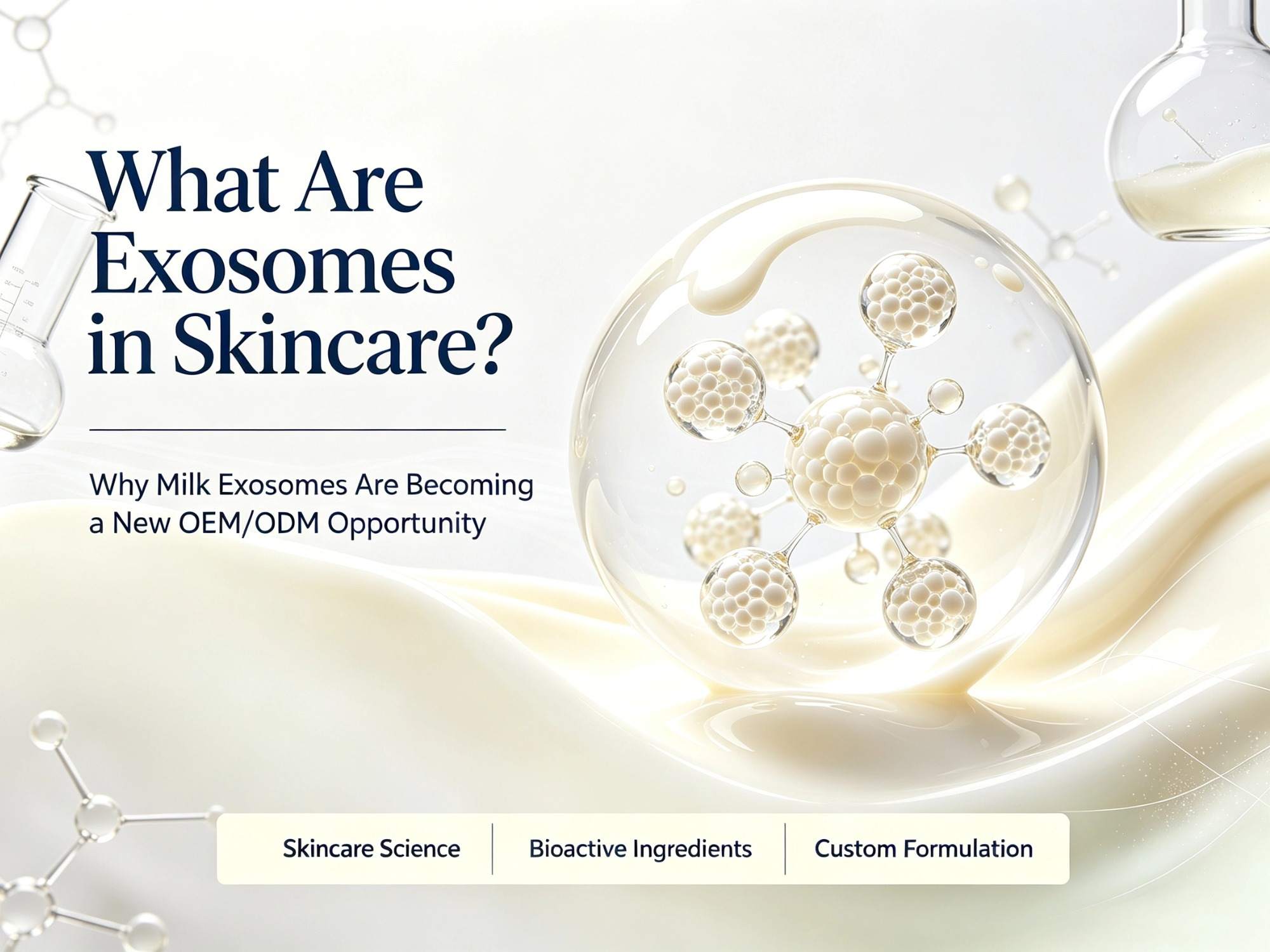
  • What Are Exosomes in Skincare? Why Milk Exosomes Are Becoming a New OEM/ODM Opportunity
    What Are Exosomes in Skincare? Why Milk Exosomes Are Becoming a New OEM/ODM Opportunity
    Jul 09, 2026
      Many skincare brands have already heard about exosome skincare. But before developing an exosome serum, ampoule, cream, or repair set, many B2B customers still ask a practical question: what are exosomes, and why are they becoming relevant to cosmetic product development?   Exosomes are attractive because they connect skincare with a larger scientific background: how cells use vesicles to transport materials and communicate with their surrounding environment. In 2013, the Nobel Prize in Physiology or Medicine was awarded to James E. Rothman, Randy W. Schekman, and Thomas C. Sudhof for discoveries of machinery regulating vesicle traffic in cells. This does not mean that exosome skincare has received a Nobel Prize. However, it does show that vesicle transport is an important concept in modern life science.   Market attention is also rising beyond cosmetics alone. Grand View Research projects the global exosomes market to grow from USD 281.9 million in 2026 to USD 1,197.1 million by 2033, with a CAGR of about 23.0%. In the aesthetic field, Grand View Research projects the global aesthetic exosomes market to grow from USD 43.9 million in 2026 to USD 139.8 million by 2033, with a CAGR of about 18.0%. These figures are not skincare sales guarantees, but they show that exosome-related concepts are moving from research and biotechnology into broader beauty, aesthetic, and premium repair discussions.   For skincare brands, importers, e-commerce sellers, spas, salons, and product developers, the real opportunity is not only using a trending word. The opportunity is understanding what exosomes mean, why milk exosomes can be easier for consumers to remember, and how to turn the concept into a market-ready product.     1. What Are Exosomes, and Why Do They Fit Skincare Communication? Exosomes are commonly described as nano-sized extracellular vesicles released by cells. They are generally discussed as carrying bioactive components such as lipids, proteins, and nucleic acids. In scientific contexts, exosomes are often connected with cell-to-cell communication.   For cosmetics, the important point is not to turn exosomes into a medical treatment claim. Brands should avoid wording such as cell repair, tissue regeneration, inflammation treatment, or wound healing. These expressions may be too medical for skincare communication.   A safer and more useful way is to translate exosomes into cosmetic-friendly language: biotech-inspired skincare, nano-vesicle concept, advanced repair story, barrier support, recovery-looking care, healthier-looking skin, smoother and more radiant-looking complexion, and premium anti-aging care.   This is why exosome concepts are especially suitable for serums, ampoules, recovery creams, repair masks, and premium skincare sets. These product formats can better carry the value of a high-tech active story than low-perception categories.     2. Why Milk Exosomes Are Easier to Turn into a Consumer Ingredient Story Milk exosomes, also called milk-derived exosomes or milk extracellular vesicles, are extracellular vesicles naturally present in milk. Public research often describes milk-derived exosomes as containing lipids, proteins, and microRNAs.   For consumers, the word exosome can sound highly technical. Milk exosome is easier to understand because milk already carries familiar associations: nourishment, softness, comfort, gentle care, skin nutrition, and premium repair.   This source story matters for brands. A product does not sell only because an ingredient is advanced. It also needs to be easy to explain on an independent website, product detail page, short video, spa sales script, or private label packaging.   A milk exosome serum may be positioned around dry and rough-looking skin, weak barrier feeling, tired-looking complexion, post-care daily skincare, smoother-looking skin, plumper-looking skin, and premium repair care. For customers who want a different source story, Aisen also has plant-derived active vesicle recovery serum development experience and milk exosome product reserves.     3. Exosome Products Should Not Only Talk About High Technology Many brands want to describe exosome products with words such as high-tech, advanced, biotech, and nano-vesicle. These words can attract attention, but consumers still need to understand what the product is for.   The real question is: does the product fit dry skin, tired-looking skin, post-care routines, barrier support, anti-aging, brightening repair, or sensitive skin comfort? If the product only stays at the technical level, it may sound advanced but still feel hard to buy.   This is why exosome communication should move from technical terms to skin-feel language. The product story should help customers understand when to use it, what skin condition it supports, and why it is different from a basic repair serum.   4. What Brands Often Overlook When Developing Milk Exosome Products The challenge of exosome product development is not only finding an ingredient. Many customers focus on samples, price, and ingredient story at the beginning, but real launch preparation requires more decisions.   First, the source story should match the target market. Milk exosomes are suitable for premium repair, nourishment, spa care, anti-aging repair, and milk-derived technology stories. However, they may not be suitable for brands that focus strictly on vegan, plant-based, or botanical positioning.   Second, the product format should carry the ingredient value. Exosome concepts work better in serums, ampoules, recovery creams, masks, and repair sets than in low-value perception formats. Packaging should also support the premium story, such as ampoules, vials, droppers, airless pumps, or high-end sets. Third, product materials should be prepared before launch. Ingredient lists, specifications, COA, MSDS, label support, packaging files, carton information, and export documents can directly affect listing speed, importer communication, and channel trust.   Fourth, brands should think beyond the first sample. If the product sells well, stable replenishment, batch consistency, packaging adjustment, and long-term supply become very important.     5. From Concept to Product: How Aisen Supports Exosome Skincare Development For many B2B customers, the difficulty is not whether the exosome concept sounds attractive. The difficulty is turning that concept into a real skincare product that can be sampled, listed, exported, sold, and replenished.   Aisen Pro Skin already has a Next-Gen Exosome Technology Plant Peptide Recovery Serum solution featuring plant-derived active vesicles, plant peptides, ceramides, and hyaluronic acid. It is suitable for barrier support, sensitive skin care, daily recovery, and private label development. At the same time, Aisen also has milk exosome product reserves and can develop milk exosome serum, exosome ampoule, recovery cream, repair mask, post-care skincare set, and private label exosome skincare lines according to customer needs.   Aisen can support source strategy, formula development, texture adjustment, packaging selection, private label customization, product materials, export documents, and replenishment planning. The value is not only offering a trending concept, but helping customers turn that concept into a product development solution.   In factory capability, Aisen has 3,000+ mature skincare formulas, 12 automated production lines, a 100,000-grade clean workshop, GMPC and ISO 22716 standards, and annual capacity of up to 80 million units. These capabilities support global customers from sample development and trial orders to scaled production and stable replenishment.     Conclusion: Understanding Exosomes Helps Brands Develop Better Exosome Products Exosome skincare is attractive not only because it is a new word. It is attractive because it can support a high-tech repair, barrier care, anti-aging, and post-care product story. Milk exosomes add another advantage: a source story that consumers can connect with nourishment, softness, and premium repair.   For B2B customers, the key is not only choosing a trending ingredient. It is choosing the right source, product format, packaging, documentation support, export preparation, and factory capability.   If you are developing a milk exosome serum, exosome ampoule, recovery cream, repair mask, or private label exosome skincare line, share your target market, sales channel, source preference, packaging needs, and order quantity with Aisen. Aisen can recommend a suitable OEM/ODM/OBM exosome skincare solution for global markets.   Related products China Anti-Aging & Brightening Salmon PDRN Facial Serum Supplier | aisenproskin.com China Bakuchiol Peptide Firming Serum Gentle Sensitive Skin Supplier | aisenproskin.com China Natural Whitening Goat Milk Soap Bar Rose Carving Supplier | aisenproskin.com  
    Read More

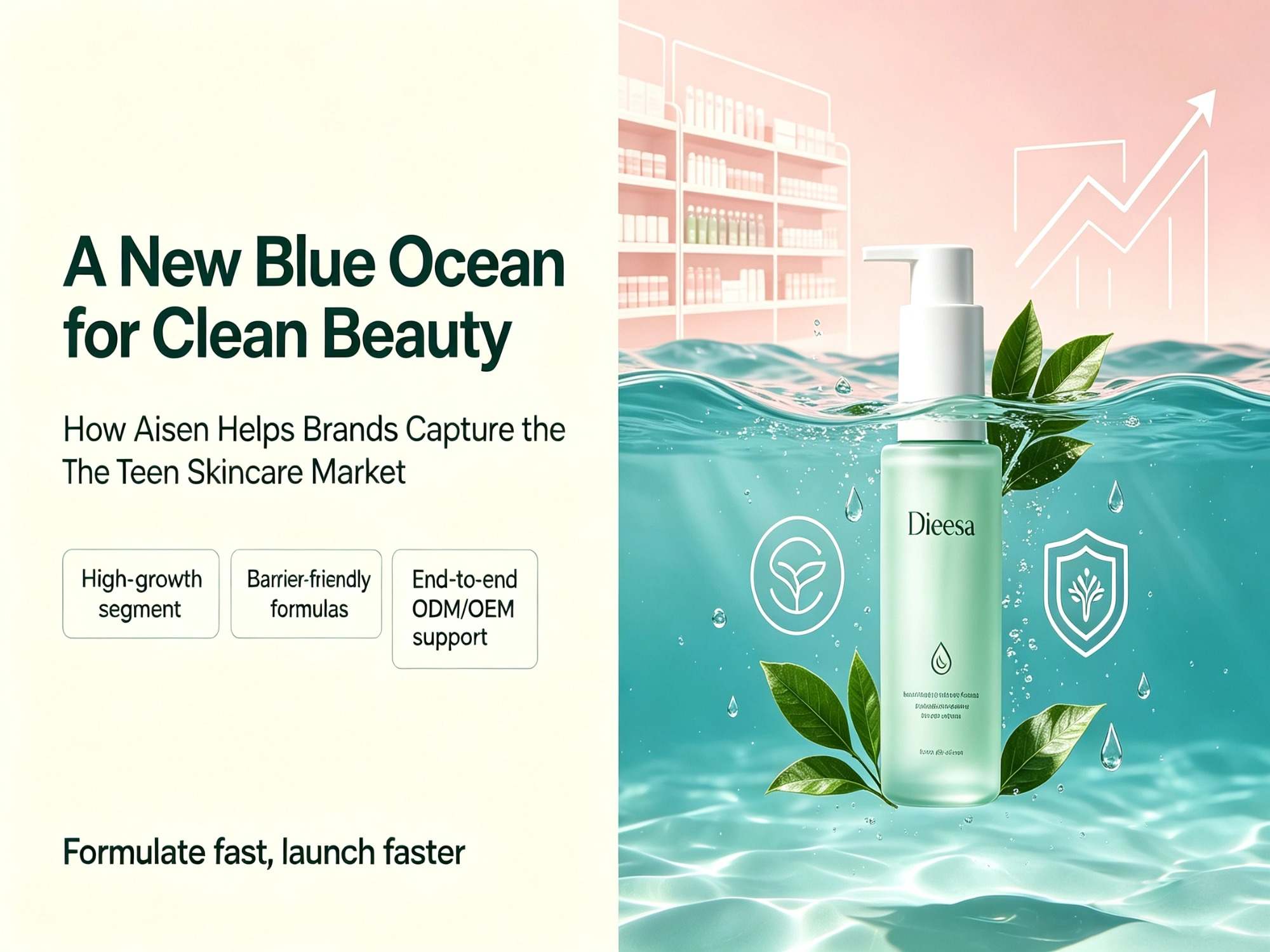
  • A New Blue Ocean for Clean Beauty: How Aisen Helps Brands Capture the Teen Skincare Market
    A New Blue Ocean for Clean Beauty: How Aisen Helps Brands Capture the Teen Skincare Market
    Jul 06, 2026
      1. Market Opportunities: Natural Skincare for Young People Emerges as a Key Growth Driver in the European and American Beauty Markets Whilst competition in the adult clean beauty sector is becoming increasingly saturated, the teenage skincare segment is emerging at a rate far exceeding the industry average. According to Mordor Intelligence’s 2026 industry report, the global clean beauty market was valued at US$9.5 billion in 2025 and is projected to grow to US$24.8 billion by 2032, representing a compound annual growth rate (CAGR) of 14.7 per cent; within which the children’s and teenage skincare segment is projected to grow at a CAGR of 13.12 per cent. Data from Technavio indicates that the global teenage personal care market was valued at US$36.7 billion in 2024 and is forecast to reach US$47.5 billion by 2030; during the same period, the natural and organic personal care market is projected to reach US$23.54 billion in 2025 and is expected to exceed US$23.96 billion by 2032.   Social media has been the key catalyst for this wave of growth. The ‘Sephora Kids’ craze, fuelled by TikTok and Instagram, continues to gain momentum—with this trend still maintaining a year-on-year growth rate of 11.4 per cent in search queries in 2025. Research by Ulta Beauty shows that the average age at which Generation Alpha first tries beauty products is just 8 years old, far lower than the 15 years typical for Millennials. However, as large numbers of teenagers follow trends and use potent adult products such as retinol and high-concentration salicylic acid, concerns are being raised by dermatologists and parents alike—these ingredients may do more harm than good to young, developing skin. There is a severe imbalance between supply and demand in the market: on the one hand, there are children’s products with overly mild formulations; on the other, adult skincare containing potent active ingredients. Products catering to the ‘middle ground’—suitable for the oily, barrier-compromised skin typical of adolescence—are extremely scarce.     2. Three key growth drivers underpinning the sector’s long-term growth (1). Parents drive safe consumption, with pure formulations becoming a mandatory requirement. In Europe and the US, parents lead the decision-making process for family skincare purchases, with fragrance-free, alcohol-free, and preservative-free products—free from irritating preservatives and made with natural plant extracts—now serving as basic selection criteria. According to Piper Sandler’s Spring 2025 report, *Taking Stock With Teens*, annual beauty spending by teenagers reached US$374, representing a year-on-year increase of 10 per cent. Gen Z and Generation Alpha have adopted a ‘ingredients first, brand second’ approach to consumption—they prioritise checking the ingredients list when making purchases, with product transparency and mildness directly determining repurchase rates.   (2). There is a gap in the market, with a scarcity of products in the mid-range segment; current offerings are polarised: on the one hand, there are minimalist skincare products with limited efficacy, suitable only for very young children; on the other, there are adult skincare products targeting mature skin and containing potent active ingredients. The shortage of products with formulations specifically tailored to teenagers’ skin—which is characterised by excessive oil production, a fragile skin barrier, and a tendency towards redness and breakouts—presents an excellent window of opportunity for brands to enter the market.   (3). As the concept of clean beauty gains traction and demand for natural and organic products continues to expand, the global market for natural and organic personal care products is growing steadily, with clean skincare standards rapidly gaining ground amongst teenagers. Offline multi-brand stores in Europe and the US, cross-border e-commerce platforms and TikTok Shop have all introduced dedicated sections for teenage clean skincare, with channels proactively allocating resources to this segment; the conditions for commercialisation in this sector are now ripe.     3. International giants are leading the way, and the sector has officially entered a phase of mainstream competition   Sephora to exclusively launch the teen-focused, clean skincare brand ‘Sincerely Yours’ in September 2025, sending a key signal to the market (Official PR Newswire Release) PR Newswire: Developed by a father-daughter blogging duo in collaboration with dermatologists, the range comprises four core products (gentle cleanser, soothing mist, repair cream and mineral sunscreen), each priced under US$30 and all certified by Sephora Clean. are vegan, cruelty-free and free from comedogenic ingredients, whilst avoiding irritating anti-ageing acids. Instead, they combine sustained-release hyaluronic acid, ceramides and low-concentration niacinamide to repair the skin barrier. The range sold out within a single day at physical stores, and pop-up events attracted 87,000 teenagers. At the same time, Yes Day, a professional skincare brand targeting the 10–15-year-old Alpha Generation, was launched. Developed in collaboration between 13-year-olds and renowned cosmetic chemists, the products have undergone clinical dermatological testing and exclude highly irritating active ingredients, precisely tailored to the tolerance levels of adolescent skin. This move by Sephora sends a clear signal: clean skincare for teenagers has evolved from a niche demand into a mainstream category.     4. Aisen Formulation ODM/OEM Solutions: One-stop compliance with European and US standards As adolescents have active sebaceous glands and an immature skin barrier, the core philosophy behind the formulations is low irritation, gentle efficacy and powerful repair. Aisen can provide and customise four major product lines, all of which meet the compliance requirements for Clean Beauty certification in Europe and the US, as well as being vegan and cruelty-free: (1). The Pure Amino Acid Cleansing Range utilises APG and amino acid-based gentle surfactants. Free from soap bases, fragrances and alcohol, it is formulated with Centella asiatica and oat beta-glucan to soothe and reduce redness. It cleanses without disrupting the skin’s natural lipid barrier, making it suitable for oily, sensitive skin during adolescence.  (2). Lightweight Barrier Repair and Moisturising Range: Featuring refreshing textures such as gel and light lotion, enriched with panthenol, ceramides and low-molecular-weight hyaluronic acid. Designed to provide essential hydration and stabilise the skin without a heavy, suffocating feel, making it suitable for teenagers’ daily skincare routines. (3). Pure Physical Mineral Sunscreen Range: Featuring a physical sunscreen system comprising only zinc oxide and titanium dioxide, free from chemical sunscreen agents and fragrance-free to avoid irritation. Modeled on Sincerely Yours’ core best-sellers, this range is suitable for daily use at school and during commutes.  (4). Soothing and Repairing Cleansing Pads: Formulated with botanical soothing extracts and free from high-concentration acids, these pads provide both secondary cleansing and soothing in a single swipe, aligning with the popular format of quick skincare videos among teenagers.     5. Conclusion Clean skincare for teenagers in Europe and the US is not a short-lived trend, but rather a segment of the clean beauty market with assured growth potential. Leading retailers such as Sephora have already established their product ranges in this category, leaving only a limited window of opportunity in the market. Leveraging its mature formulation technology and experience in meeting overseas regulatory requirements, Aisen provides end-to-end ODM/OEM implementation services for cross-border brands, helping them rapidly capture the untapped market for teenage skincare with barrier-friendly, clean formulations.     Disclaimer: For B2B reference only. Aisen is an independent OEM/ODM manufacturer and not affiliated with any mentioned brands. Brand owners are responsible for ensuring local regulatory compliance.   Related Products China Natural Whitening Goat Milk Soap Bar Rose Carving Supplier | aisenproskin.com China Microencapsulated Retinol Renewal Serum Supplier | aisenproskin.com    
    Read More

  • The Partnership Playbook: 5 Steps to a Successful Skincare Launch with Your OEM Manufacturer
    The Partnership Playbook: 5 Steps to a Successful Skincare Launch with Your OEM Manufacturer
    Mar 17, 2026
    Bringing a new skincare product from concept to shelf is a complex journey that hinges on a strong partnership with your manufacturer. For brands targeting markets in North America, Europe, the Middle East, or Southeast Asia, aligning with a factory that understands both global standards and local nuances is critical. This guide outlines five practical steps to build a collaborative, efficient, and transparent relationship with your manufacturing partner in China, ensuring your vision is realized on time, to specification, and in full compliance.     Step 1: Begin with a Detailed and Strategic Brief For a Clear Start: The foundation of any successful project is a comprehensive brief. Be specific about your target market (e.g., “sensitive skin consumers in Germany,” “halal-conscious buyers in the UAE”), desired claims, price point, and regulatory needs (such as FDA compliance for the US or COSMOS standards for the EU). Clarity upfront prevents misalignment. How We Add Value: Our team in Guangzhou acts as your strategic advisor. We analyze your brief against market trends from Europe to Southeast Asia and our extensive formula library to advise on feasibility, compliance pathways, and cost-effective solutions tailored to your geographic goals. For example, skin longevity is quickly becoming one of the most talked-about anti-aging directions in the global market — moving beyond traditional wrinkle correction toward long-term skin quality, resilience, and radiance. If your brand is looking for a more premium and expandable anti-aging story to anchor your next product line, read our full analysis on why skin longevity is becoming the next big opportunity for skincare brands.     Step 2: Engage in Active, Technical Dialogue During Sampling The Refinement Phase: The sampling stage is iterative. Provide precise feedback on texture, fragrance, and skin feel. For instance, a texture suitable for humid Southeast Asia may differ from one ideal for arid Middle Eastern climates. Direct Access to Expertise: You’ll collaborate directly with our Ph.D.-led R&D team. We don’t just make samples; we explain the science, suggest adjustments for regional preferences or stability needs, and use data to guide decisions.   Step 3: Leverage Integrated Processes to Accelerate Timelines Gaining Speed: Development involves parallel tracks: formula, packaging, regulatory filing. An experienced manufacturer manages these concurrently. For example, while the formula is being tested, our team can simultaneously vet packaging for global shipping durability and prepare documentation for target market registrations. Our Coordinated System: Our integrated project management ensures these streams converge seamlessly. This efficiency is crucial for hitting launch windows, whether you’re preparing for Black Friday in the US or Ramadan promotions in the Middle East.     Step 4: Align on Production Realities for Smooth Execution Planning for Success: Understand practical aspects like production lead times, MOQs, and the manufacturer’s quality lockdown procedures. Discussing capacity upfront ensures your launch plan for the Australian market doesn’t clash with production for another client’s European campaign. Our Commitment to Transparency: We provide clear production schedules and real-time updates from our facility in Guangzhou. Our robust QC system, trusted by brands worldwide, ensures every batch meets your specifications, giving you confidence for your global supply chain.   Step 5: Build a Strategic, Long-Term Growth Alliance Beyond a Transaction: The greatest value emerges from viewing your manufacturer as a long-term extension of your team—a partner invested in your growth across different markets. Our Partnership Approach: We share insights on regional ingredient trends, regulatory updates in key markets, and production analytics to help you optimize future lines and enter new regions like Eastern Europe or North Africa with confidence.       A truly global skincare brand is built on a foundation of a reliable, strategic manufacturing partnership. At Aisen in Guangzhou, China, we combine precise execution with a deep understanding of international markets to be your partner in growth. Ready to streamline your next product launch for your target market? Contact our team to discuss your specific needs for the US, EU, GCC, or ASEAN markets. Schedule a virtual tour of our Guangzhou R&D and production center.   Related products China Brightening Turmeric & Kojic Cleansing Set with Brush Supplier | aisenproskin.com China Retinol Microcapsule 4 Step Skincare Set Supplier | aisenproskin.com China Retinol Revitalizing Cream – Wrinkle Smoothing, Firming & Hydrating Supplier | aisenproskin.com
    Read More
leave a message

leave a message
If you are interested in our products and want to know more details,please leave a message here,we will reply you as soon as we can.
submit

home

products

WhatsApp

CONTACT US

Start a Conversation

Hi! Click one of our members below to chat on